
Episode 57
Joe Quirk: Seasteading, Evolutionary Psychology & The Surveillance State
Published
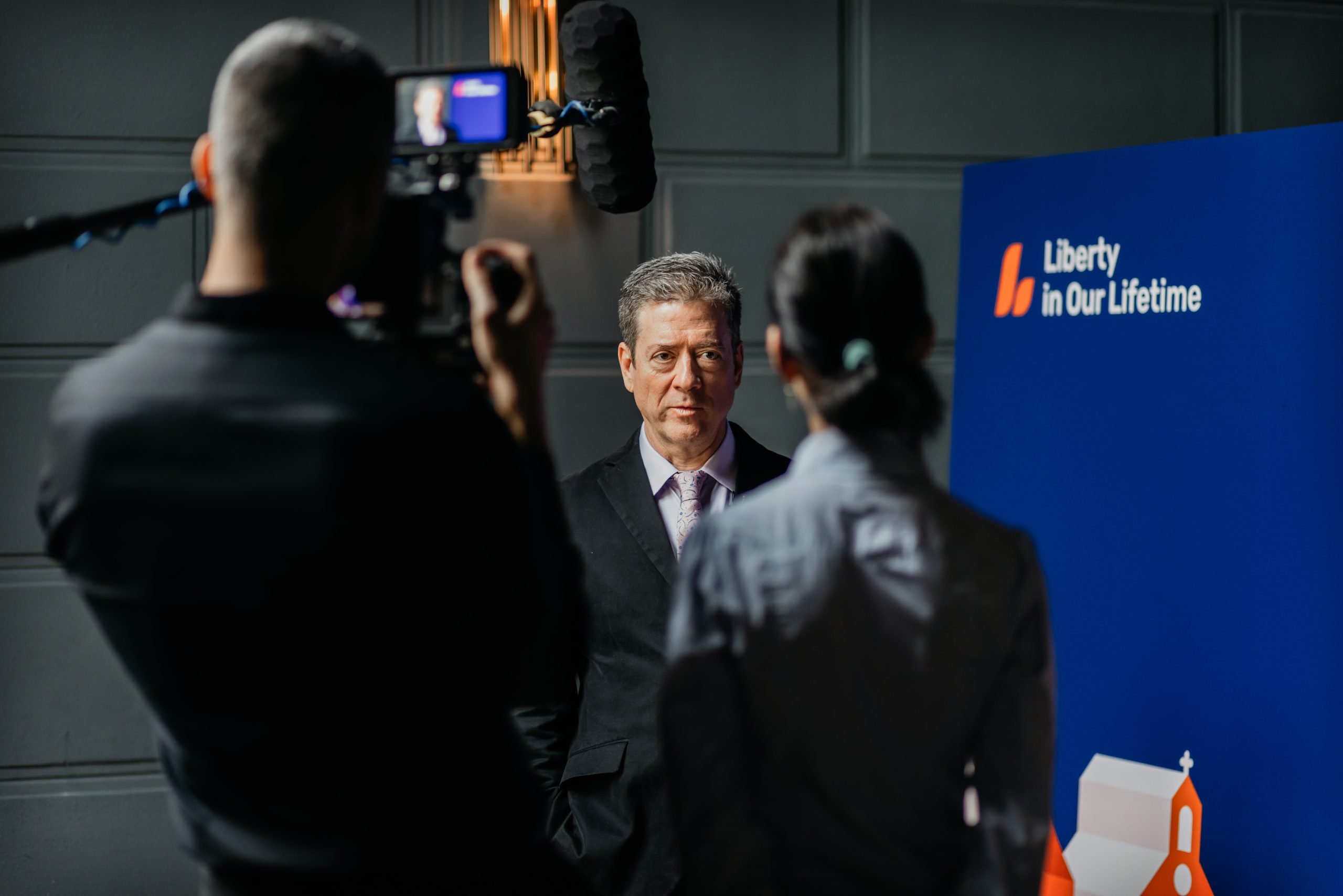
"People are completely persuaded by monopoly governance. They're brainwashed with it. It's coming for us. It's coming for free people. It's coming fast, it's coming hard and it's not hiding its agenda. So this is where I want to argue with all my colleagues. We don't want one Próspera here. We don't want a dozen Pr..."
Audio version
Read transcript
Use ¶ beside a passage to link directly to it.
Transcript
Timothy Allen: I have got no agenda other than obviously talking about seasteading. I have to talk about your previous life as an author, because I was just looking through your list of books that you have written, and it is a really diverse selection. I thought it was quite interesting.
When I look at the books you wrote before as well, I wonder how you suddenly just fell into the seasteading world and then stayed there. It is kind of like that is the end of the line, is it not, with the books when I look at it?
Joe Quirk: Well, look, I can explain it.
Timothy Allen: Before that, because I do not know how many people in this world know that you wrote all these books. Is that common knowledge?
Joe Quirk: I do not think it is common knowledge. I reinvent myself and get a new audience over and over.
Timothy Allen: Can I just read out your list of books? Because it is quite funny, actually.
We have got Ultimate Rush, which is a rollerblading messenger caught in an illegal insider-trading ring. Then It's Not You, It's Biology: The Science of Love, Sex and Relationships. I mean, that is quite a jump already. It was originally titled Sperm Are From Men, Eggs Are From Women: The Real Reason Men and Women Are Different, which is brilliant.
Then we have Exult, which tells the story of love, death and hope among a community of hang gliders.
Joe Quirk: You laugh at the only one that is not a comedy.
Timothy Allen: I just love the way it is written. I copied this off the internet. I do not even know where it came from. It says, "Exult tells the story of love, death and hope among a community of hang gliders."
Then we have Call to the Rescue: The Story of The Marine Mammal Center. Now we are… And then, since 2014, seasteading, and your seasteading book, which also has a brilliant title: Seasteading: How Floating Nations Will Restore the Environment, Enrich the Poor, Cure the Sick, and Liberate Humanity from Politicians.
Did I get them all? Are there any others?
Joe Quirk: I have also ghostwritten some books that are very successful that I cannot talk about.
Timothy Allen: Okay, that is even better. So come on then, how do you go from strange novels, to a sort of evolutionary-psychology manual, to seasteading? The final boss appears to be seasteading because you have not written anything else. Well, maybe you have as a ghostwriter, I do not know.
Joe Quirk: I am almost finished with the next book about Chad and Nadia, the first seasteaders, and their crazy manhunt.
Timothy Allen: But you have stopped at seasteading, so I presume you have found your… well, what would it be? Nemesis maybe? I do not know what you call that in writing.
Joe Quirk: I think I found my passion and my mission, because I think it is something worth convincing people of.
Yes, my series of books sounds zany, but there is an intellectual development going through that whole thing.
Timothy Allen: Oh yes? Go on.
Joe Quirk: I could start with It's Not You, It's Biology. I could tell a lot of stories about each book. I could start at the beginning, or we could talk about how Sperm Are From Men, Eggs Are From Women leads to seasteading.
Timothy Allen: I would like that, actually, because I am a big fan of evolutionary psychology. I love listening to that. I did not really come across it until the last few years. It has become popularised, has it not, this idea that there is an evolutionary psychology? Jordan Peterson and people like that have really pushed it into the mainstream.
So come on then, what is the connection?
Joe Quirk: I got in early. I realised this stuff was going to get popularised. I was a fiction writer, and what I do is every time I write a book, I completely alienate that audience and reinvent myself, get a different voice, and go find a different audience.
There have actually been arguments online about the different Joe Quirks, and people saying, "Stop confusing them." Eventually I had to write a bio saying it is all the same guy.
Timothy Allen: Wait a minute. How have you turned off your readers then? What is it about your style of writing that alienates your readers?
Joe Quirk: When people love a book and then they love an author, they want to go back and get more of the same thing. Then they find out I do something completely different.
Timothy Allen: Completely different. Every book is completely different.
Joe Quirk: I am kind of proud of the fact that people say you cannot tell it is the same writer.
Timothy Allen: I could not. The only reason I thought it was unusual is because I assume there are not many Joe Quirks around. I thought, oh, there is another Joe Quirk. That is funny.
Joe Quirk: There is only one. It is all the same guy.
I guess I am kind of a voicist. I do not just have a style and write. I figure out what the voice to tell a certain kind of story is. I have done fiction. I have done non-fiction. I have ghostwritten a memoir. Right now I am writing a book that is entirely in the voices of the characters, what real people said, taken straight from transcripts of what they said, and I interleave the transcripts. So once again, I am writing a book that is completely different from all the others.
Timothy Allen: But how does writing about the evolutionary psychology of sex lead to seasteading?
Joe Quirk: Very early, I started reading scientific studies about human behaviour, and I discovered evolutionary biology before it became popularised. I became addicted to it. It was before the internet, really, so I would get up every day and walk to the UC Berkeley campus and print out studies. I would read the studies and go all the way deep into them and look at the graphs.
I found it illuminated human behaviour so much more sublimely than any psychology or Aristotle or anything I had ever read. I would be in a bar explaining to people, "Man, did you know there is a strong correlation between female promiscuity and the size of the male testicles among all primates?"
Timothy Allen: Really?
Joe Quirk: Yes. The bigger the balls, the more promiscuous the female near the balls.
Timothy Allen: Really?
Joe Quirk: This is among large apes. The way I sold this to publishers is, I said, "Okay, here is the abstract. It sounds pretty science-speaky, does it not? Well, here is how I translate that into English. Notice how it is automatically funny. I want to write a book in the voice of a guy who has read these studies and is just going to explain it to people, but it is a humour book."
A lot of the things you discover reading this, it does not just illuminate what is so wonderful about us. It illuminates what is Machiavellian and cynical about it all.
I found it so mind-blowing that human emotions evolved. If you think of emotions as instincts, and instincts come from evolution, evolution is won by animals best at getting their genes into the next generation. Then you realise that men and women have two different ways of getting their genes into the next generation. Getting pregnant and getting somebody else pregnant are two very different strategies.
To the extent men and women have the same interest in passing on their genes, their emotions are going to evolve to be in harmony: finding children cute, getting aroused, caring about status, all that. But to the extent men and women have two different ways of passing on their genes, their emotions are going to evolve to be in conflict.
So I kind of take it from there, and I use humour to slip in all these harsh truths about reality. The book has been translated into nineteen languages at this point.
Timothy Allen: Amazing.
Joe Quirk: So I really came to understand that the most powerful force for evolution, for progress in the world, and for design, is evolution.
This microphone I am looking at right now basically evolved. There is no one person in charge of designing it. There has been a variation of a huge amount of forms. Distributed people select for the best, and over time we get this marvellous microphone that is working so well that nobody can make it from scratch. It is kind of like a global brain creates it.
At some point, I was exposed to reason and evidence and realised the libertarians are winning the arguments, and became converted to that. But I came to realise that governments cannot really undergo variation and selection because variation would be a war or a revolution. Too much damage. So governments do not evolve.
I can tell you the story of how I came to seasteading.
I was first on a cruise ship, and I noticed it was the highest standard of living I had ever experienced. I was living like a very wealthy person, with servants taking care of me. I remember there were ice sculptures and infinite marvellous food. I was like, why is this cheaper than the coastal hotel I stayed in the night before? I do not get it.
Instead of enjoying myself on the cruise ship, I was walking around trying to do back-of-the-napkin calculations, saying, okay, this thing probably cost about half a billion dollars. There are this many people on it. How much does it cost to run every day? I do not understand how this thing makes a profit. It must be some kind of tax play. I do not know what it is. What is that flag? I guess that is a Panama flag.
I did not understand why the floating city was so much better and cheaper than any city I had ever been in before.
Six weeks later, I was at my tenth Burning Man.
Timothy Allen: Really? How long ago was that?
Joe Quirk: This was around 2011.
Timothy Allen: Do you still go?
Joe Quirk: No. I went to a total of sixteen and finally burned out on it. Finally grew up. But Burning Man is fascinating because it is basically a startup society in a flat, featureless desert that lasts a week or two. Then every year it takes itself apart, disassembles, goes away, and then you start up again.
Every year the press report says Burning Man is now ruined, there is an insurmountable crisis. One year it was people throwing solid things into the porta-potties, causing the porta-potties to get clogged, and the porta-potty companies had their vacuums clogged, costing them a lot of money. They were going to pull out of Burning Man, and if we lose the porta-potty people, we cannot do Burning Man. You cannot have 60,000 people with no porta-potties. What are we going to do? It is like, oh my God, this could be the end of Burning Man.
Then the city gets taken apart and put up again next year, and all the porta-potties work perfectly. The problems get solved. Then the next year it is, we raised too much dust. How do you enforce a speed limit of five miles an hour for all these cars everywhere? Oh my God, there is a big crisis. We need to have a political argument.
Well, I do not know. The city just gets taken apart, put up again, and then the problem gets solved. I noticed that the problems all get solved in a distributed way without me ever needing to argue about it.
So I was sort of talking out loud and saying, would it not be interesting if we had more Burning Mans? What if this was going on all year long? What if we could have more startup societies in the middle of the desert? What kind of interesting ways of living together would we discover?
Somebody said, "You need to learn about seasteading." I did not really know what that was. I was introduced to Patri Friedman at Burning Man, who described it to me very briefly. Because I had just been on a cruise ship, I thought, yes, I can understand why mankind would eventually move to the water. I think that is technologically realistic. I do not see why anyone would found a nonprofit to make it happen sooner than it would otherwise.
I just went home. At some point, I noticed that the seasteading logo is based on the Burning Man logo.
Timothy Allen: Is it?
Joe Quirk: Yes. It is the Burning Man logo with a cruise ship on top of it. The Burning Man logo is a man holding his arms to the sky. The seasteading logo is a man holding his arms to the sky, standing on water, with a cruise ship on top of him.
When I noticed that, I thought, why would a city in the desert inspire cities on the ocean? What was this called? Seascaping? I started Googling it, and at some point, I do not remember when or how, I came across the argument that if you founded civilisation on the water and city blocks and homes were modular and movable, and could be moved about like a floating Venice, and you could move city blocks about and hook up with other neighbourhoods, you could choose the neighbours you wanted. You could essentially vote with your house.
I realised, oh, these would be like modular cruise ships that stay on the water forever. They detach and reattach. I realised this would be variation by governance providers and selection by residents. Variation and selection is the secret recipe for progress in all things. On the ocean, we would have evolution in governance.
The problem is we founded civilisation on the wrong third of the planet. Because I had been on cruise ships and boats, and I understood barges, I thought, this is completely doable. I do not think this is hard. I think it is easier than going to Mars.
Look, the surveillance state is on the rise. The original version of the talk I was going to give at the Liberty in Our Lifetime conference was going to show all the reasons that is happening. Not only are Schwab, China, the World Bank, you name it, coming for your children, your children are crying out for more of it. People are completely persuaded by monopoly governance. They are brainwashed in it. It is coming for us. It is coming for free people. It is coming fast. It is coming hard, and it is not hiding its agenda.
This is where I want to argue with all my colleagues. We do not want oases. We do not want one Próspera here. We do not want a dozen Prósperas there. We do not even want six thousand special economic zones all over the world. It is not enough.
We need to radically proliferate the alternative examples and completely outcompete the rise of the surveillance state with 100,000 better examples. It is the only way freedom can win, because they have the technology, they have the AI, they are probably already training it on the blockchain, and we are completely outnumbered. It is coming fast.
We need to do this in the next couple of decades. I want to see hundreds of seasteads in the next couple of decades. In the next fifty years, I want there to be tens of thousands. I want these to be floating Hong Kongs all over the world.
Most will probably fail, but the ones that succeed will be selected. We have two thirds of the planet to do this on. It is technologically doable. It is affordable. The people who get the bug are working on it now. We have inspired probably between nine and a dozen seasteading companies in the last few years, and we need to radically accelerate the creation of a technology for new societies that are mobile.
We need to understand that founding civilisation on a liquid is fundamentally different from founding it on land. The reason governments are monopolies is because land is static. Whoever has the military to control it is going to farm you and your resources.
Timothy Allen: It is funny. You are only the second person I have actually spoken to in person about seasteading, and the other one was Mason yesterday. As someone who is pretty open-minded, up until I spoke to Mason I had always thought, yes, I understand the theory of seasteading and it is a good idea, but in my mind it was a bit of a fantasy.
After speaking to Mason, I have now realised it is absolutely not a fantasy at all. It is very simply doable. In particular, like you say, the cruise-ship example is a brilliant example. But also just oil platforms, which are basically floating platforms. I did not even realise that. I thought they were attached to the seafloor or something.
The technology is already there, and we can now build very large concrete structures to create harbours. The other thing I always thought of was, yes, but what about when you get your first big storm? But you can isolate yourself from a storm quite easily now, I have realised. I had never really thought it through.
It is funny. I am in the movement, I am open-minded, yet still I was thinking, nah, not really a thing, until I had actually dug under the surface a bit. It is a really interesting realisation to come to, that it is not just some little fantasy world or whatever.
Joe Quirk: There are industries that are on the ocean right now. In my talk, I showed a picture of one of the flotels. You have your oil rigs, you have guys working on them. A lot of oil you have to drill in very high wave conditions with storms. They build flotels for people to live in, the workers, for weeks at a time, a month at a time, living there and then commuting by bridge to the oil rig.
Timothy Allen: They cannot move, can they? They are not allowed to move a lot.
Joe Quirk: They can be towed.
Timothy Allen: What I mean is, they need to be a solid structure that sits still, even in large waves.
Joe Quirk: Pretty much.
Timothy Allen: I know there is movement, just like there is in a building, a tall building. But I would imagine that large waves would make these things move so that you would be lying in your bed going backwards and forwards. But that is not the case in the slightest, is it?
Joe Quirk: No. The place where waves happen is at the air-water interface. The wind causes waves at the surface, but down below, the water can be quite calm while there is a storm going on overhead. If you can send a piling down and put tons of ballast at the bottom of it, well below the waves, it is like – I call it a sea pillar – it is like sticking a pillar into land.
You can engineer for anything. Since a lot of oil is in the North Sea, or terrible places like that, they have to engineer these things to be big and strong.
Another thing on the sea is floating wind turbines that are gigantic and are based on the same spar principle. Just as land is very diverse – there are mountains, there is the Sahara – in the same way, with the oceans, there is the North Sea and there are the doldrums near the equator.
If you can imagine the Earth going around the equator, there is a thousand-mile-wide band of calm turquoise seas, for the most part, where waves generally do not get higher than five metres. You have to engineer for the highest possible wave you are going to experience. That area is larger than any continent on Earth.
So you can make a flotel at one-hundredth the size and one-thousandth the cost. Instead of doing a wind turbine, put a little house on that thing, make it at one-thousandth the size and one-ten-thousandth the cost, and float it in calm equatorial seas. Forty-five percent of the Earth's surface is completely unclaimed by any government, any state. It is just that people do not focus on it.
When I first got hooked by this, which was about thirteen years ago, I was confronting the challenges. How do you bring the price down? How do you engineer these things? The ocean is very corrosive, so how do you use the Wolf Hilbertz process to grow coralcrete on the seastead, to encase it in a seashell so it will last for centuries at sea? Because you need to be out there forever.
Timothy Allen: Did you just say coralcrete? Is that like concrete made out of coral?
Joe Quirk: Yes. Coralcrete.
Timothy Allen: Is that a new word?
Joe Quirk: It is a word that gets used. I use a lot of puns because seasteading is such a fundamentally different way of thinking about how civilisation works. I am trying to snap you out of how you normally think about things. I want to use the word seavilisation because it is so fundamentally different. We need a different word. An aquapreneur is going to be different from an entrepreneur.
One by one, the professionals and experts have solved all those problems, as far as I am concerned. The problems have all been solved, except we just have to get a business going on the sea and prove that these things can pay for themselves. Most of the challenges have been knocked back. The one remaining challenge is the misunderstandings about it. Very intelligent people who could make this happen think it seems like a crazy, weird fantasy, and meanwhile they are all interested in how we are going to go to Mars, which I think is crazy.
The reason to go to Mars is the idea that an asteroid might come and hit the Earth, but the chance of that happening in the next ten thousand years is very low. The chance of a complete monopoly surveillance state controlling the entire planet is coming fast, in the lifetimes of our children. That is the problem we need to solve.
Timothy Allen: The problem I would say I still have with it is the culture of seasteading, the reality of living at sea. Like you say, it is a very unusual thought. When you look at the planet, you see there are a bunch of people who are very much seafaring, but it is quite a small group of people.
My thought would be, even if this was a vast island – I mean, how vast are these things potentially? That is the thing. How similar to life on land am I to expect in a certain form of seastead?
Joe Quirk: The market shall decide the size of any particular seastead as they develop.
I call it the blue frontier, to compare it to the Western frontier in North America. At first, it is all these wacky pioneers with a big vision trying to get away from the old world and do something different. They go out there and, at great personal risk, get a covered wagon and build a log cabin in the middle of nowhere. Then they set up farms and start having some food, and then other people say, that seems like a good place to live, and come in.
You get those early adopters. We already got that with Chad and Nadia. Then other people get it. Right away, they had all sorts of people interested in joining their wacky community in the middle of the Andaman Sea. That would probably be happening right now if that had not been quashed by the Thai Navy. There would probably be twenty seasteads of eccentric people, and most of us, including me, saying, I would not want to live out there.
Timothy Allen: Maybe you should quickly give us the 101 on the Thai story. I have heard it myself before, but in this context it is important.
Joe Quirk: To prove that seasteads can be cheap and can work, the first seastead, named XLII after the Roman numeral 42 –
Timothy Allen: Why 42?
Joe Quirk: That was a nerd check, and you just failed.
Timothy Allen: Are we talking Restaurant at the End of the Universe?
Joe Quirk: That is exactly what we are talking about. It is the answer to life, the universe and everything.
Timothy Allen: I passed.
Joe Quirk: You passed, yes. The Hitchhiker's Guide to the Galaxy. So they said seasteading is the answer to life, the universe and everything.
They built this thing and lived on it for two months. Then, out of nowhere, the Thai Navy went to the press and declared a death threat against them, and sent battleships out to surround them. They managed to scuttle and escape, and lived a ten-day Hollywood movie that would make Tom Cruise jealous.
When I write this book –
Timothy Allen: You are writing about this?
Joe Quirk: Yes. I am writing a book. Since I want to get it as close to the truth as possible, and I was not there during the manhunt, although I was there just before it happened and then when they were rescued in Singapore, I have been reconstructing it. They lived a crazy ten-day manhunt chase.
One of the ways I convey what it must have been like is this: when the death threat happened, they got in a boat and they had a full fridge full of food. Over the next ten days, they lost about seven to ten pounds between them, with all the food they needed to eat and all the water they needed to drink, and no place to walk on that boat. Just sheer stress, adrenaline and sleeplessness.
I could not believe it when I saw them in Singapore. They had lost all this weight. That is the level of stress they were experiencing.
Timothy Allen: What was their vessel then? Can you describe it, their seastead?
Joe Quirk: It looked like a lollipop. It was the most bare-bones thing you could imagine. It was a spar. I call it a sea pillar so land people know what that is. It was stable on the sea, and then they put a tiny little house on it. It was probably about as big as this room we are sitting in right now. It was twenty-five feet across, about six metres by six metres. That was the size of their thing.
A few years before that, I had a declaration for future seasteaders. I was imagining I was talking twenty-five years in the future, saying you cannot say it is a seastead unless you pass the wine test. You cannot have civilisation if people are seasick, so you have to get a glass of wine, pour the glass of wine, show waves outside, and then look at your table and the wine glass is not rippling.
I just threw that out there. Nadia waited until they were in a storm to whip out her cell phone and film high waves outside their door, then pan down and show a glass of wine on the table, and it is not rippling. They freaking passed the wine test.
Timothy Allen: Wow. On a six-by-six platform?
Joe Quirk: A six-by-six platform on top of the key technology, which ocean people call a spar. For the land folk, I call it a sea pillar.
The best way to talk about it is to think of a wine bottle. Empty the wine, put two inches of rocks in the bottom of the bottle, put the cork back in the bottle, and throw it in the water. The rocks drag it down, but the neck of the bottle sticks out of the water. Then make waves with your hand, and you will be amazed that the bottle does not move. It remains stable.
I made a little video myself in a swimming pool. I put a rubber ducky balanced on top of the cork and said, watch this. It looks like, is that sitting at the bottom of the pool? No, it is floating. It is not sitting on anything, and the rubber ducky is not falling off. You can go on YouTube and look at my video of that.
Timothy Allen: How did they move then, when they were pursued?
Joe Quirk: They had a sailboat.
Timothy Allen: So the seastead could not move unless it was towed? Is that how it worked?
Joe Quirk: They could drag it or tow it. It was anchored to the seafloor, so it was stable in one place. It was a proof of concept. It was not even necessarily the first product. It was just a proof of concept: proof it could be cheap, proof that it worked, proof that in that sea, which is very flat and calm, it could function.
Timothy Allen: Did they build it themselves in Thailand, in a harbour somewhere?
Joe Quirk: It was built by Ocean Builders at very low cost.
Timothy Allen: Why Thailand? Why did they choose to do it there?
Joe Quirk: I think it is because the Andaman Sea is often described as a giant lake. But actually you can get the same thing in many places near the equator.
Timothy Allen: It is funny. When we were talking to Mason yesterday, I mentioned that I made a film years ago about the Bajau, the sea gypsies. We lived on boats with them.
Joe Quirk: Really?
Timothy Allen: Yes. It was a BBC film. You can see it. Human Planet, it was called. It was one episode of a series, just about the sea. We did different environments and stuff.
Joe Quirk: Before this manhunt happened, I was writing my first science-fiction book about seasteading, and it opens with a boy from the Bajau Laut.
Timothy Allen: Yes, that is how you pronounce it. Laut just means sea. Bajau is the tribal name.
Joe Quirk: I have looked into those people a lot. It is amazing.
Timothy Allen: There are a few really fascinating facts about them as well. Do you know about the eyes focusing underwater and stuff?
Joe Quirk: Yes.
Timothy Allen: It is really interesting. We followed this guy, Sulbin, and he could hold his breath for about five minutes using breath exercises, the same kind of thing that free divers do. You should watch it, actually, because it is a phenomenal bit of footage. I was down there shooting stills, and we recorded him dive down, pick up a rock, and just walk along the bottom of the seabed with a harpoon.
Joe Quirk: I might have seen it.
Timothy Allen: You probably have. I was there watching that with my own eyes. I have some great photos of it as well. It was extraordinary. We were all in scuba gear, obviously. But they did talk about it. One thing is they had no passports. They had no nationality. That was interesting in itself.
Joe Quirk: Stateless.
Timothy Allen: Yes. Also, they had the problem of bad seas. We flew around that whole area in a helicopter. We were off the coast of Sabah, and you could see these little communities everywhere. A lot of them had stopped being nomadic and had started positioning themselves. They were farming seaweed and stuff on stilted huts out in the middle of nowhere.
I have got some amazing pictures of just one hut on stilts, and literally for kilometres around, nothing else. I often wondered what that is like, because my issue again with a six-by-six platform is: could I do that? No, I do not think I could. I do not think I could live on a six-by-six platform, even as an experiment. I think that would drive me kind of crazy. I do not know. Could you?
Joe Quirk: Probably not. But the CEO of Ocean Builders, his plan was to go out there and meditate alone on the thing for three months. There are some people who like that kind of solitude.
Chad and Nadia will always tell you they loved it: seeing the sunrise and the sunset, the infinite views. It is extraordinary. Then a bunch of people went to the website saying, yes, I want the next one. I want to come join you out there. This is how the community scales up.
If they are in different places around the world, and they are bigger, once you demonstrate that one little thing works, you can build others.
Timothy Allen: What is the end of the Thai story though? How does it end?
Joe Quirk: It ends with an insane rescue into Singapore. They were ejected from every country.
Timothy Allen: Countries were not letting them in because Thailand was after them?
Joe Quirk: Thailand declared them a threat to Thai sovereignty. They tried to get into another country, but they did not let them in. They had to do a mad dash through the most pirated waters in the world into Singapore. Singapore is basically a fortress. How are they going to get into Singapore?
I was in Singapore at that time, providing a diversion.
Timothy Allen: Putting a lot of flags up or something?
Joe Quirk: No. I was giving a speech to explain why seasteaders were in Singapore, because a secret rescue thing was arranged. I am not going to give away the whole book, but it is an extraordinary true story. It is the craziest manhunt you could imagine.
Timothy Allen: What happened to the platform?
Joe Quirk: The Thai Navy confiscated it.
Timothy Allen: So they have got it. As I remember, they were within their rights to be in that area from a legal perspective. They were more than twelve miles off the coast, et cetera. Is that right?
Joe Quirk: They were more than twelve miles off the coast, and they did not commit a single crime. Not even minor infractions.
Timothy Allen: Obviously that throws up a few interesting conundrums for seasteaders. The whole Free Cities movement is in its infancy, and we are sorely lacking in good examples of things, but they are starting to happen now. You see Próspera having a legal battle with the Honduran government, et cetera, and all these things add to our understanding of what is possible and what the best route forward is.
So what about seasteading now? You have shown that governments actually do not really care.
Joe Quirk: I think Thailand was a fluke. I do not think other governments are going to declare war on a floating house the size of a shack.
Timothy Allen: That is the best way to put it.
Joe Quirk: That is the other thing I love about seasteading. If land governments do not find cruise ships to be a threat, if the United States does not find the Cayman Islands to be a threat, if Malaysia does not find Singapore to be a threat, if socialist Venezuela does not find Trinidad and Tobago a threat, which is something like six miles offshore, I just do not think seastead communities floating twelve miles out and providing better services are going to provoke the immune system of nation-states.
I think you could just be scaling these things up and slowly win people over.
Timothy Allen: It just made me remember something from my childhood: the Vietnamese boat people. Do you remember that? They were refugees from Vietnam who were trying to find a place to live, and everyone was turning them away. Is that the true story of it? I was a kid. It was in the news every day.
Joe Quirk: That is the same kind of thing, although they were probably looking for residence on land.
Timothy Allen: There is a history of people not liking people arriving or being close by on boats or whatever.
Joe Quirk: The most interesting things in the world are not being filmed. One of the things I find very interesting is that ocean people will tell you that what you are talking about is already happening: people who live on catamarans, who are not getting taxed, who are staying quiet. They are part of a whole community. They go to the same ports. They trade with the same people. They do the same things. They are kind of off the grid, living on boats.
They are not poor people fleeing bad governments and desperately trying to get into other places. That is such a humanitarian tragedy. But there are people just living on boats who travel the world or stay in one place.
Timothy Allen: That has got a lot of… if my Instagram For You is anything to go by, that kind of lifestyle is becoming idealised much more now. People are often talking about it.
Also, and I know this from first-hand experience, there is a billionaire class that does it as well, in a much more sinister way, in my opinion.
Joe Quirk: You mean the yacht class?
Timothy Allen: I mean the proper yacht class. Sixty people working on the boat and doing the circuit each year, all meeting up at the same events, et cetera. I have a connection with some people who work in that world, and I have often heard some quite… Well, the impression I get is that it is a lawless place. When you are on a catamaran, like you say, it kind of is. But when you are an incredibly wealthy person, that means a whole different thing.
Joe Quirk: What do these things do?
Timothy Allen: I cannot really say because these are confidential conversations I have had with people. But like I say, I can sum it up as: for the same reason that if you are sailing a catamaran around the world, people leave you alone, if you are on a yacht which is basically the size of a cruise ship, people leave you alone. Everyone knows who you are, and all your friends do the same thing. You all meet up.
It is a way of living outside the system which requires proper wealth. Fuck-you money.
Joe Quirk: I think catamaran life that you see on TikTok is a version of that. It is just a more blue-collar version of it, I suppose.
Timothy Allen: Yes. There are all sorts of income levels. You can get your yacht, or you can be the Bajau Laut living on the sea and stateless. Those are tragic stories, but there is a whole middle ground.
Suppose you could stay out there forever and live on a permanent floating city, town, neighbourhood or house. All I care about is something that is scalable, and as far as I am concerned, what Chad and Nadia achieved is scalable. There are waters like that all over the world. Now they are on the other side of the world doing it. Ocean Builders has some floating structures and they are going to build a lot more.
Tell me, are Ocean Builders the only company making prototypes?
Joe Quirk: That is hard to say. I think they are the most advanced, but there are several companies building things and working on things. Many of them have "ark" in the name. It is kind of interesting. A bunch of these people independently put "ark" in the name.
If you go to the Seasteading Institute website and look at active projects, you can check out various projects.
Timothy Allen: Let us talk about prototypes and working models. I remember last year in your talk you showed a bunch of examples. I did not get to see yours this year because I was recording new episodes of this podcast. What stage is the community at in the design and building process of anything to do with seasteading?
Joe Quirk: When the Seasteading Institute announced that we were going to develop the first classification society for seasteads, professionals in the ocean industry started taking us seriously and reaching out to volunteer to help.
What we are doing now, with the guidance of some ocean-industry people, is deriving… Let me explain to you how we are going to make seasteads legal.
Timothy Allen: Wait a minute. What is illegal about them? What do you mean by that?
Joe Quirk: They are not defined in international law. If you are on the sea, you are required to have a flag. Otherwise any country is free to board you and you have no protection.
You can get an open-registry flag. You can flag with Liberia, and then you can sail your ship or yacht.
Timothy Allen: Which is how cruise liners actually work, is it not? That is how they live outside the system in a way. It is a strange little quirk in maritime law. When I heard about it, I was very surprised that you can just get a flag from anywhere and use that as a way to insulate yourself from other nations in a way.
It is a core part of the seasteading idea as well. Something that sounds like it will probably never change. The first time I heard about it, I thought, well, they will stop that. But then you realise they are doing it on cruise ships, and cruise ships are not going anywhere.
Joe Quirk: Cruise ships are de facto self-governing floating cities.
Timothy Allen: I know. It is bizarre. This was the thing that clicked when I was talking to Mason. Add that to the fact that floating platforms are already an industrial reality and used a lot. You cannot doubt that one day these things are going to exist, unless civilisation collapses, because people are just going to make these things. Humans are good at making things.
Joe Quirk: Imagine you are on a cruise ship. It is flagged in Panama. You are up in Alaska waiting for a glacier to calve. Two drunks get in a fist fight, and in the mayhem a ninety-year-old lady has a heart attack. You are not going to call 911 back to Panama. It is going to take the ambulance a long time to get there. Anything that happens has to be dealt with on that ship. What I just described happens every day on cruise ships. There are hundreds of them.
A population equivalent to Taiwan every year rides cruise ships.
Timothy Allen: That gives me a question. Is it too much of a stretch to say that, between ports, they kind of have their own legal system on board?
Joe Quirk: I do not think that is a stretch. Functionally, that is what happens.
Timothy Allen: So they have private security?
Joe Quirk: Yes. A captain is fundamentally a dictator when he is at sea. He is a tin-pot dictator, and he has a lot of leeway to do whatever he wants.
Timothy Allen: He can lock you in the brig?
Joe Quirk: Yes.
Timothy Allen: He even dresses up like a dictator as well. He kind of looks like one.
Joe Quirk: When I talk about this in my talks, I show a picture of a captain posing on his cruise ship. It is kind of funny. He looks like a tin-pot dictator. He is dressed like it, and he has sunglasses. He does not realise he looks like that, but I do that to make the point.
Then I ask, why does this guy not flog his passengers and keelhaul his crew? What stops him from being a tyrant? The answer is that the customers have choice. You can go to another cruise line and put him out of business. The same goes for employees. Employees can quit one cruise line and go to another as they get more experience.
There are no angels involved here. These are all people with human nature. I am sure the guy would love to flog a couple of difficult passengers. But since the customers have choice and the employees have choice, the governance keeps improving.
It works so well that when you are sitting on a cruise ship, it does not occur to you to argue about who the alderman should be, or who the government should be, or how you should vote, or what the politics of the ship should be. You do not even find out who the captain is because you do not care. All you care about is that everything works.
No one argues about cruise-ship politics. All they have to do is say, "I like something better," and write a negative review online, and the cruise companies panic. Employees can go online and complain that this is not fair or that is not fair, and they complain about that too. Competition among all these floating cities causes people to behave more civilly.
You cannot get away with the same level of corruption. These societies are not perfect, but a lot of elderly people ride on these things. You can get sued. You have to have a helicopter to take people to a hospital.
Timothy Allen: They have a lock-up, a kind of jail on board, do they?
Joe Quirk: They have jails on board. You can call them that. They call them the brig, I guess. They have medical centres, and the captain is free to drop you off on an obscure island and abandon you.
Timothy Allen: Really?
Joe Quirk: Sure. They do it all the time.
Timothy Allen: If someone is too rowdy, they just say, get out?
Joe Quirk: Yes. We are leaving you here. Sue me in Bahamian court.
Timothy Allen: Brilliant. So you can be ejected from your floating city.
Okay then, why are residential boats not a thing? Or are they?
Joe Quirk: They are. I just spoke on one. Thirteen years ago, when I discovered seasteading, I was looking for precedents and I immediately discovered The World, which is not a cruise ship. It is a big boat with condos on it of different sizes. Generally high-net-worth people are able to buy condos on this thing, and it travels the world constantly.
Imagine you are in Istanbul, you get off the ship, you visit stuff, you come back, go to sleep, and wake up with Paris on your doorstep. I am summing it up, but I always thought this is the most advanced seastead in the world. In fact, it is a prestead. Would it not be amazing, I said thirteen years ago, if I could give a presentation on that ship and explain to those residents why they are the world's foremost seasteaders?
Finally, last month, my wife and I were sponsored to go on a ten-day cruise on that exact ship.
Timothy Allen: On that exact ship?
Joe Quirk: On that exact ship. They asked me to give three talks, each an hour long. I called them: "Seasteads Solve Political Conflict," "Seasteads Heal the Ocean," and "The Eight Great Moral Imperatives of Seasteading."
Timothy Allen: How did it go down?
Joe Quirk: It could not have gone better. The people who came to the talks came to all three talks. Afterwards, I was supposed to make myself available for breakfast or whatever if someone wanted to talk to me, so I talked to a lot of people on the ship about why they are seasteaders. They were interested. It was wonderful.
It was frustrating because they had very strict rules against fundraising, which I completely understood. I was reminded of that repeatedly.
Timothy Allen: There are lots of rules.
Joe Quirk: I know, but they are de facto self-governing and it does not even occur to them.
Timothy Allen: What is it about seasteading that would interest them when they have already got that? How do you convince them that a seastead is better? Is it more space?
Joe Quirk: Why should there only be one World? What if there could be thousands of worlds?
Timothy Allen: Sure. But a boat and a seastead are going to be very different things, are they not? I get the impression that a seastead might be more like an island, whereas a boat is more like a mall. You are going up and down a lot.
Joe Quirk: I call a cruise ship camping and taking your mall with you.
Timothy Allen: Nowadays they have fun fairs on them and all kinds of stuff. They are incredible, really.
Joe Quirk: This particular ship was very nice. It had restaurants. It had sizeable apartments and small condos. It is for all different kinds of people. But it is a fundamentally different technology. If you are floating in high waves on a boat, you are going to get seasick. You are going to be rocked all over the place.
A boat or ship stays stable by moving. A seastead has to stay stable by holding still. Instead of moving through the waves, you have to go deep beneath the waves with ballast.
Timothy Allen: What was the result then? Did you get any emails a couple of weeks later from people saying…?
Joe Quirk: One couple said, yes, we want to be on your newsletter. I got word back that one of the people who came to my talks and asked lots of good questions was in a report somewhere and announced themselves as seasteaders.
I put the bug in their heads and we will see where this goes.
Timothy Allen: For me, I can see the evolution of my understanding of it. There seems to be a kind of hurdle that you need to get over. I understood the theory of it all, but for some reason I had not quite clicked that it was a reality. Maybe if you are already a seafaring person you understand that it is more of a possibility.
I suppose the other problem is it is still pretty out there. It is like people talking about going to Mars. We kind of know it is probably going to happen, but I do not know many people who are envisaging Mars, really thinking about it. It is probably a very small subset of the world. I think that is probably true of seasteading.
Joe Quirk: The reason I am newly enthusiastic and encouraged is that I am now discovering people in the ocean industry have been watching us for a while and staying quiet. It is not until we started moving on this classification project – which I still have not explained, and we should go back to that –
Timothy Allen: I have got a big circle around prototypes.
Joe Quirk: You have to have a flag. If Chad and Nadia had had a flag, the Thai Navy would essentially have been declaring war, or it would have been an act of aggression against a country.
Timothy Allen: So would you say that is the big lesson from that whole experience?
Joe Quirk: Yes. We knew that ahead of time, but we did not think anyone would care just about a proof of concept. They just wanted to make a proof of concept so they had something to talk about with Thailand. They were doing their best to work with Thailand.
If you want a flag, you need to be defined as a vessel in international law. There is no category of vessel known as a seastead. It is completely different technology. It is sort of like a flotel. It is a lot like a spar. They know what all these things are. But now suppose it is a home. Suppose it never comes into port.
We want a flagging registry to recognise that as a unique thing. You cannot apply the rules of the giant spars. You cannot apply the rules of the hundred-million-dollar flotel. That is not what it is going to be. It is going to be smaller than that.
So we want to go to flagging registries and say: this is smaller, it stays on the sea, it is a lot like all these other things. You take the rules from these different structures and put them together on a seastead. Now we have a new type of vessel and we want it to be recognised.
In order for the high-ranked flagging registries to recognise that, they are going to need marine insurance. They are going to need insurers to say, okay, we have done the actual analysis, we know the risk of this, it is in calm waters, it is small, we are willing to insure it.
But the insurance company relies on classification societies. There are at least fifty of those operating on the ocean, basically classifying your boat, your spar, or your flotel as different kinds of structures. But there is no seastead classification society.
So the classification society develops the safety rules for the seastead, puts their imprimatur on it, and says, "We declare this safe and we are staking our reputation on this." Then they hand that to the insurance company, and the insurance company says, "We are willing to insure this thing." Then the flagging registry, feeling reassured, says, "Okay, we will put our flag on it."
At that moment, two thirds of the Earth's surface is open for seasteading.
Timothy Allen: Do they have to be a specific design, or can you just classify seastead in general and have a little bit of variance?
Joe Quirk: If you want to take a structure that already exists, like a barge or a flotel, you could do it that way. But I think most seasteads of the sort that are being built that I know of – if you want to go to the high seas and be comfortable and stable – you need to build this new thing, which is basically a spar.
Spars have been in use on the ocean since the Beatles broke up. Spars are known technology. They have been around almost as long as I have been alive. But they are used for other things, not for someone to have a house on it and live on it.
Timothy Allen: Flotels use them?
Joe Quirk: Flotels use them. We are talking about a type of thing that has never been on the sea. So we need to codify the safety rules for these things, get them insured, and declare a new type of vessel category. It is not a boat. It is not an oil platform. It is a seastead. I want it to be called a seastead and get a flagging registry to recognise that kind of vessel and flag it.
Timothy Allen: What kind of timescale have you got on that?
Joe Quirk: As soon as possible.
Timothy Allen: How long does it take? Bureaucracy like that, in my experience, can take a while.
Joe Quirk: This is why seasteading is better than working with governments. The insurers want to make money. The classification society wants to make money. The flagging society wants to make money. So the flagging registries have shown more interest in seasteading than governments have, because they are looking to get in ahead of what they see as the future movement of something new on the sea.
We have people from the industry who think seasteading might happen and are curious to talk to us about what we can do to make it happen.
Timothy Allen: You are pretty adamant then that the prototype Ocean Builders has come up with, which adheres to that pod-on-the-top with a very long bottle shape on the bottom, is going to be the one? Or do you think you are going to see variations on that? Are you going to see something brand new?
Joe Quirk: I think we are going to see variations on that, and then very quickly that is going to inspire things that are brand new.
The other active seasteading projects are working on different models. Honestly, last night Mason showed me the schematics, the blueprints for what he is designing, which is a mobile seastead that could be classified as a boat. That could get there sooner because he would make an end run around our efforts to create a new category of structure on the sea. He could just flag it as a boat.
There are so many ways to go. What is wonderful about seasteading is that when people get interested in it, they are all pursuing different ways to do it. The evolution of different sorts of solutions is already happening.
Timothy Allen: Can you give me a rough list of the categories then? For example, the Ocean Builders one: do they link together to form a bigger structure?
Joe Quirk: Not at first. Obviously that is a thought.
Timothy Allen: It is a thought? I imagine you want to get there.
Joe Quirk: They could have two or three, and you could have temporary gangway bridges connecting them. But in waves, if there is a big storm, you would probably want to pull those gangways in because you do not want seasteads banging together.
But if you had a table with four spars, so you had a city block, there are multiple ways to get stability. One is for the spar to go deep down and have lots of ballast. Another way is for the seastead to be so wide that if it is wider than the period of the wave, then you can get stability. You either have to go deep or go very wide to get stability on the ocean.
Timothy Allen: The other thing Mason alerted me to was the fact that you can create a harbour at sea anywhere. You can create a ginormous dome to insulate yourself from the outside world, and then you could just pop as many seasteads in there as you want. They would not even have the problem of sea waves at all.
That seems to me to be one of the more realistic ideas because, engineering-wise, they are quite simple, floating harbours. I think people would have more inclination because you would get boats as well. You would get a lot of sea people there, and that is kind of what you want, is it not?
Joe Quirk: Yes, you want a community. When you talk about seasteading, I am focused on the minimum viable product to get the first one, two or three going. Soon after that you might want to have something floating in the shape of a horseshoe or a big giant U, as a boat dock. It is also a natural wave breaker, so boats can go inside the U.
People have designed many versions of these. We have videos of different versions. We have a Singaporean who designed something like this. You could go in there and live on the inside of the U, or you could live on the U itself. Mason is thinking we could just put a big dome over that thing, and then you would really be protected from the elements.
But each of these steps has to be paid for. So we can talk about seasteading year one and seasteading year twenty. I am imagining a big dome over a floating harbour as being a couple of steps down the line.
Timothy Allen: Like you say, it is an evolution.
Joe Quirk: I am interested in the replicator. I am interested in the thing that works. If you do one of those, then the sky is the limit.
Timothy Allen: What kind of price is there on one of these Ocean Builders things, do you think?
Joe Quirk: They are making them fancy and futuristic, and they are under a million dollars generally. I think they are willing to take a loss on the first few because they are so dedicated to getting it started. But if you wanted to do a bare-bones one, it would probably be in the hundreds of thousands.
Timothy Allen: How do you feel about the first few prototypes being a bit of a tourist attraction? Does that matter? Is that against the seasteading ethos?
Joe Quirk: Not at all. That is probably what is going to happen.
Timothy Allen: There is going to be an Airbnb or something.
Joe Quirk: We call it the SeaBnB. Matter of fact, Titus Gebel himself came up with that pun: SeaBnB.
I think that is the easiest. Again, if we are going to focus on the first thing that is going to work, we can always talk about big cities and all these big plans, but what is the first business that is going to work on the smallest possible, most affordable seastead? I think it is going to be something like a SeaBnB: a tourist attraction. People want to go and live on it, see the underwater room, scuba dive around it, get used to the lifestyle, maybe a meditation retreat.
Then we build up eventually to medical research and affordable mental health care twelve miles off your coastal city.
Timothy Allen: That is true as well. I was thinking casinos, those industries that often come up against huge regulations on the mainland. The floating harbour idea really inspires those kinds of thoughts as well, because you can easily imagine that, quite quickly, cruise ships will dock for one night because it will be an interesting thing to do in the beginning: let us go and check out the floating city.
It is not hard to bring in quite a lot of income relatively quickly, I think, when you are a first mover. By the time people are living on them, it will not be a thing. But in the first instance, when it is a novelty, I could see it being quite easy to publicise and to have people visit and generate income because it is a curiosity.
Joe Quirk: I agree. I think that is how it would start. You can get in your ferry, and in twenty minutes you can be twelve miles out with a good motorboat.
Timothy Allen: That is shorter than my commute.
Joe Quirk: Yes. You can go stay on this thing and get a feel for it and say, wow, those guys really built this weird thing that really works. Is that not cool?
If you look at underwater hotels where they just have one underwater room, people pay thousands of dollars a night to stay in those things.
Timothy Allen: I did not even know they existed. Where are they?
Joe Quirk: They are on various coasts. There are about a dozen of them around the world that have an underwater hotel room. It is like luxury seasteading, and you get to look out your window at the coral, the crabs and the fish.
Timothy Allen: How do they work? Same principle?
Joe Quirk: They are not floating. They are on the land, and then part of it goes down into the sea. You can stay beneath the sea.
Timothy Allen: So very close to the coast.
Joe Quirk: Very close to the shore.
Timothy Allen: There is one in Dubai, which I have actually seen, that is floating. I do not know if that gets used much. That is one thing I have not thought about. The Middle East is the kind of place that is going to experiment with these things. They have some very flat seas there as well, have they not?
Joe Quirk: They sure do.
Timothy Allen: Have they shown an interest? That is the part of the world that likes to do things like that as a bit of a show-off, a bit of a "look what we have done."
Joe Quirk: The answer is yes. Lots of countries in that area are looking to do things like this.
Timothy Allen: Floating hotels and stuff?
Joe Quirk: Yes. They are not explicitly interested in seasteading.
Timothy Allen: No, it is all evolution, is it not? But they are going to be developing the technology. They already make islands, do they not? That is a real ball ache compared to probably making a floating island, I would have thought.
Joe Quirk: The environmentalists get really upset at pulling sand up from beneath the sea to build false islands so you can put your mansion on there. But imagine seasteads. Every seastead you build increases the amount of life on the ocean. They are floating coral reefs. If they are going to last on the sea, you are going to need a coral reef on there.
Timothy Allen: Is there a climate-change angle to this, or do you not go there?
Joe Quirk: If you care about the ocean, you should live on a seastead.
Timothy Allen: What about rising ocean levels and stuff like that? Presumably there is going to be more real estate, you can imagine, to be lived on.
Joe Quirk: Imagine Kiribati going beneath the seas. You can imagine people there transitioning into living on floating islands. Suppose the people of Kiribati, as their country goes away, slowly transition to seasteads. Does that mean they are not a country anymore? If they are recognised as a floating country, now we have a precedent.
Now suppose someone builds another one right next door. Are they also a floating country?
Timothy Allen: Are there people at the organisation looking into these kinds of things? Is the goal to create a new country, or is it something else? Is it just to be different, to be outside the system, to be stateless?
Joe Quirk: The goal is to bring a Silicon Valley sensibility to the problem of monopoly governance. The more startups we can create, the more we will discover better solutions for living together, whatever that is. We probably cannot imagine it. But we have to experiment. Just as I could not have imagined this microphone back in 1900, we have to allow evolution to work and provide solutions to us.
Timothy Allen: Have you got a personal prediction, as someone who is obviously a deep thinker, especially in the dark arts of evolutionary psychology? What is your vision, say, fifty years in the future? Incorporate the current state of the world and what the state is doing. How does all this work out?
Joe Quirk: I think the future is fundamentally unpredictable. It is black swans and golden swans from now on. The thing that happens that is going to matter is always the thing we are not talking about.
Timothy Allen: I have got to say, what are we not talking about? You cannot say that and not expect that question.
Joe Quirk: We do not know. When we make these predictions about the future, we are going to be wrong because the human mind is not wide enough to predict the crazy thing that is out there. Heck, most people are not even predicting seasteading is going to happen.
But if I were to set up what I am afraid of and what I am hopeful for fifty years from now: I think we have a choice. Fifty years from now, either there is a total surveillance state, controlled money, a controlled social-credit system, global. Or we start proliferating superior examples on the ocean, and our grandchildren are living in a world where they cannot imagine why they would argue about state politics.
It is like they are on cruise ships. Things just keep getting better, and they take that for granted. They will look back at history the way we look back at wars and say, why were they fighting over that? It does not make sense. They are going to say, why were they arguing over politicians? Why were our grandparents doing that? It is so primitive.
Timothy Allen: Can it be both? Could you see a future of both, the surveillance state and… is it a bifurcated world?
Joe Quirk: I think there could be both. If you have a complete surveillance state, maybe seasteading will not help.
The thing I fear most is governments all getting together and saying, "We are declaring the whole ocean our territory because we are going to save the ocean because of environmentalism and climate change. We need complete power."
Timothy Allen: They have done that with the Antarctic, have they not? And space. They did that in the 1960s with space. Apparently no one can own a bit of space, according to the United Nations, even if you are the one who goes out there, spends all the money to get there, finds a place, and builds a civilisation. Apparently it belongs to these people back here.
Joe Quirk: If you are actually on Mars, I think you can redefine what owning means.
Timothy Allen: Of course. Can you do that at sea? That is the question.
Joe Quirk: I hope so. But seasteads have to win the hearts and minds of humanity the way Singapore won the hearts and minds of people all over the world. No one cared about Singapore until it became a successful, very humane society. I spent a lot of time there. It is a pretty amazing place.
Timothy Allen: Last question then. How do we win the hearts and minds of the general population for the notion of living free at sea?
Joe Quirk: The way cruise ships have: slowly scale up and get people interested. I always point out that people step off land onto a cruise ship and they do not change their ideology, even though they are choosing to vacation in private governance at sea. They do not say it that way. They just say, "It is this awesome ship and I get to eat and drink all I want and ride the water slides."
Same thing when they go to Disney World. We want to win not by convincing people through arguments, but by simply providing better choices.
Timothy Allen: Criticised by creation, as you said on our film last year. That really stuck with me. We used that as a sound bite on the film we made about Liberty in Our Lifetime last year. I had never heard it before. It is attributed to Michelangelo, is that right?
Joe Quirk: Yes. I should have said that. I hope I did not make it sound like it was mine.
Timothy Allen: No, it does not matter. I had just never heard it before. I think it is a really perfect way of describing the system of opting into something new.
Joe Quirk: Stop arguing, start seasteading. That is what we say.
Timothy Allen: Well, Joe, we did not argue, but I am definitely on board. That is a pun in itself, is it not? I did not even mean that.
Joe Quirk: I am stealing it.
Timothy Allen: Surely you have heard that one before. I spoke to Mason yesterday and I said I came up with "vote with your boat," and he told me, no, we have already got that one.
Joe Quirk: He said he put it in his talk and he had never heard of it before. I think a video was made fourteen years ago called Vote With Your Boat about seasteading. Then we lost that phrase, and then you brought it back. Now Mason is using it.
Timothy Allen: I thought I had invented it, but there is nothing new in this world, is there? Everything has been thought of before.
Anyway, thanks, Joe. I love this conversation. I am super interested in how it all evolves now. I really am on board. I think it is really interesting, mainly because the Free Cities idea really is happening on the sea already, like you say, on cruise ships. It is actually happening, and everyone is obsessing over doing it on land and struggling for working examples. But there is a working prototype already happening on the sea, and people, like you say, do not even know it, which is kind of what we are after in a way.
Joe Quirk: The proof of concept is flourishing on the sea and has been for many decades now.
Timothy Allen: Thanks for bringing that to my attention, because it is a big part of my Free Cities journey to acknowledge that. I am surprised I did not spot it myself, but it is really useful.
Joe Quirk: I think our movement needs to confront the fact that we do not want oases of freedom. They are not going to last. We want to completely outcompete the state, put it out of business, and give people alternatives as quickly as possible.
Timothy Allen: Hallelujah. Well, good luck with everything, and thanks for coming on, Joe. It has been a great conversation.
Joe Quirk: Thank you for inviting me.