
Episode 6
Jorge Colindres: Mayor of a Free City
Published
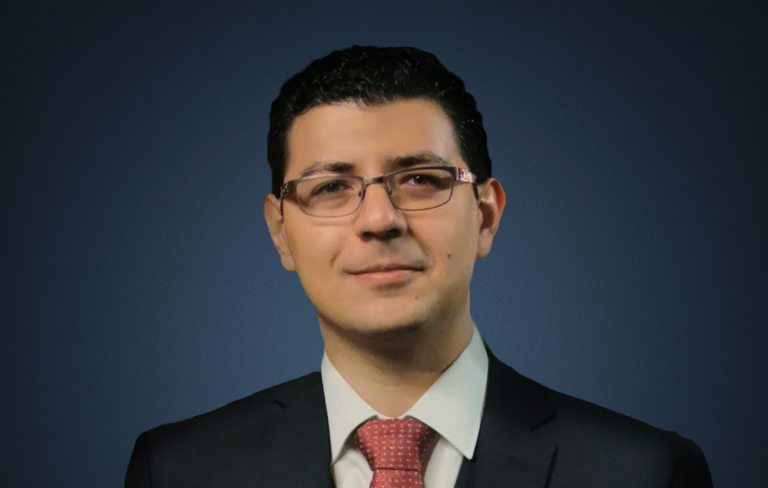
"It's good freedom, for sovereignty, for democracy to not have all the power concentrated in the national government. [...] There's an understanding of sovereignty that's really the core in this whole issue. I think sovereignty resides in the people and I think it should be very well distributed through various inst..."
This week's episode is another foray into the world of Próspera, Honduras' innovative Free Cities project.
This time, I'm talking to Jorge Colindres, who is Próspera's Technical Secretary, which is a role akin to the mayor of a traditional municipality. We spend time going into Jorge's responsibilities at Próspera and his opinions on the idea of the ZEDEs, Honduras' so-called Zones of Employment and Economic Development, which he considers to be the world's most advanced form of these kinds of special zones.
We also discuss tourism and the problems of political instability and the idea of the ZEDEs as a response to this instability as well as the notion of whether governments could ever shut down Próspera.
We talk about the most compelling arguments against ZEDEs and how they manifest in Honduras and whether Europe is actually a good place for this kind of Free Cities model.
Jorge finishes with some timeless advice for anyone wishing to replicate their model of governance and also how he sees the future of Próspera over the long term. I would like to say thank you to Jorge for taking the time out of his busy schedule to speak to me.
Enjoy the conversation!
Audio version
Read transcript
Use ¶ beside a passage to link directly to it.
Transcript
Timothy Allen: Okay, let us introduce yourself first. Your name and what you are doing here in Próspera.
Jorge Colindres: My name is Jorge Colindres. I am the Technical Secretary of Próspera ZEDE. That is a Zone for Employment and Economic Development. It is a new type of administrative subdivision of Honduras.
My role is basically to apply the laws of the city. My position is akin to that of mayor in a municipality. That is what we are doing. We are offering governance services that we think are more attractive to investors, to entrepreneurs, and even to residents. We are attracting investment with the idea of creating jobs and trying to take the country in a different direction, a better direction.
Timothy Allen: If your role is akin to a mayor, describe the difference between a mayor in the old sense and a Technical Secretary, which is what you are. What is the difference in the role?
Jorge Colindres: It really depends, from an international perspective. You have hundreds of models of governance. Here, the ZEDEs were designed to be governed through a trust. The Spanish word for the CEO of a trust is the Technical Secretary, secretario técnico.
Because the city is a political subdivision of the country, it is a jurisdiction alongside municipalities and departments. The CEO of the trust, the Technical Secretary, is the mayor of this municipality. The constitution recognises it as enjoying municipal autonomy.
Timothy Allen: Do you have any ceremonial role, like a mayor would? Is that something that happens in a city?
Jorge Colindres: Yes. ZEDEs have a big deal of autonomy to determine and establish their governance frameworks. In the case of Próspera, while the ZEDE Organic Law granted the Technical Secretary very vast administrative, executive and even legislative powers, we thought that we needed to democratise this and make it more, you know, establish a system of checks and balances.
So in Próspera we created a nine-member Council of Trustees. It is a legislative council. Most of the decisions and structures are defined at that stage. That is where we deliberate on legislative acts and policies, and then we move forward to implementing them.
Timothy Allen: Did your interest in autonomous regions, or semi-autonomous regions, start with Próspera, or was it something you had already had contact with?
Jorge Colindres: It started in 2010, when the concept was introduced into Honduran public opinion, or idiosyncrasy. I thought it was a great idea. I was studying law at the time and immediately in law school I could detect that we had very weak institutions, confusing law, and not very clear jurisprudence.
So the idea of being able to create a new zone within the country and adopt different policies, different laws, different institutions, institutions that work better for entrepreneurial activities and business, I thought that was a great idea.
By 2013 I co-founded a think tank with the main focus of deploying the ZEDE regime. I worked with government officials to try to deploy it, to try to interpret the different policies and lines within the law, what that meant and how it was going to be applied.
I also provided information to investors. I also worked with several of the first investor groups that came into the country to try to develop ZEDEs. I have been involved ever since. I joined Próspera in 2020, and in 2022 I became the Technical Secretary.
Timothy Allen: Where are you from originally?
Jorge Colindres: I am from San Pedro Sula, in the mainland of Honduras, Cortés.
Timothy Allen: Prior to working here, had you been to the island before?
Jorge Colindres: Yes. Roatán is very beautiful, but I had been here very few times because it is mostly seen as a tourism area. Frankly, I do not do much tourism. I do business tourism and I travel for business and work.
I have only been here a few times. I am actually very glad that what we are doing here is going to help, or is already helping, diversify the island's economy. Tourism is very risky, at least in Honduras, because of the reputation of the country. During the pandemic, that was a big issue. The tourism industry took a big hit and the islands suffered very much. Fortunately, 2020 was the exact year when Próspera started operating, so despite those challenges we were investing, trying to develop a services-export economy, finance, healthcare, education, real estate development and many other areas.
Timothy Allen: Other than the pandemic, you said you would consider tourism a risky endeavour here. Is that because of the situation in the whole country? This is my first time here, and obviously I have come straight to Roatán, but Roatán looks beautiful and everyone we have met is coming here on holiday. So it is obviously a big part of what Honduras means to foreign people and people who are visiting. Why do you think it could be considered risky? Pandemic aside, because that is very unusual.
Jorge Colindres: I think it is a great industry. It provides so many jobs. Próspera is also involved in the tourism industry. What I think is risky is being solely dependent on that one industry.
The reasons are yes, the pandemic, but also because Honduras has regular political instability, and that is a big challenge for the development of the tourism industry. Basically, bad press.
Timothy Allen: How does that affect what is going on here? Does that worry people for the same reason that it does in tourism? How does the general instability of the nation as a whole affect people in a ZEDE?
Jorge Colindres: ZEDEs are a policy that was specifically deployed to deal with these issues. That is the reason why they were deployed. Without the overall context, it would not have been possible for them even to exist.
What we are trying to do is respond to the imbalances that we see in the public institutions. Congress, back in 2013, and various political sectors thought: Honduras keeps having political instability. Every time there is a new crisis, this is really affecting our capacity to maintain jobs, attract more investment and get more people out of poverty.
So what they devised was a scheme in which we create these highly autonomous zones with top-level legal stability guarantees and protections, and also with the freedom to adopt international best practices for economic growth, investment and establishing businesses.
That is what we are doing, and I think it is working. Since ZEDEs were created, we have been through around five political crises. Since 2020 specifically, when we started operating again, there have been various political crises, but the city keeps bringing investment, keeps bringing jobs, and we are protected from this instability. That is also protection for residents, businesses and investors.
Timothy Allen: Do you think that makes the idea of a ZEDE less seductive to a country where there is not instability? I like the way you framed it. It is like they are a response to the fact that there is instability. Does that mean that in a country that is stable, there is less incentive to create a ZEDE?
Jorge Colindres: Yes. I think there is definitely less incentive. If you have good policies, if you have a legal and institutional framework that to a degree has created vast amounts of wealth and wellbeing, even with whatever challenges they might be facing, then sure, it is going to be harder to change all of that.
But here in Honduras, we had a crisis in 2009, another in 2012, another in 2017, another earlier this year. Everybody is conscious that we need to make a big change, but the question is: what is the change? Where are we going?
That is why I think ZEDEs are key. We are not forcing a direction on the whole country. What we are allowing is for Hondurans to partner up with international investors and, within privately owned land, create a new governance system to which people can adhere voluntarily.
I think that is a great way to push things forward. We do not force it on the whole country. We try out a different scheme in a specific place, and if it works out, then we will make it grow and the rest of the country can copy the policies.
Timothy Allen: Is that an important aspect of the whole notion of a ZEDE, the fact that it is an opt-in system? Around the world, governmental bodies are not famous for having opt-in policies, let us say.
Jorge Colindres: Yes. I think that is why I consider the ZEDE regime the most advanced legislation in the world in terms of developing these special zones.
We have already seen very successful zones in Asia and the Middle East, particularly in China and the United Arab Emirates, but these were zones that were pushed by the government, established by the government, and they worked great.
Here, we went a step further. It was not up to the government to designate a zone and say, all you people are going to live under this new scheme. It was more the government opening an opportunity for the private sector to come in and say: hey, government, this is privately owned land, nobody is living here, it is in a strategic location of the country.
Congress determined that the coastal departments were strategic, and these investors proposed to a governmentally appointed committee a new system of governance that would govern that zone. It would only be applied voluntarily to people who wanted to join.
The constitution says that if you want to develop a ZEDE in a highly populated zone, then you have to do a referendum in which the people agree. But if you do it in low-density zones, and Próspera has been developing low-density zones, that means there were private lands with no inhabitants.
The ZEDE Organic Law says that you need to do an Agreement of Coexistence, which establishes the rights and duties of the residents. That is what we have done. Everybody here has an Agreement of Coexistence. It says these are your rights and duties as a resident. They opt in. They like the system. They see opportunities and they want to be part of it.
Timothy Allen: Do you live here yourself?
Jorge Colindres: Yes. I live here, and my quality of life has improved greatly, mostly because of the climate. San Pedro is very, very hot. It is humid. It is a valley. Here, it is basically an island with the breeze and the sea in front of me.
Timothy Allen: Other than the weather, from a day-to-day perspective, compare and contrast living in your former city and living here.
Jorge Colindres: There are main differences, like weather and security, but those two are just because of the island. The island of Roatán is generally way more secure than San Pedro.
Public services are run differently here. I would say even more efficiently than in San Pedro. In terms of the ZEDE aspect of things, the biggest improvement has been in business development capacity and the ability to bring investment into the country.
I am an attorney. I have my own firm in San Pedro, and believe me, it is very hard. It is extremely hard. It takes months to get permits, to get bank accounts, and every time you try to bring a new investment into the country, there are differences in procedures. I was pretty frustrated with the situation.
Here, I can invest and bring more people, and they can get set up very easily, with very clear rules.
Timothy Allen: Why is it so much harder in the rest of Honduras? What is it about the system?
Jorge Colindres: Many, many reasons. But for starters, in Próspera we do things digitally. Believe me, we use commercial applications for electronic signatures and document management software. Just being able to do it electronically and digitally really reduces the cost and makes everything easier.
In greater Honduras, you still have to do everything physically. Starting a business, you have to deal with fourteen or fifteen institutions. You have to go five or ten times to each of those, so it is even physically extenuating to deal with all of that.
Timothy Allen: We have asked a lot of people we have been speaking to in Próspera this question, and most people have given roughly the same answer. I will be interested to hear yours.
What, for you, is Próspera? If you are explaining it to someone, I kind of know now because I have come here, but prior to coming here I had an idea of what it was, and actually most people who live here give me a different answer from what I thought it was before I came.
So what is it here? How do you explain it to your friends on the mainland or to someone who has never heard of a Free City or the platform or whatever?
Jorge Colindres: I think perhaps the easiest answer is that it is a semi-autonomous city with great rules for investment, entrepreneurs and residents. Most of the contextual problems you would find in greater Honduras, you will not find them here. But it is still in Honduras, so it is great, and everybody is welcome.
Timothy Allen: The next question everyone always has when we talk about Free Cities and semi-autonomous regions is: what happens if the government decides to shut you down? Is that possible? Could it happen?
Jorge Colindres: Legally, it is not possible. The state of Honduras granted to the ZEDE regime the highest degree of legal stability guarantees that a nation-state can grant. That was done through constitutional amendments, through statutory acts, through judicial rulings, through administrative regulations, through legal stability contracts, through international treaties.
So we have the highest degree of legal stability guarantees that any state can give. Legally, they cannot do that. Now, if the state were to act unlawfully, I think as Hondurans we are used to it. We deal with it, we fix the situation, and then we keep moving forward.
We are used to those scenarios. I am not surprised at all if the government does not abide by its own rules. That is a day-to-day thing. I think we are pretty well equipped to deal with those challenges.
Timothy Allen: Is it something that people who live and work here consider? Is it something they think about?
Jorge Colindres: Yes, of course. There is a very aggressive discourse from political factions against ZEDEs. Unfortunately, there are a lot of lies, and that takes a toll on our commercial relationships, and even on the emotional stability and wellbeing of workers and residents in the city.
But again, I think this is a great initiative. I think it is the only real opportunity that the country has to considerably start attracting great levels of investment and reducing poverty with outsiders. I do not think there is any sensible or viable strategy even in the works. So yes, those are challenges, and we deal with them and keep moving forward.
Timothy Allen: What is the government's take when it is against it, or when an institution is against it? What is the main argument against it?
Jorge Colindres: The main argument is that they say the previous government took parts of the country and sold them off to foreigners, and that basically foreigners are governing here. I entirely differ.
I am a Honduran citizen. I am the mayor. I apply the law. I am in the legislative council. Most of our residents, over 90 percent, are Honduran. There is also a Committee for the Adoption of Best Practices that supervises me and the ZEDE itself, and basically we cannot approve norms without the approval of CAMP, which was appointed by the president of the Republic and ratified by Congress.
Also, the judicial power has a role in the city. The city is not entirely autonomous. Again, we are subject to the constitution in all matters concerning sovereignty, international relations, issuance of passports and identifications, national defence, immigration. We deal with customs.
So I think it is empowering Hondurans to finally change the governance system of Honduras, but in a decentralised way.
Timothy Allen: Do you know what the most compelling argument against ZEDEs is? When I talk to everyone, I think to myself: yes, it makes total sense. It seems to be productive for everyone. But where do you genuinely have to fight a good argument against ZEDEs?
Jorge Colindres: It has a lot to do with culture, legal culture, and economic philosophy or understandings. One of the main arguments is that opponents feel there is a loss of sovereignty.
However, the way they interpret sovereignty is very telling of the predominant culture and thinking. They feel that any loss of power, attributions or faculties by the national government is a loss of sovereignty. Of course, to me that does not make any sense.
I think it is good for freedom, for sovereignty, and for democracy to not have all powers concentrated in the national government. When you create these systems of mass decentralisation, or governance features into a ZEDE, a local government, or by allowing the private sector to come into energy sectors, telecoms, public services, I think that is great.
But they feel that threatens sovereignty. There is an understanding of sovereignty that is really affecting this whole issue. I think sovereignty resides in the people, and it should be very well distributed through various institutions, including executive, legislative and judicial, but also in municipalities and ZEDEs.
However, this only affects a very minimum percentage of the population. This is the privileged class, actually. When you hear those arguments, it is in that context. For me, that is academics, journalists, businessmen, politicians, the privileged class. Most of the people do not care. They just want a job and investment. They do not go into all of that. But of course, this intellectual class, those are the ones in the media.
Timothy Allen: Are you saying that particular echelon of society considers sovereignty to be nation-state sovereignty? Is that what you were saying? That for them the notion of sovereignty is nation-state sovereignty, whereas for your average person, myself included and most of the people I have met here, sovereignty is about self-sovereignty and your ability to express yourself, create a business, be an entrepreneur, or whatever. Is that kind of what you are saying?
Jorge Colindres: Yes, correct. For example, I go into this debate with some prominent businessmen in San Pedro. I tell them: I feel very empowered. I am a Honduran citizen and I am participating in creating these new institutions and debating these new norms and policies that we are going to adopt here.
Then the counterargument is that no, we cannot give sovereignty away. I say, how are we losing sovereignty? They say, well, you are allowing them to make laws. I say, I am participating in the making of laws. Do you not want to participate in making laws? I think participating in creating a local government and creating new rules is an exercise of sovereignty. I feel more sovereign than ever before.
Timothy Allen: What does your average resident of a ZEDE, yourself included, feel about Honduras as a nation? There is a lot of misunderstanding there because most people at a surface level look at something like a ZEDE and say it is a country within a country. That was my initial thought when I first heard about it. So how do you actually feel about Honduras as a country?
Jorge Colindres: My feeling is that the most important thing is basic human rights: life, liberty, property, freedom of speech and many others. Those are not guaranteed in Honduras. I would frankly describe it as a dangerous place, because there is no rule of law and guarantee of human rights.
That is why I am mostly excited about developing ZEDEs, because we have created a framework with new institutions that actually have the capacity to guarantee these rights. Not only because they say it is good or because we are good people, but because we institutionally created the mechanisms for each of our residents to enforce their rights.
First of all, we have a contractual guarantee with each of our residents that they will enjoy, as a minimum basis, the amount of freedom enjoyed by a U.S. citizen under the U.S. Constitution, in accordance with the Supreme Court interpretation up to, I think, June 2018. That is a contractual guarantee. There are some exceptions to that, like obligations derived from international treaties or in the areas in which we are subject to the national government, but I am happy to receive that guarantee any time.
Furthermore, we also created a system of dispute resolution in which our residents can get into controversies or disputes with the city authorities and go to independent arbitral tribunals, either locally or in the United States. That is the International Centre for Dispute Resolution in the U.S., the American Arbitration Association. We also have the Próspera Arbitration Centre, with great arbiters, former judges. One was a former judge, a Supreme Court magistrate of the Arizona Supreme Court.
Whereas in Honduras, there is no judicial mechanism to hold the government accountable. Just as an example, if you want to take the government to court, there are only two courts in the whole country that have jurisdiction to know of that matter. One is in San Pedro and the other one is in Tegucigalpa. So you have 298 municipalities, and only in two municipalities can you get into a fight with the government.
I do not want to go too specific on this, but you have to go through one administrative procedure first. You used to have to pay a lot of money to be able to sue the government, and that was removed very recently, actually. A couple of months ago, the Supreme Court eliminated that article, and now people can sue the government.
But then again, it is the same political class appointing the Supreme Court, and there are matters of efficiency, credibility, impartiality and independence. So people do not feel protected. They just have to lower their heads and do what the bureaucrat says.
Timothy Allen: On a day-to-day basis in Próspera, what is the thing that needs resolving? Give me an idea of what that might be. Does it happen a lot?
Jorge Colindres: I think the biggest asset in the Próspera system is autonomy, even more so than its express legal stability guarantees on paper.
Because we have autonomy in regulating and authorising financial activities, healthcare, education and construction, we just do it. We exercise it. That is why we are developing Duna Tower. That is why Sean Paul is setting up a bank in Próspera. We are trying to develop a financial centre.
In terms of needs, I would say real estate and more infrastructure, because the island has a deficit of homes. I think that is also because of regulations and problems in the issuance of municipal construction permits and in the acquisition of land. There are many issues there. We make that easier, and we would like to speed up that real estate development to create more homes and more places, because we are bringing people to work here and they need a place to live and work.
The other main challenge is more financial infrastructure. There have been some challenges dealing with the national financial system because the ZEDE framework is new and has different norms. The discourse from certain political factions also makes the banks a little risk-averse. So I would say those two: more real estate development and more financial infrastructure.
Timothy Allen: For you personally, when you look around the whole area of Próspera, what excites you most? It could be something being built, or just the general freedom that you feel.
Jorge Colindres: Again, I think those two.
Timothy Allen: What is your favourite development or potential development?
Jorge Colindres: The first challenge or mission was to increase the scope of the ZEDE. When I joined the ZEDE, it was 58 acres. Then we started working on increasing that footprint, and now we are a little bit over 1,000 acres. I am very excited about that. It took many months, a lot of resources and efforts to make that happen, and we made it happen. I am very happy about that.
It is around 600 acres here in Roatán and 400 in La Ceiba. We have secured that. The next stage would be the developments.
For developments, there are many. Of course, Duna is a four-tower project. We also want to do another project that is more affordable. We want to do another residential tower here in Pristine Bay Resort, which was incorporated into Próspera. Those are very exciting, and I want to work to bring co-creators, co-investors and developers to help us develop this real estate. I think we have a very competitive system in terms of taxation, issuance of permits, and the types of designs and structures you can build here.
The other one is the financial centre. I think that is incredible. We have a bank that is almost ready to start operations. The Próspera Council just approved a new resolution to allow for the licensing of various fintech activities. I think that is really going to make a change, because financial services in Honduras are very limited and the service is not that great.
I want to convert Próspera into a place where everyone, but mostly Hondurans, can find alternative sources of credit and financing to develop their projects. Also, for guarantees in terms of foreclosing on mortgages and resolving disputes, it is also way easier to do in Próspera. If you create all these guarantees for the creditor, then it is easier to give out funds and lower interest rates. That is pretty exciting for me.
Timothy Allen: And the vision for the distant future of Próspera? When you close your eyes and think about it, do you know what it is going to look like?
Jorge Colindres: The key is going to be to solve the situation with the government so that we are able to deploy more ZEDEs across the country.
I am confident that Próspera will thrive, but how that would look is that you will have a very awesome place with big infrastructure and great opportunities, but in a very circumscribed area. Although that is great, and good for the country, good for us and good for everybody, the real vision is to deploy these types of zones all over the country, as was originally envisioned when the constitutional amendment was made, and as has happened in the United Arab Emirates and China.
If we really want to transform Honduras, one part is being able to deploy these zones. The other is showcasing to national stakeholders and national decision-makers that these policies work, so we can start adapting them at the national level.
I would really recommend, and I would love, for national authorities and experts to actually come study our system. It has broad experiences from all over the world, from the U.S., from Dubai, and I think there is a lot that the Honduran people in general can learn from what we are doing here.
Timothy Allen: What would your advice be to someone who was thinking of duplicating the ZEDE model in their own country?
Jorge Colindres: It really depends on the problems you are facing in your country. But one of the main problems, at least across Latin America, is bureaucracy and permitting.
So I would say, if you have to sacrifice some other areas in terms of autonomy or things like that, make sure you get that regulatory autonomy for authorising investment: the ability to authorise investment and tell a businessman or investor, go, you have a green light, create, develop, invest. That is the main thing. I think everything else can be a little bit more flexible.
Timothy Allen: Latin America, but what about Europe? We have a very specific set of governance problems in Europe, which I would say are different to here. My thought is that it probably is not something that would interest a lot of people in Europe, certainly not governments.
Jorge Colindres: Yes. With Europe, I have two comments.
One, when I have seen the governance structure in Europe, even in unitary states, European countries, at least Germany, Spain and some others, have a great deal of decentralisation. Switzerland has a great deal of decentralisation. That really allows for certain differences in policies and a bit of jurisdictional competition, and also for more general governmental efficiency.
Whereas in Latin America, you have states with perhaps even more population, but everything is so tightly concentrated in a very small amount of people that it causes huge socioeconomic problems. So I think that, because of the decentralisation that several European countries have, that part is a bit controlled.
Of course, Europe would benefit from some of these models, and they might start to look at it if we are successful here in Latin America and replicate it here.
However, my second comment is that I am frankly a little afraid of Europe. We are trying to do something great for our country, but sometimes it feels like their foreign policy may feel threatened. They expressly have these policies with the OECD and the Financial Action Task Force, where they feel threatened when these jurisdictions pop up and start pulling in capital from all over the world. They play dirty. They sometimes say this is money laundering, or this or that, but frankly it is just about tax-base revenue.
That part concerns me. How we have dealt with it is by keeping a high degree of KYC standards, a high degree of regulatory norms in the financial centre.
We have great experts at the Roatán Financial Services Authority. We have personnel from the U.S. Federal Deposit Insurance Corporation, from the U.S. Department of Homeland Security, from the Dubai International Financial Centre, and from the National Commission on Banks and Insurance of Honduras.
We are trying to create a safe environment, but what we are trying to do is pull in capital. I think that might raise the alarm somewhere else.
Timothy Allen: When you mentioned that you consider this model of governance to be the most up-to-date, the most efficient, I forget exactly how you described it, but the pinnacle of governance, can you talk about that relative to the governance models you see around you in the rest of Honduras? Where do they originate? Who do they serve? Why is the one that you are suggesting so much better?
Jorge Colindres: Do you mean the model of governance in the country?
Timothy Allen: The model of governance.
Jorge Colindres: Concentration of power is really the main issue. Right now, most of the powers of government in Honduras are concentrated in a 128-member Congress, and then in the executive function. Everything is concentrated and dispersed among national-level institutions.
I think that is very problematic. We have 298 municipalities and eighteen departments, but everything has to go through Tegucigalpa. It is a logistical challenge. Not everybody has access to this. If you need a permit for this or that, you have to go to Tegucigalpa. You tell somebody in La Ceiba, go to the capital to get that permit. That is very expensive.
So decentralisation is one thing. Here on the island, we are able to give out all these permits for various commercial activities. I think that is the main thing: being able to locally authorise these matters, and do it in a digital way, in a dynamic way. We can do it faster, with a lower tax pressure and with lower compliance costs.
We also create security. Security is also an issue that we are fixing here. I think the issue at heart is alignment of interests. The political class is thinking about political power, about remaining in power, and they have that party going on in Tegucigalpa. But the rest of the country wants to do different things: get a better education for their kids, get more healthcare, and all that.
Because we cannot force our policies on people, we are forced to attract them. That is what we are doing. Our incentives are to attract residents and investors by delivering what they need. Fortunately, we have the autonomy to do so.
Timothy Allen: What about security, then? What is the security model here, out of interest?
Jorge Colindres: Again, it is the same issue: concentration of power.
You have three institutions: the Public Ministry, which is the prosecution body; the Supreme Court; and the National Police. Those are the three main bodies. These are big institutions. They have their budgets, they have a lot of personnel.
Let us say you are a criminal mastermind. If you want impunity, what do you do? You only have to buy a handful of people. It is so concentrated that if you control the head of the Public Ministry, which is the prosecutors, or you control a couple of Supreme Court magistrates, or just the head of the National Police, then you are set and done. You can do what you want.
Whereas if you had a decentralised model, it is not as easy to control everyone. There are good judges, good prosecutors and good policemen, but if you put them under the control of people who do not have the best interests of the country at heart, then you have a problem.
What ZEDEs do is decentralise that function, sort of like in the U.S. There are state courts and federal courts. There are state prosecutors and federal prosecutors. There are fifty states. So it is very hard for somebody to operate in impunity everywhere. You might for a little while in a certain area, but if a corruption gets big enough, one of the many various independent institutions is going to get to you.
That is what we are doing. Our law-enforcement capabilities do not depend on this concentrated system.
Timothy Allen: One final question, which we ask everyone we interview. There is no right or wrong answer. Everyone gives something very different.
Imagine you are given a one-year sabbatical from this, during which everything is paid for, so you do not have to worry about earning a living. What would you devote your year to?
Jorge Colindres: Probably education. Education on good economic policy, rights, constitutional rights, and how to enforce them. I would love to do that.
Of course, if it is a vacation, I would also do other things. But if I could get a sabbatical, I would go into academic production and try to teach people what economic policies work, what constitutional rights are, and how we create constitutional systems that can actually protect us and allow us to thrive. I very much enjoy doing that.
Timothy Allen: Would you do it for Honduras or for the island?
Jorge Colindres: I would like to do it at the Latin American level. I think Latin America is really a place that needs it. But it is not only based on need. It is also based on need and potential. It has great need, but also great potential. So it is hard work, but also high reward if we are able to improve the governance systems in this part of the world.
Timothy Allen: Great. Thanks for talking.
Jorge Colindres: Thanks for inviting me.
Timothy Allen: Pleasure. Thank you.