
Liam Bates | Make Sealand Great Again
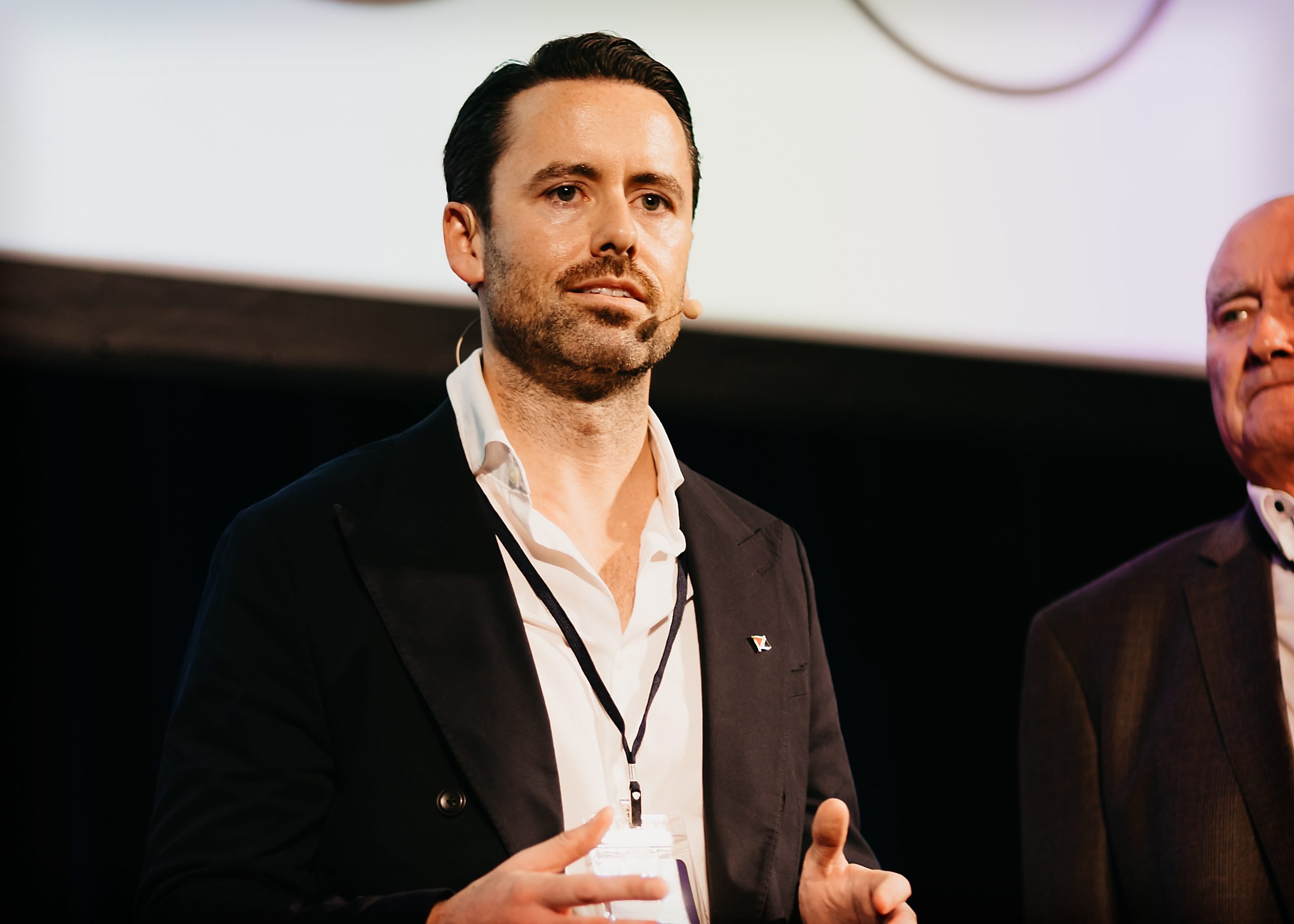
“We’ve lived this life. My dad has. And my grandfather before him. We’re sure of where we want to take it. It’s not just dreams. It’s grounded in reality. We’ve got a plan of how to get there. Now we just need to go and do it.”
Episode 179
Liam Bates is part of the Bates family behind the Principality of Sealand, the self-declared sovereign platform in the North Sea first occupied in 1967 by his grandfather Paddy Roy Bates. What began in the pirate radio era as a fight against the BBC broadcasting monopoly became one of the world’s longest-running experiments in independence, jurisdiction and building outside existing systems.
Timothy Allen sits down with Prince Liam Bates in Próspera for a conversation about the real story of Sealand: life on a former wartime sea fort, the legal case that shaped its claim to being outside UK jurisdiction, the 1978 coup attempt, and why Liam and his brother James Bates are now trying to take Sealand into a new phase through eCitizenship, digital governance, a possible Sealand DAO, and long-term plans to expand the physical platform into a larger offshore community.
Key topics covered
- Why life on Sealand was difficult, cold and physically demanding, and how that hardship shaped its culture
- How Paddy Roy Bates moved from pirate radio into a full sovereignty project in the North Sea
- The legal argument around Sealand’s claim, UK territorial waters and the court case involving warning shots at a British vessel
- Why Sealand still matters as an early example of opt-in governance and building freedom without permission
- The role of Radio Essex, pirate radio and the BBC monopoly in Sealand’s origin story
- What the 1978 coup attempt reveals about legitimacy, force, diplomacy and state-like behaviour
- How Liam Bates sees Sealand’s future through eCitizenship, online community, noble titles and a Sealand DAO
- The long-term vision for towers, reclaimed land, advanced manufacturing and a permanent offshore population
This episode is a rare look at sovereignty not as theory, but as something a family has tried to live, defend and pass on across generations. Sealand sits somewhere between micronation, legal anomaly, pirate-radio legend, network-state precursor and genuine governance experiment – and Liam Bates believes its most important chapter may still be ahead.
Enjoy the conversation.
Read transcript
Timothy Allen: I didn’t know a huge amount about you guys, and I knew about Sealand because it’s a bit of a myth in the UK, isn’t it? Everyone knows about it, but I’d never made the connection between what we do and what you guys are doing. So I had a bit of a dig last night. Not a deep dive, but I watched the 60 Minutes documentary, mate. It’s insane.
Do you know what I thought watching that was? You couldn’t get away with that now, could you? You know how polite everyone was?
Liam Bates: Yeah, I think there’s several parts to why we were able to get away with it. I think at the time it was kind of the start of that identity crisis for the UK. I think they were very nervous to be seen to be acting against people, you know, as the empire was kind of winding down. I think it was in that period. There were all sorts of places declaring independence from the UK, and they didn’t want to be seen to be using the military to remove my family. And my family were obviously very clear that that was going to be the only way that that was going to happen. I don’t think the UK had the appetite for it.
Timothy Allen: No. Just a word of warning, try not to bang the table. Unfortunately this is a hollow table, so just be aware.
No, I don’t know, I’ve noticed that when I watch old films now, especially news stuff, you realise just how different culture is now. Even if you take the extremes like woke culture and all that kind of nonsense, go back to that period in time and it just does not exist in any shape or form, you know. But so does a bunch of other stuff.
I was just watching. It’s your granddad who started it, right? Just the things he’s talking about, the way they’re discussing, and your grandma dressed up to the nines living on this thing. Presumably she kind of did that for the camera, I’m sure. What do you know about life back then?
Liam Bates: Life on Sealand then was very, very tough. They gave themselves a huge challenge, like you can’t even imagine. Everything had to be taken out there. Even when I was younger it was hard work. We would run the generator for 30 minutes a day. My dad would turn on the little black and white TV, you’d watch the news and then turn it off because you didn’t know when the next boat was going to come to give you more diesel. It was always cold. We’d have the little paraffin heater, but the paraffin had to be brought in, had to be carried down onto boats, on and off boats, lugging everything about. Every aspect of it was difficult.
A lot of those things have eased now with technology. It’s quite comfortable out there, but everything was done the hard way, literally everything. Part of that would have been done for the cameras, as you say, with my grandma, but my grandma did live out there with my dad. She was a very glamorous lady and she always used to brush her hair and do her makeup and all that kind of thing, even on Sealand, as bizarre as it is.
Timothy Allen: It’s things like that that show you how far things have changed since that time. Even the fact that your wife would go out and live there. Your average 21st-century wife would be like, no way, I’m not going out there. It’s so weird. I don’t know, it’s going to sound a bit weird, but I find the modern world a bit disappointing in that sense. Those kinds of things wouldn’t happen in the same way now. I was looking at it thinking, holy shit, that would not cut it now.
Liam Bates: Yeah, that spirit of adventure is kind of gone. You see it a little bit here in Próspera. Not a little bit, quite a lot, but that’s because people from all over the world who have that spirit of adventure are converging here. But you don’t really see it anywhere. I guess back in those days people were a lot more used to the adventure. They used to be sent off to war and those kinds of things. I think that was part of the thing that drove my grandpa to found Sealand. He was involved in the Second World War from when he was a very young man. He lied about his age, he signed up, he fought in the Spanish Civil War originally when he was a very, very young man, I think for the adventure. Obviously he fought all the way through the Second World War, through North Africa, the Middle East. Then I think he got back to the UK when the war was over and he was disillusioned with the UK that he saw, as I talked about, with the empire winding down and that adventure leaving the UK, losing its identity. I don’t think he was ready for the adventures to end, to be honest with you. So I think he went out and carved out his own piece of adventure.
Timothy Allen: I just think it’s audacious, the audacity to do that. I’m trying to think what the equivalent now would be. People’s risk appetite is nowhere. Like you say, imagine faking your age to go and fight for Keir Starmer or something. It’s not going to happen, is it? But you don’t even really want to get in a fight on the street anymore. We’ve changed in such a drastic way, and I don’t know, it’s hard to gauge whether it’s for the worse or not, because great things are happening in the world.
But I did a lot of travel before I did this. I did a lot of adventure travel, and you see the same thing. A lot of cultures you go to where they still live a little bit more so-called in the past, their risk appetite is completely different. Climb that tree, scale that mountain, cross that river. We’d be like, hold on a minute, let’s think about this. They’re like, no, let’s try it and see what happens. I want that back. I really do. I don’t know how we get it back because I think it takes a group effort. It’s like a culture.
Liam Bates: It’s definitely cultural. Yes, it’s a good question, how do you get that back? I think there are levels to it in the West as well. If you go to the US, their appetite for risk is still greater, probably more in an entrepreneurial way, which is the way it’s funnelled these days. But the appetite for risk in the UK and Europe has just absolutely been destroyed. I think that’s a governmental thing. I think society has been shaped that way. It’s a great shame because that’s why you don’t see the great companies coming out of the UK and Europe anymore. They all come from the US.
Timothy Allen: We should probably try not to make this a whinge about the UK because I do that too much. I’ve just been to something called Freedom Fest in the UK. Have you ever heard of it?
Liam Bates: I’ve heard of it.
Timothy Allen: I went there literally the day before I came out here. So I was interviewing Brits about Britain. God almighty. I’m the same. If you let me off the hook, I will just hate on my own country so much. That’s a terrible scene, isn’t it? It’s a bad thing.
Liam Bates: It is. I think in a way that’s why Sealand is more important than ever now, because it shows that spirit of adventure. It shows that there is an alternative route. You don’t need to keep going down this path of not believing in yourself, not standing up for what’s right and wrong. I think it’s a really important message, and I think it’s getting more important all the time.
Timothy Allen: The other thing I gleaned from watching that doc was that your granddad was trying to make it profitable. That’s the part of it I didn’t know about. I actually assumed it was an old quirky British thing and then it kind of stopped, but it didn’t at all. He was fully ideologically committed, wasn’t he?
Liam Bates: Absolutely. He had great big plans to develop Sealand, reclaim land around it, build hotels and all that kind of thing. It didn’t materialise in his lifetime. We’ve got plans for the future to do similar things, and I hope that we can achieve that. The early days were very difficult for my family. Everything was paid for out of their pockets. They gave absolutely everything to their dream, their cause, however you want to look at it. They lost their homes over it. They lost any jewellery they had, cars, anything. Literally anything you can think of, at times they sold everything and put it all into Sealand, time and time again. That was in my lifetime too, when I was younger.
Timothy Allen: Before we go into that side of things, what exactly was your role? Your granddad started it. Your dad grew up on it. Your dad and his sister in that documentary, like I say, once again something you couldn’t get away with these days. The kids would be like, no dude, I don’t want to live out here. Take me back to school or whatever. So what was your experience of it and how often were you there?
Liam Bates: I started going out there when I was probably three or four. My dad would start taking me out there, and then it was school holidays and all those kinds of things. We’d be out there.
Timothy Allen: Oh no, where are we going on holiday this year?
Liam Bates: Yeah, we never went anywhere else. So that was just how it was.
Timothy Allen: What was expected for you.
Liam Bates: Exactly. But it seemed normal, weirdly. I guess when you grow up with it from such a young age, whatever kind of environment you’re in…
Timothy Allen: I know, but in your granddad and your dad’s age, I can imagine it just being par for the course that Brits do weird things. But by the time you get to your age group, did the kids at school think you were weird and stuff?
Liam Bates: Yeah, because you didn’t have the internet or a phone in your pocket to pull out to show them. So they didn’t think I was weird, they just didn’t think I was telling the truth. You’d try and describe what you’d been up to over the summer holidays and they’d just look at you like, okay. Even the teachers, they were like, okay.
Timothy Allen: Really? They just didn’t believe you?
Liam Bates: No. When you think about it now, why would they, I suppose?
Timothy Allen: Yeah, exactly. How could you even explain it? It doesn’t explain very well, does it? Two hollow concrete pillars and a platform, and you can live inside the pillars. That’s the thing I didn’t realise.
Liam Bates: Yeah, they go pretty much all the way to the seabed. There are seven rooms down in those towers, so that’s where most of the space is. There are bedrooms, a gym, a chapel, all sorts of things down there.
Timothy Allen: What’s the weirdest thing that happened to you out there?
Liam Bates: That’s a good question. Lots of things. I guess one of the weirdest things I look back on is when my dad taught me to fire a shotgun at about four or five years old. I thought my shoulder was going to disappear.
Timothy Allen: Well, no one’s going to tell you off for the noise, are they?
Liam Bates: No, exactly. That might not seem too weird to people in the US, but obviously with the gun laws in the UK, most people in the UK haven’t even fired a gun.
Timothy Allen: But he was thinking, you’ve got to get into your granddad’s mindset here. He wasn’t thinking, I’m going to teach you how to shoot a shotgun. He was thinking, I own this place. I can do whatever I want. I think that’s a really core idea to get around. That’s something else that’s changed. If people did it today, they’d be much more timid about claiming that thing.
Liam Bates: Yeah, we’ve had it beaten out of us. We really have. That’s why I’m saying Sealand becomes more important by the day, to show people that these things actually do still go on. There might be an anomaly, but there are examples of the human desire for freedom and that spirit.
Timothy Allen: What does the government actually say about it now, if anything? Do you ever have brushes with bureaucracy still?
Liam Bates: No. The British government have pretty much, I think, taken a line of waiting for us to disappear. I suppose they thought maybe when my grandpa went that my dad would let it go, and then now that my dad’s handed it down to us, maybe we’ll let it go. But if you look back at the old government papers, the ones that have now been declassified and released, there’s a big effort to not engage with us, to just stand back, leave it alone and wait for it to die out, I suppose.
Timothy Allen: But if you think that we’re entering a new age, you’ll come back on the radar almost certainly. That’d be interesting. You’re not outside, you’re still in British territorial waters, aren’t you?
Liam Bates: When my grandfather claimed Sealand, it was in international waters, but then the UK extended their territorial limits to 12 miles. Most people argue that the UK has then claimed Sealand or whatever, but in actual fact, because our claim predates that, there’s a median line drawn between overlapping claims. You can see this all over places around the world. You can’t just claim new territory because you’ve extended your international waters. There are several parts of international law that guarantee that that’s grandfathered in.
Timothy Allen: Has anyone tried proving that in court or anything? Have you had any legal battles?
Liam Bates: Not since the UK extended their territorial waters, but before that, yeah. It was pretty early on. A British naval vessel was kind of forcing its way towards Sealand, testing the limits and seeing how we would respond, and my father fired a pistol across it, emptied his magazine across its bow to give it warning shots. It turned and left. When he returned to the UK, he got hauled in front of a judge, him and my grandfather, and the judge eventually found that the UK had no jurisdiction. There was nothing they could do.
Timothy Allen: See, that’s something I wonder whether would still occur today. If you fired a… I don’t know, I just think the state has got more audacious. I don’t know whether I can quantify that with truth in this particular instance, but that would make the news. Whereas back there, there was that kind of politeness amongst British people, that high-trust society type thing where the guys driving the ship are like, well yeah, we’re doing something wrong. Whereas now it’s like, no, we run this place and we can do whatever we want. That’s the impression I get. I don’t know whether it would play out like that in real life, but it’s a feeling.
But if you have plans for Sealand now, I see a similarity with Liberland, in fact. It’s at the wacky end of the free city spectrum as well, but it is a sovereign place. In the grand scheme of things, you’re right at the self-sovereign end. You’re right at the absolute sovereignty end, which is the most dangerous one.
Liam Bates: Yeah, for sure.
Timothy Allen: To be honest.
Liam Bates: Yeah, and from that perspective we have to look after ourselves. We’ve had several incidents of people trying to take Sealand over. So you have to be your own police force. You have to be your own military. You’re literally responsible for yourself.
Timothy Allen: Is someone on there 24 hours a day?
Liam Bates: Yeah, usually at least two people.
Timothy Allen: Really?
Liam Bates: Yeah, they’re guarding it and maintaining it.
Timothy Allen: Who are they?
Liam Bates: One of the guys has been with us for a really long time. He was involved with pirate radio from when he was a teenager, so he’s never really left that space, if you think about it. As one developed into the other, he’s never really left that space.
Timothy Allen: Is he still broadcasting from Sealand?
Liam Bates: No, no. He’s still very enthusiastic about his radios and things like that, but no, he doesn’t broadcast anymore. He’s a real quirky character. He’s seen everything.
Timothy Allen: Is he just a friend of the family or someone who showed an interest? Is he an employee or does he fund himself?
Liam Bates: No, he gets paid. We pay him.
Timothy Allen: And who’s the other person?
Liam Bates: He’s someone that’s been with us about 15 years now. I forget exactly how he became involved. I think he liked Sealand and it became apparent that he would be suitable to that life.
Timothy Allen: What do they do on a day-to-day basis?
Liam Bates: Maintenance mostly. The place has always been battered by the North Sea, so we need to keep painting it and maintaining it.
Timothy Allen: Crazy. I don’t know how much you know about Liberland. Have you looked into Liberland quite deeply? Because it has so many similarities, actually, even in the idea of expanding something over water. Quite wacky, quite legally weird. Hard to know what might go on.
I’ve been out to Liberland a few times and they’ve got Zaha Hadid Architects to draw them up. That just shows you what some people think. When I go there, I’m thinking, oh, a few little houses would be really cool here. Then you get someone coming in like that saying, no, we want to build Singapore here and we want it to be on pillars, concrete pillars in the water and all this kind of stuff. So what are your plans for it? What have you been thinking about recently?
Liam Bates: We’re currently building out the Sealand eCitizenship. We’ve got thousands of eCitizens that actually pay monthly to Sealand. I think they truly believe in what we’re doing and what we’re trying to build. We’re building that community out. We’ve got quite a big global community also. We’re followed by about 1.5 million people online now.
Timothy Allen: Really? On what, social media? Or on your email lists and stuff?
Liam Bates: On social media. We’ve got a big email list and everything, and lots and lots of noble title holders of Sealand, but that’s just the social following. We’re building towards launching the Sealand DAO. Essentially we’ll be handing over a lot of the governance decisions to our community, and that’ll be distributed so they can still be a part of Sealand from wherever in the world they live. Sealand eCitizens are in, I think the last time I checked, 124 countries.
Timothy Allen: Are you ready for the politics? Life is probably hard, but at least it was simple. You wait till you get 1.5 million people voting on every single thing you want to do.
Liam Bates: Yeah, we’re going to try and keep it as streamlined as possible so it doesn’t get bogged down. There have been a lot of DAO projects that have failed for those reasons, where the granular decisions are voted on and then people get exhausted from all the voting. We’re going to make sure that we cut through that and take a lot of the lessons.
Timothy Allen: The Veritas Villages guys have got an interesting one. I think they’re building on top of Bitcoin, but they’ve got weighted voting. Each member gets 100 votes a year, so you can choose. If it’s something you really care about, you can pop all your votes in one go. Otherwise, I find that with those kinds of votes, how do you decide? Is it 50 or 75? How many people do we need to agree with one of these things?
Plus, I’ll be honest, your granddad had a vision that probably no one else had. The average person that signed up online probably is not as invested, and you can make flippant decisions. I think that’s true of the whole democratic system in general. I don’t think everyone should be voting on things, to be perfectly honest. What do we know? I know about my local community, but what do I know about other things?
Liam Bates: That’s so true.
Timothy Allen: Have you got any plans to build stuff on it?
Liam Bates: Yeah. We’ve been talking with a really well-respected marine architect, a marine engineer in the Netherlands, Waterstudio. I don’t know if you know Koen or have come across him.
Timothy Allen: No.
Liam Bates: He’s given us several designs for what Sealand could look like. I guess the one that we love is two really tall towers coming out of the sea fort, and you’ll be able to invite people to actually live there, to grow the physical presence.
Timothy Allen: What does that mean? How deep’s the water there?
Liam Bates: It’s about 30 feet. It depends on the tide, but probably an average about that.
Timothy Allen: So you can still sink pillars down? I’m just trying to think through how they did it originally. How do you put concrete pillars in the sea like that?
Liam Bates: It’s not actually anchored to the sandbank. They built the fortresses inshore on a concrete barge, literally built them at a shipyard, towed them out and then sunk them into place on the sandbanks.
Timothy Allen: Oh right. So they could go underwater potentially? Not that this is going to happen, but if the water rises too far, it’ll stay. It’s sinking, is that right?
Liam Bates: No, it’s just sitting on top of the sandbank.
Timothy Allen: But if the water went up, it could actually flow over the top.
Liam Bates: That’s how you work out how to do it. You basically build it tall enough that it’s never going to run.
Timothy Allen: So how would you build on that? How does an architect design things around that?
Liam Bates: We haven’t seen his in-depth plans because he’s just done the high-level ones. He needs to do a load of investigation and engineering designs, but it would be piled into the sandbank below where Sealand currently sits.
Timothy Allen: New pillars?
Liam Bates: Yeah, but we would want to ensure that inside of that we keep some of the old structure, or quite a lot of it, because it’s part of the history now. It would be such a shame to lose all that.
Timothy Allen: Have you looked much into the seasteading world as well? You’re quite aligned with them.
Liam Bates: Yeah, we know quite a few of the guys that are involved in it. It’s been going on for quite some time. Their designs and ideas really vary, so it’s really interesting.
Timothy Allen: The only problem with Sealand is your location. Your average seasteader probably wants to live on a reef somewhere.
Liam Bates: They all do so far.
Timothy Allen: Which is sort of the crazy thing about Sealand and one of its main problems. It’s the North Sea, right?
Liam Bates: You could see that as a problem because if you were going to design where you maybe would want to live day to day, you would think French Polynesia and places like that for the weather. But in actual fact, if you want to be connected, we sit right at the intersection of the Netherlands, Amsterdam, London, Paris. Strategically, it’s a really important place. It’s in that blue banana corridor of Europe. So I think that’ll be important going forward.
Timothy Allen: So you really are thinking about proper plans for it?
Liam Bates: Yeah, absolutely.
Timothy Allen: Talk to me. Say in 30 years’ time, what do you imagine might be there if things go according to plan?
Liam Bates: Originally we want to build the towers, but then after that we want to reclaim more and more land, build the community out, have advanced manufacturing and things like that. That’s the real future.
Timothy Allen: What do you mean, like dropping boulders onto the ground and building up land? When you say reclaim land?
Liam Bates: There are lots of ways of doing it. You can sheet-pile a perimeter and then backfill it.
Timothy Allen: Oh shit. So a proper island?
Liam Bates: Yeah, exactly.
Timothy Allen: How does that work legally? When you claim a bit of land like Sealand, do you get six miles around it or whatever? What would the law say about what you’re doing compared to what everyone else is doing on the planet?
Liam Bates: We have our territorial waters. It’s not just the fortress that you see, so we would be looking to extend into those.
Timothy Allen: What are they then?
Liam Bates: Twelve nautical miles, really, but where the overlapping claim is with the UK, you draw a median line.
Timothy Allen: What happens when you extend your boundary? It doesn’t extend your territorial water? Say you eat into your territorial water with an island. What happens then?
Liam Bates: No, it doesn’t. But then you get into these big questions around international maritime law, with China building these artificial islands to claim vast areas of the South China Sea. I think a lot of those questions come back to how well you can defend your position. The more you dig into international law and sovereignty, the more you realise it’s a nuanced grey area all over the place.
Timothy Allen: Talking to the Liberland lot, I’ve interviewed all of them over the years. One of their strategies is getting diplomatic acknowledgement from other countries. They’ve had marginal success. I think Argentina, and they’re good at getting high-profile things done. Have you ever gone down that route?
Liam Bates: No. I know that in the early days my grandfather used to speak with various African countries and things like that. I’ve read old letters from foreign offices and things like that communicating with my grandfather. But these days it’s not the direction at all that we’re trying to push in. I think the UN system and the old nation-state ideas don’t really align very well with what we’re trying to build. We’re trying to build more of an opt-in community, an intentional one. I think the old system is slowly decaying more and more.
Timothy Allen: Agreed. The question is over what timescale and whether or not, I would guess, if you started dropping boulders and backfilling land and all that kind of stuff, they would probably have to do something about it, or at least be seen to be doing something about it.
Liam Bates: What though?
Timothy Allen: I don’t know. Fortunately, you’ve been working on the community for how long now?
Liam Bates: Next year will be 60 years.
Timothy Allen: Sixty years. So you’ve got a number of people. Have you got high-profile backers and stuff?
Liam Bates: Some, yeah. There are some pretty high-profile YouTubers these days, I guess, who would be the most relevant ones.
Timothy Allen: I saw someone. Someone went out there, didn’t they?
Liam Bates: Yeah. To be honest, we get requests all the time from YouTubers and the press and everything. Most of the time I say no to the press these days. We do sometimes still take them out there, but it’s not really the way to connect with your audience, I don’t find. YouTubers tend to go out there just with a curious mind, whereas the press usually want to put their own slant on it, or they’re less curious and more narrative-driven.
Timothy Allen: Yeah, they’re certainly creating the story. Próspera has done well out of the YouTubers recently. They had exactly the same thing. They had absolute shit-show coverage for the first many years. Recently, everyone who came here, a lot of the YouTubers were expecting a kind of hit job of their own in a way, and I don’t think any of the YouTubers have done that. They’ve just come here and gone, ah, because they’ve understood the principles, seen what’s going on, and met the people actually doing it.
Liam Bates: That is the way to do journalism. It just shows how far we’ve gone.
Timothy Allen: Something I loved about that 60 Minutes documentary as well was that originally, talking of radio stations, they only allowed rock and roll music for one hour a day, was it? So they just thought, right, we’re going to go and have a radio station outside the UK waters?
Liam Bates: From my understanding, because my dad talks a lot about this, it was one hour on a Sunday when they would play the Top 20. That doesn’t just mean you’re not getting access to the music, but you’re not getting access to open information either. You would literally just have the BBC, that single channel giving you your news, and that was the internet of the 60s. Complete dominance and monopoly over information. That’s the big reason that my grandpa got involved in pirate radio. He hated that restriction.
Timothy Allen: Which station was it? It wasn’t Radio Caroline, was it?
Liam Bates: My grandfather’s one? Radio Essex. Then it became Britain’s Better Music Station.
Timothy Allen: Caroline was on a boat. What was the other one? Radio Luxembourg?
Liam Bates: Yes, but that was further out.
Timothy Allen: Have you seen that film The Boat That Rocked, by the way?
Liam Bates: I’ve actually not watched it.
Timothy Allen: Haven’t you? It’s a great film, mate. Regardless of the storyline, it’s just a really enjoyable film. I’m really picky about films, but it’s really enjoyable. I was talking about it with someone the other day and I couldn’t remember whether it was based on real events or whether they just…
Liam Bates: I think loosely.
Timothy Allen: Loosely, yeah. Radio Caroline probably, but they don’t talk about it in terms of it actually being that radio station. But one hour a week, the charts. You can’t imagine it now. It’s so hard to even try and describe that to a young person today who has access to absolutely everything at their fingertips on their phone.
Over the years there have been a number of ways to try and monetise the place, right? I saw some data centres. Ironically, the things that have been tried there are all things that are happening in the free city space. They are people who basically need to do something and they’re struggling in their homes, in their nation state or whatever. It’s so weird, isn’t it?
Just before I spoke to you, I’ve just been interviewing a lady from Brazil with this place. Have you heard of Ipa City?
Liam Bates: Yeah.
Timothy Allen: That guy built that 45 years ago.
Liam Bates: Really?
Timothy Allen: Yeah, he built a privately run city 45 years ago. They just didn’t know. If he’d been doing it now, he would have been doing this basically.
Liam Bates: One hundred percent.
Timothy Allen: These ideas are… I take it you’ve fallen into this world for the same reason. You think we’re at the cusp of a bit of a change, do you think?
Liam Bates: Yeah, absolutely. That’s what drives us. That’s why we’re still so enthusiastic about it. I think we always have been with the message and the culture we’ve built around it, but I think that’s the thing that we really know is going to be the future of Sealand and the way we want to take it. It is crazy to see the emergence of this culture and the way it’s growing, and the interest around these ideas of network states, intentional communities and all those kinds of things. We went to the Network State Conference in Singapore in October. My dad doesn’t really come to many of these things, but we took him to that one, and he could not believe that thousands of people were in this room all the way in Singapore to talk about essentially the same things he’s been doing for 60 years.
Timothy Allen: What’s his backstory then? To be compelled to do that is one thing, but then to want to continue doing it is quite a big thing. Would you call him a libertarian? Or he just didn’t know it? Back then before the internet, a lot of these ideas weren’t quantifiable. You wouldn’t label yourself something because you’d literally never heard of the term.
Liam Bates: I think that’s exactly true. I was talking to someone about that just yesterday. They were asking me if I’m a libertarian. I said, well, I’ve always grown up that way, but I’d never heard the term until I went to the US. They said, would you describe yourself as a libertarian? And I was like, tell me more about that term, because that’s not something you ever heard. Now, as you say, with the internet and this growing movement, you hear about that kind of thing all the time. But you just live it without realising that you’re that thing.
Timothy Allen: You don’t even need to put a label on it. The other famous free city in Honduras, Morazán, on the mainland, the only people living there are blue-collar workers from Honduras. For all intents and purposes it’s a libertarian city when you actually look at the way it runs, but they don’t know that. They just know, and this is the mantra for this industry, that they want to live somewhere better. That better means freer. A lot of people don’t make that connection, but eventually I think everyone does.
I’m just trying to get inside your mindset. As you grew up, did you realise that you probably think very differently to other people? I’ll give an example. I grew up typical middle class, on an estate, and as I got older, I earned a bit of money and I bought a farm. It took me a few years before I realised my zone of ownership started getting bigger and bigger. Now when I go to cities, or even staying in buildings like this, and I realise there are people sleeping all around here, I realise how my mind has changed. I’m just wondering what happens when you have it from a very young age. Did you realise you were thinking differently? Has it affected the way you live now, do you think? Obviously you’re in a place like this, so you believe in freedom, but then so do a lot of people.
Liam Bates: I don’t think my mind has really changed much on it. I suppose, am I a product of my environment with that? Yeah, probably. The more I’ve read into libertarianism and holding governments to account, and the argument between the state over the people or the people over the state, it all seems so obvious. In all the big ways that these different things have been tried out over the last hundred or so years, the results were always the same. The freer countries end up with the much better results. It speaks for itself. I find it truly shocking that people want, as mainstream politics in the UK and US now, to try and redo the things that have murdered tens or hundreds of millions of people over the last hundred years. I just find it shocking. There are still real-world examples of these things, Venezuela, Cuba. Just go and have a look.
Timothy Allen: It’s the ultimate red pill, actually, for me at least, because it took me a while, realising that the state is not necessarily a good thing. It’s weird when you start entertaining those thoughts, because to begin with you feel quite dangerous. That’s one of the biggest ideas that lives in the subconscious of people. I even find myself arguing on behalf of the state without realising it quite a lot, because you just expect it to exist.
That’s why I was asking you about growing up being told that you can do literally pretty much whatever you want, apart from what your mum and dad say you can’t do. Essentially, on this place, no one is going to come in and tell you, apart from your mum and dad, which is obviously the correct way to do it. It must be pretty bloody amazing. Did you go to school?
Liam Bates: Yeah, I went to school.
Timothy Allen: That’s where most people get it beaten out of them, don’t they?
Liam Bates: Yeah, for sure. You get taught to conform. But I think having Sealand there balanced that out, so I was still able to be a well-adjusted person, to go about your day-to-day life, but still with those strong ideas in my mind.
Timothy Allen: What’s the longest you’ve stayed on there in one go?
Liam Bates: About three weeks, maybe more.
Timothy Allen: Do you get cabin fever at all?
Liam Bates: No. When I was young it seemed like a long time. I guess your perspective is completely different. These days it’s so comfortable out there. You have the power on all the time, so we have the wind and solar generating power for us, and we have Starlink for the internet. So I end up doing pretty much the same things there as I would do in the UK or anywhere else.
Timothy Allen: Am I right that you run a fishing business normally?
Liam Bates: Yeah. In the UK we have a company. We manufacture and export canned shellfish. It started out with my dad. My dad got the fishing boat because we needed to keep Sealand going. We needed to generate some money. So he had the fishing boat and that’s been in the family, and my brother and I got involved with that as well. We scaled it to manufacturing and export.
Timothy Allen: You’ve got a load of boats now?
Liam Bates: We have boats in several locations around the UK, and then we buy from other boats and people who hand-rake shellfish and things like that all around the UK coast.
Timothy Allen: And can it yourselves?
Liam Bates: Yeah, we can it close to Southend-on-Sea, and we export pretty much everything to Spain.
Timothy Allen: Given the opportunity, would you give that up and devote your time to Sealand?
Liam Bates: I’ve devoted more and more time to Sealand over the last few years. My brother and I run everything together, the manufacturing business and Sealand. We plan everything together and pretty much have always done everything together. He’s taken over more of the manufacturing business, which has given me some time to devote to Sealand.
Timothy Allen: What about your dad? He’s been retired for a long time now?
Liam Bates: No, there’s no retiring really. But more and more he’s given James and me the opportunity to handle Sealand affairs.
Timothy Allen: Did he ever have a career, or was Sealand his business as well?
Liam Bates: He left school at 14 to help my grandfather found Sealand. He was the one that did pretty much all of the defending, the invasions in the early days, the coup d’état, all that stuff. That was all my dad. Him and my grandfather always had a business in the UK. It was kind of like a fishing business. They were doing exports at the time as well with the fishing business. But that, again, was literally to fund Sealand. Everything they did there was to fund Sealand.
Timothy Allen: It’s like having a vintage car or something. You’re always tinkering on it, but it’s just a money pit.
Liam Bates: Yeah. Sealand didn’t become self-sustaining until about 10 or 15 years ago when we started offering noble titles to the community. It was only really the internet that enabled that. We knew that we had support around the world, we knew that people were really curious about Sealand, but when we started offering those noble titles and more recently the eCitizenship, we realised just how big that community is.
Timothy Allen: We better go into that then. I know what the noble titles are because one of our employees got one the other day. Natalie got Duchess of Sealand. In real terms, if in the future it became recognised and Sealand becomes a recognised place, will these titles be something real? Or is it a bit of fun?
Liam Bates: They’re symbolic. We’ve talked about ways of including them in the governance, to make sure that they’ve got some recognition as we move towards the DAO. I think that’s important. They’re people that have literally given their money to help sustain Sealand. I’m sure there are all sorts of reasons why people buy them, but I genuinely think that most people buy them because they like what we’re doing and they think we should exist, and they help fund it.
Timothy Allen: With e-residency, for example, there’s a genuine use case. What’s interesting in your case is you can offer e-residency and you don’t even have to ask anyone. How does it work? Say I incorporated my company. Can you do stuff like that yet?
Liam Bates: That will be part of the DAO that we’re building towards.
Timothy Allen: But say I incorporated my company in Sealand. How would that work when the British government says, say I live outside of the UK or something and I’ve incorporated in Sealand, so I’m not paying tax, or I’m paying tax to you guys at a really low rate, and the government says, come on, we want your tax. I say, sorry mate, I’m a Sealand resident, I’ve incorporated in Sealand. How does it work when there’s no official documentation? It would bring it to court, right?
Liam Bates: They could bring you to court in the same way they bring people to court if they incorporate anywhere in the world and they want to try and bring you back under their jurisdiction.
Timothy Allen: Mostly you incorporate in a real place. You incorporate in the Cayman Islands or something. They recognise the Cayman Islands. The problem with Sealand is it’s not recognised.
Liam Bates: It all falls under private law, private contract law. So it’s all doable. How defensible it is will depend on the country that takes issue with what you’re doing.
Timothy Allen: It’s phenomenal thought. Have you spoken to the Próspera lot about the way, because they’ve got a platform ready to go.
Liam Bates: We’ve talked to them, not that deeply, but several of the things they’re doing here, like the dynamic ways you can choose the laws that apply to you, are really, really interesting.
Timothy Allen: It’s the perfect place to apply it, except that you’ve got this problem of acknowledgement by other countries. It’s a weird one. Liberland, according to me at least, has reached a plateau. But here’s a funny realisation I came to last time I was there. At Liberland, they have this bit of land called Gornja Siga, which is the disputed land where Liberland is, where they’re trying to settle and the police are always kicking them off. But over in Serbia on the other side of the river, they bought an old holiday camp, and that’s where they base themselves because they get left alone. What you realise is that that’s Liberland, the place in Serbia, because the flags fly there and everyone’s living there. It’s only when they go into that bit of disputed land that the problems start. Then you realise, okay, Liberland is all over the place. You’ve got this in a very extreme case, 1.5 million people living all around the world who consider themselves involved in this, and there’s your network state. What that means is hard to say at the moment.
Liam Bates: It seems like a movement that’s emerging and emerging quickly. You look at the space, you go to these conferences, and every time there are more and more people, more people trying to start the projects and more enthusiasm for them. The internet has really brought about the possibility to do that, to form online communities that are made with intention. It’s all opt-in. You’re not just coerced by the place you happen to be born in to live under their laws and their rules and their customs.
Timothy Allen: What do you think about the fact that my view on the network state side of things is that it feels less effective at the moment because it’s easy to opt in. You just click a button on the internet, so in a way your commitment is much lower. Do you think there’s validity in that or not?
Liam Bates: It’s hard to say. It’s got a long, long way to go. I’m really interested in the idea of it. I think where Sealand is different, and where Sealand becomes the only real viable network-state-type project, is that we actually have the sovereign claim. The whole thesis around the network state is that you’ll be able to gain sovereignty in the cloud, but we’re still flesh and bones and we need to live somewhere. You’re only ever going to be able to solve half of the puzzle that way, whereas Sealand can address both problems at the same time.
Timothy Allen: Or at least I think the network state people believe they will form the physical place after.
Liam Bates: Yeah, if they can get the community big enough, if they can get half a million people to say, we all want to move somewhere, and have a referendum, maybe there’ll be a country that will welcome that. But right now that’s a long road to get yourself to that.
Timothy Allen: How long has it been since you’ve shown a new interest in making things happen? Is it the last couple of years?
Liam Bates: Over in Sealand, yeah. I would say that James and I have been given the reins by our dad in the last couple of years. That’s where we’ve really tried to drive the community growth and the new direction forward.
Timothy Allen: What does your dad think about it?
Liam Bates: He loves it. He knows that obviously we’re the future of it. When I tried explaining the ideas of where we want to take it, he kind of looked at me like, okay. A lot of these ideas of rebuilding it have been tried and all the rest of it. But taking him to things like the Network State Conference and seeing the interest around this stuff now, I think he thinks it’s doable.
Timothy Allen: There are people building cruise ships for more than two billion dollars. You could grab a load of stone and drop it in the ocean. People create islands all the time. The engineering thing is nothing. Getting the money might be a problem, because the risk appetite for things like that, especially off the coast of the UK, I don’t know. You’re going to need someone with vision, because they’re going to come up against a lot of problems. But the engineering thing is nothing.
There were a couple of guys at the conference this year who were thinking of doing islands off the coast of North America and putting data centres on them, funnily enough. It’s because you’ve got access to water and cooling and all this kind of stuff. What are the main business ideas at the moment other than generating e-residency and titles?
Liam Bates: The main idea is to create and launch the Sealand DAO. That will allow things like company incorporation, arbitration and start building out the economy. Right now the economy is the noble titles and the citizenship, but we’re going to build it out to be a lot more functional and have much broader utility.
Timothy Allen: Do you know what I love? It’s just that you’re not asking permission. It’s so funny. That’s the only way you can drive change though, isn’t it? You can’t ask to do anything. The world is regulated. They tell you no, so you just have to go and do it.
I agree, I don’t think it’s the only way because I notice with a lot of these projects, and I’m not saying Sealand fits this category, but you can do a deal with a government which is a bit of a Trojan horse. They just don’t really get it. We get it, they don’t. They see something that you don’t. I think Bitcoin is a bit like this. It’s a Trojan horse, because it takes strength away from the people that don’t really understand it.
I love the fact that you could just create a legal framework for incorporating your company in a country and not ask anyone. Because really, anyone should do this. The fact you’ve got an actual place is great, but you don’t even need that, do you?
Liam Bates: No, you don’t, because it’s all digital. Most of the network state projects are just digital projects. But I think the fact that we do have the physical space and we do have the 60-year history and the culture generates a lot of trust. I think that’s also going to be one of the differentiators going forward. There’s a lot of nerves around crypto projects and network state projects, that there’s going to be a rug pull at some point. But my brother James and I are the third-generation custodians of Sealand. This is our life, and it was my dad’s life, and his dad and my grandma’s life before that. I think that generates a trust that you can’t really have.
Timothy Allen: Have you got kids yourself?
Liam Bates: Yeah, I’ve got two sons.
Timothy Allen: Has your brother got kids?
Liam Bates: Yeah.
Timothy Allen: Four?
Liam Bates: Yeah, he’s got two boys and two girls.
Timothy Allen: That’s all right. You’re getting a bit more of a population.
Liam Bates: My boys are too little right now. They’re babies. But my brother’s boys are a bit older now. They go out for the summer holidays. They’re kind of being brought up in the same way that James and I were, going out there for the school holidays and that kind of thing.
Timothy Allen: It’s interesting, because one of the problems you see in farming is that for many generations farmers became farmers, became farmers, became farmers. Now you see the draw of the modern world, and farmers don’t want to be farmers anymore. The new generation are coming through. That’s almost a surprise that your kids, maybe they’re too young, or at least your brother’s kids. How old is the oldest? Are they teenagers yet?
Liam Bates: No, 11.
Timothy Allen: They might rebel against it, who knows. According to you lot anyway, the future, have you got any plans to go down the route of data centre type stuff in the meantime, before you would do renovations? Those kinds of offshore projects that you see cropping up a lot in these kinds of places.
Liam Bates: Potentially, I’d be open to it, but it’s not part of our plan right now.
Timothy Allen: So you think you’ve got a robust plan to be profitable into the future?
Liam Bates: Yeah, absolutely. Things like data centres out there, once we reclaim more land, then absolutely. That’s exactly the type of thing we’re going to be looking at.
Timothy Allen: When do you start reaching out to wealthy people to create islands and stuff like that? When does that happen?
Liam Bates: This year. We’re going to be starting to talk to people this year.
Timothy Allen: Wow. So what’s your plan? Have you got this written down?
Liam Bates: Yes, it’s mostly done, the plan. We’re going to start reaching out to people probably in the next six weeks, I would say. We’re just finalising a few things. We’re going to announce what we’re doing, then start building the tech and then launch the DAO.
Timothy Allen: What about physical structures and stuff like that? Is that something in the distant future?
Liam Bates: The first thing we’re going to do is upgrade some of the infrastructure to get on and off Sealand, so that we can take larger groups of people out there and have events out there. It’s quite tricky right now.
Timothy Allen: Is it still the bosun’s chair?
Liam Bates: Yeah, still the bosun’s chair.
Timothy Allen: Sixty years. Come on mate, you should change that surely.
Liam Bates: Maybe it’s part of the adventure of the whole thing. People either love it or hate it.
Timothy Allen: Once you get a mooring and steps or something maybe.
Liam Bates: It has to be done with the view that you have to keep the place secure. It’s not as simple as just putting a dock type structure on the side so people can just pull a boat up. We’ve been invaded before many times.
Timothy Allen: That’s what I was going to ask you about. You mentioned a coup d’état. Is that the one with the Italians or Germans?
Liam Bates: Yeah, mainly Germans.
Timothy Allen: Typical bloody Germans. Can’t stop invading. Just marching in and taking things that aren’t theirs. Tell us about that quickly then.
Liam Bates: In 1978 my grandfather was putting a deal together with a consortium of mainly Germans to reclaim land around Sealand and do the whole thing we’ve been talking about. They invited my grandparents to Austria to sign the deal, essentially. But what they were really doing was luring them out there. When they were there, a helicopter showed up. My dad was on Sealand on his own and it started winching people down. They basically kidnapped my dad, threw him in one of the rooms. Over the next few days they starved him of food and water. They were tussling with him and eventually released him, so they put him on a trawler back to Holland. He managed to make his way back to the UK, regrouped with my grandfather, and they hatched a plan to take Sealand back because they’d got word that it was going to be reinforced by Belgian paratroopers in the coming days. They said, we need to act right now.
Timothy Allen: Why? Come on.
Liam Bates: This guy just wanted to write my grandfather out of the plan. He still intended to create the island and do the whole thing, but he thought, why share it?
Timothy Allen: Who was that guy then?
Liam Bates: He turned out to be a very shady character.
Timothy Allen: Do you know his offspring? His progeny?
Liam Bates: Thankfully, I don’t.
Timothy Allen: That’s insane. See, that’s once again something I don’t think would happen anymore.
Liam Bates: No, it’s insane to think.
Timothy Allen: And the way they responded. They didn’t just take it lying down. Their immediate reaction was, okay, we’re going to go and take it back.
Liam Bates: Exactly. One of my grandfather’s good friends was a James Bond stunt pilot. He flew in many of the Bond movies. They asked him if he would fly them out there and he said yes. They made a plan. At dawn, they took the doors off his helicopter, they were armed with pistols and sawn-off shotguns, piled into the helicopter, swept across the North Sea, abseiled down onto Sealand, stormed it and took it back.
Timothy Allen: I did see a bit in that documentary. Was that real footage of the prisoners?
Liam Bates: Yeah, that was real. One of the guys involved actually held a Sealand passport. They released the others, but they kept him prisoner and convened a trial and found him guilty of treason.
Timothy Allen: And did what?
Liam Bates: Locked him in the Sealand jail at the bottom of the north tower for three months.
Timothy Allen: Three months? Germany lobbied the UK?
Liam Bates: Yeah, it was a big diplomatic thing. The Germans said to the UK, you need to fix this. The UK said, we have nothing we can or will do, we don’t have jurisdiction over Sealand. So Germany sent a diplomat directly to Sealand to negotiate for his release, which of course is diplomatic recognition.
Timothy Allen: Oh my god, mate, that is insane. I’d love to think that things like that could still happen now. Do you know that guy anymore, the one who was in prison with the passport?
Liam Bates: No. My dad’s tried to find him in recent years to see what happened to him, but there seems to be no trace of him. He was a lawyer, so I think he probably changed his name and tried to disappear.
Timothy Allen: The people that tried to take it were basically doing it as a business move as well, because they really did want to do that.
Liam Bates: Yeah, they saw the potential and thought, we’re going to build this island but we don’t want to share it.
Timothy Allen: That’s also great validation, right? The Germans normally, I know now they’re a bit of a laughing stock, but back then they were building good cars and stuff. So we’ll wrap up. Talk me through a sort of timeline of the future, going forward. I think I get this a lot talking to people outside of this world. When you’re in this world and talking about this stuff all the time, you don’t realise just how involved you’ve become. When you go outside you realise everyone’s got, like I’m getting now listening to what you’re saying, you’ve been thinking about this stuff for years. You know everything about it. You’ve thought all the thoughts. It does sound weird to me, and I keep having to check myself, going, yeah, of course Liam’s thinking like this because of this. I’m fresh in, trying to soak it all up. So what are the plans that normal people would understand going forwards?
Liam Bates: To describe it in that way, we’re going to open up Sealand. We’re going to build the eCitizenship to a point where hopefully we’ve got millions of eCitizens. Those eCitizens are going to be able to vote on the future of Sealand and help build the future of Sealand. Then when we build the two towers in the North Sea, they’re going to be able to come and stay there and live there.
Timothy Allen: Live there?
Liam Bates: Yeah, we want a big permanent community.
Timothy Allen: How many people?
Liam Bates: Initially around 50 could live there on those towers, maybe more, including office spaces and things. But once we start reclaiming land, the sky’s the limit really.
Timothy Allen: I keep forgetting that part of it. You’re basically creating an island, essentially.
Liam Bates: Yeah, exactly. It’s not the first time it’s been done.
Timothy Allen: What, making an island?
Liam Bates: I mean Venice.
Timothy Allen: Oh yeah. When people say it can’t be a country because it’s man-made…
Liam Bates: Venice was a sovereign state for nearly a thousand years. It’s the most successful city in history, I think, and it was all man-made, just driving piles into the lagoon.
Timothy Allen: I don’t know enough about the history of Venice to know how much. I think the reason nobody bothered them was because of the strategic location, which you’ve got to a degree. But in this modern world, they could send some drones out and do whatever they want, couldn’t they?
God, I can’t wait to see what happens. Really phenomenally exciting. I talk to everyone in this space and you get the out-there people who are just doing shit. You’re definitely in that category. I love it. You’ve got, like I say, I think it comes from many years of just knowing what you’re doing, that you can be that resolute about it.
Liam Bates: We’ve lived this life, and my dad has and my grandfather before him. We’re sure of where we want to take it. It’s not just dreams. It’s grounded in reality. We’ve got a plan of how to get there. Now we just need to go and do it.
Timothy Allen: I find that in legal battles as well. When you feel you have the moral right, you actually will go one step further than the opposition because they’re just defending the status quo.
Liam Bates: Exactly. I feel like we have a responsibility to do this. We’ve got quite a big community that’s grown quickly and people want to see this. They want this to exist. So I think it’s something really, really important. I’ve got a duty to my family as well. That’s a big part of it.
Timothy Allen: You are Prince Liam, isn’t it? Your dad wasn’t the king, was he?
Liam Bates: No. Because it’s a principality, you have a sovereign prince.
Timothy Allen: I don’t know how that works. That’s where principality comes from? God, I’ve never made the connection before.
Liam Bates: It was only set up as a principality to simplify the law, because essentially the prince’s word is the law.
Timothy Allen: What’s the difference between that and a country or a state or whatever?
Liam Bates: It’s the same. It’s just the way that it’s formed, instead of a kingdom or a republic or those kinds of things.
Timothy Allen: Wow. Well look, Liam, I was going to say I’m on board, but that wasn’t going to be a joke. It’s a brilliant idea. I’m super happy that you can actually have those thoughts, because I know we’re all a little bit weird in this particular industry, but that’s a bold idea. As I break it down now in my mind, it makes absolute sense. Why wouldn’t it succeed? I just can’t wait to see what happens.
Liam Bates: Me too.
Timothy Allen: Anyway, look, mate, thanks for coming in and thanks for telling us all about it. I’ll put all the connections and all the links in the show notes if people want to. Tell me quickly about what people can get, like Duchess, Duke and all that kind of stuff. It’s an important part of your business model at the moment, isn’t it?
Liam Bates: Yeah. We offer noble titles. It’s a cool way to get involved in the community and help fund Sealand. Lord, Lady, Baron, Baroness, Duke, Duchess, that kind of thing. We also offer the citizenship. Those are the two ways that we fund it at the moment.
Timothy Allen: What can you get with the citizenship?
Liam Bates: You get a VPN, a Sealand email address, a Sealand ID card on your phone. We make a donation to an ocean cleanup charity every month on your behalf. We’re also building that out so those are going to be the guys that are able to vote in the DAO, or the governance.
Timothy Allen: And if I get a duchy or a duke, can I put that on my passport?
Liam Bates: I’ve seen people do it. I won’t tell you that you can, because I know that some people have tried and failed, and I know some people have tried it and done it.
Timothy Allen: Or at least your driving licence.
Liam Bates: Yeah, I’ve seen people do it.
Timothy Allen: It’s cool, right? I might have to give that one a go. Anyway, mate, thanks a lot for coming in.
Liam Bates: Thank you very much for having me.
Timothy Allen: Yeah, no problem.