
Episode 1
Peter Young: Free Cities Overview
Published
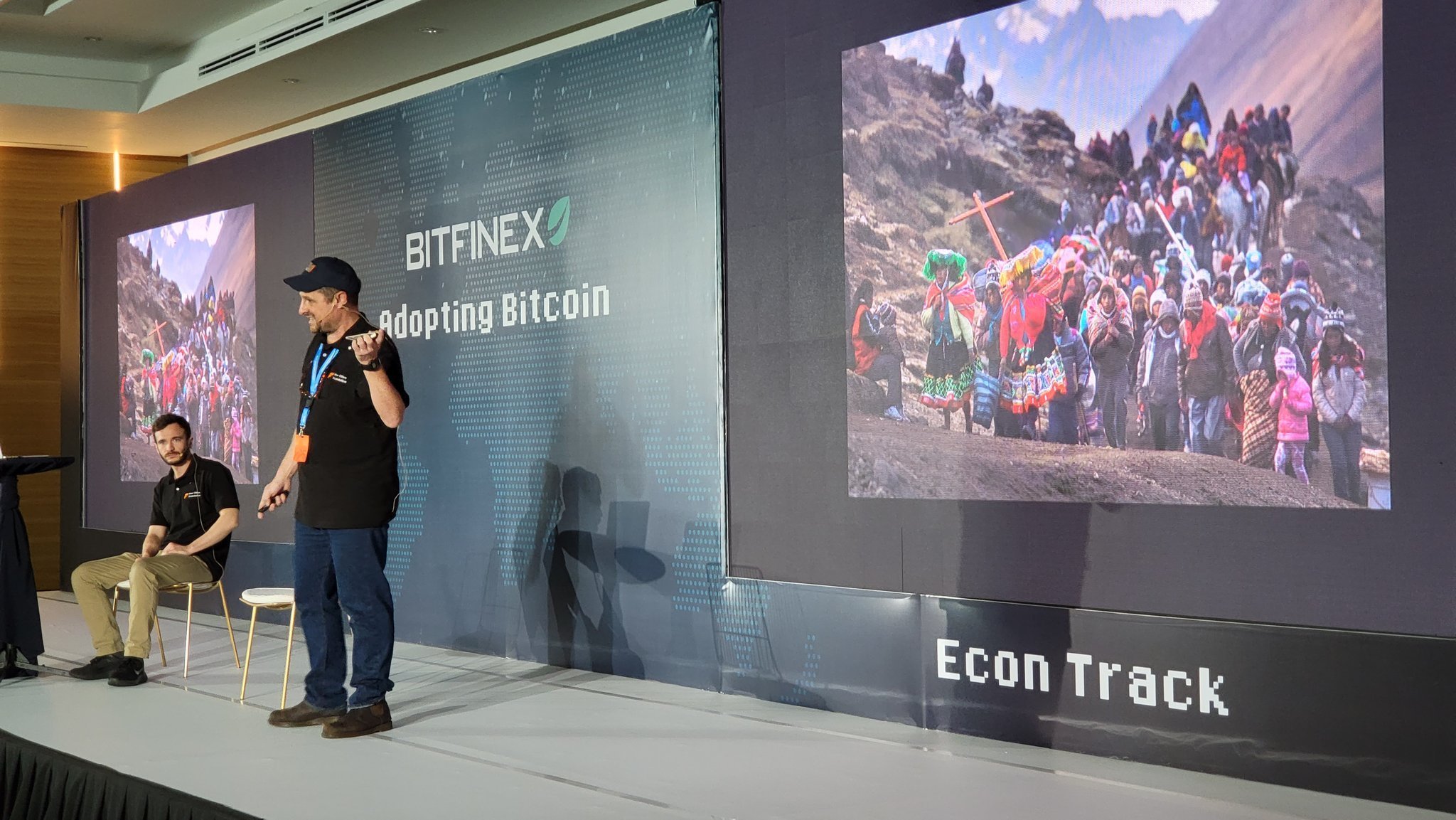
"We think that for historical reasons the world has converged on a small number of governance models and we think the world would be better if people could choose the kind of governance model they live under and not be limited by the range of choices that are available today."
Peter Young is the Managing Director of the Free Cities Foundation. He leads the operational management of the Foundation, with oversight over project delivery, communications and finance.
In this, the inaugural episode of the podcast I talk with Peter about the Free Cities Foundation and its work. We also discuss Austrian economics, civilisation and the importance of contracts, education, the nature of protest, and parallel systems of finance including Bitcoin.
Finally, Peter gives an overview of the hugely successful Liberty in Our Lifetime conference hosted by the Free Cities Foundation in Prague in October.
Audio version
Read transcript
Use ¶ beside a passage to link directly to it.
Transcript
Timothy Allen:
You’re the Managing Director of the Free Cities Foundation, which is a non-profit for promoting the ideas, the notions, and the ethos behind Free Cities. Maybe you could tell me what your expertise would call a Free City.
Peter Young:
We define a Free City as an autonomous territory that’s adopting some kind of policy to support human freedom.
Generally, we look at the spectrum of political systems that are out there, and we look for small jurisdictions that are doing things that are outside of the box.
El Salvador would be a good example of a jurisdiction that’s doing things differently, because they’re innovating in one of the core areas that most governments tend to have in common, which is that they operate a fiat currency and fund themselves through bond issuance, and the bonds are purchased by a central bank.
This is part of the operating procedure of any standard government, and El Salvador is going outside the box by adopting Bitcoin.
Generally, when we say Free City, we are talking about some kind of special jurisdiction within a nation state. So not a nation state itself like El Salvador, but something a bit smaller.
Timothy Allen:
It’s an important point to mention, actually, because when I talk to people about it, most people’s idea when they hear what you’re saying is that it’s a country within a country, and that’s most definitely not the case.
When I’ve spoken to people on this trip about this, because we’ve been to a few places where Free Cities are actually being built, they’re very keen to make sure you understand that that’s not the case.
So expand on that a little bit. The next question, of course, is how do you persuade a government to let you do something inside their country that isn’t their rules? For want of a better expression, that’s basically what a lot of Free Cities are doing.
Peter Young:
I think of it in a similar way to imagining that the US today didn’t have 50 states, it just had a single federal government that controlled the whole country.
Imagine you were trying to make the case to the federal government that they should have 50 states. Detractors from that would say this is taking power away from the federal government, because you’re devolving power to 50 separate jurisdictions and giving them certain powers that could otherwise sit within the central government.
But people who supported that would say decentralisation is a good thing. If you manage local problems at a local level, then in the long run that actually makes the country as a whole better off: more prosperous, more influential, with a better economy and better lives for the people who live there.
I think about Free Cities in the same way. You’re making a request to the central government that there should be a degree of devolved power, and that power can be anything from something more like a special economic zone, all the way through to Titus Gebel’s Free Private Cities concept.
That is basically that you have a single operator governing a city. It is operated like a for-profit company, and there’s a citizen contract between every citizen and the private operator.
So there’s a spectrum of autonomy, but the focus of the Free Cities Foundation is to encourage as many experiments and innovations in governance as possible.
At bottom, our goal is to offer people of the world more choice. We think that for historical reasons the world has converged on a small number of governance models, and we think the world would be better if people could choose the kind of governance model they live under, and not be limited by the range of choices that are available today.
Timothy Allen:
That was my big takeaway from spending the weekend at Liberty in Our Lifetime, which was the Free Cities Foundation’s conference held in Prague a couple of weeks ago.
It was a concept that, while I probably did believe it deep down, I’d never actually taken the time to think about.
I was asking a lot of people about what their version of democracy was. That was one of the questions I was asking. I think I asked over 40 speakers to talk about it, and the most consistent answer that came back was: my version of democracy is, let me choose the “democracy” in which I want to live, rather than the current system we have, where everyone votes and then probably 50 percent of people are disenfranchised by the result.
It’s something worth thinking about, because democracy is like a pillar of Western civilisation and people don’t even question it. I had fallen into that category of just saying, yes, democracy is good, everyone has a vote.
But the truth is, if you can’t choose between democracies, or you can’t choose between jurisdictions, or you can’t choose between places, democracy doesn’t really work for you unless you’re part of the majority.
My takeaway from the conference was that this is a founding principle within the Free Cities movement. Is that fair to say?
Peter Young:
On the question of democracy, if you define it as putting power in the hands of the people, then there are different views on how best to achieve that.
The current prevailing view is that democracy equates to having a system where you have this caretaker government that is in charge of a nation state, a jurisdiction, or a territory for typically around five years.
This caretaker government is brought in through a one-person, one-vote electoral system, and there are typically two or three options for the group of people you can put in charge.
People say this is the best way of empowering people. Every five years the population goes and chooses one of these political parties, and that political party governs the country.
This is commonly accepted, but I don’t think it really makes a lot of sense.
When you look at how we actually operate in the real world, when we go out and buy things in shops, when we interact with people, the way we make our decisions is not done in this way where we all come together and make a single decision, where there is no skin in the game behind the vote we place.
The way we operate and exercise our freedom in the real world is by using free choice.
No one is forcing us to use an iPhone rather than an Android phone. We can decide which of those options is best for us. We don’t feel like we’re being disadvantaged by the fact that we can’t go to Apple once every five years and cast a vote on what kind of iOS update should be implemented.
We realise that we have the choice in the market of choosing one kind of phone or another.
I think jurisdictions should be like that as well. That is actually the best way of giving people real democracy and real choice: offer them a range of options and say, these are the choices available to you.
I think that’s the best way of increasing the democratic choice of everyday people: giving them more choice in governance systems.
Timothy Allen:
By its nature, then, the movement you’re talking about has to decentralise power. That idea doesn’t scale, and that’s the whole point of it. We’re talking about centralised versus decentralised here, aren’t we?
My next question is: how do you convince a centralised authority to allow decentralisation? Because it’s inherently destructive to centralised powers, isn’t that correct?
Peter Young:
Not necessarily.
If you look at the US, the US is the most powerful country in the world, and it’s arguably achieved that because it has decentralised power in the form of the states.
You can make the case that if you want to be successful like the US has been, in relative terms compared to other countries, then decentralisation is a good thing.
Timothy Allen:
Wait a minute. Explain to me why you think the US is a decentralised power.
Peter Young:
Because it has 50 states that have pretty wide-ranging powers to implement laws that the local population decides on.
They have quite wide-ranging powers that individual states can adopt, and the federal government doesn’t have a say in.
Timothy Allen:
So do you think that’s a good model, or is that also something that isn’t working?
Peter Young:
I would say there are some good things about it, but there are lots of things I would point to and say could be drastically improved.
The reason I’m interested in Free Cities is because I discovered the Austrian School of economics in 2017, and that radically changed the way I think about the world, political questions, governance, what can be regarded as legitimate use of force, whether coercion is a good thing or can be a good thing.
I now use the lens of the Austrian School of economics to analyse political systems. I can look at the United States system and see lots of things about how that operates which are not ideal from an Austrian perspective.
But there are certainly things that have been successful about it, and I would argue that decentralisation of the states is a good thing.
Timothy Allen:
We’d better break down Austrian economics then. I suppose the best way to do that might be to juxtapose it against current economic theory, which is Keynesian economic theory. Is that correct?
Peter Young:
Mainstream economic theory is an amalgamation of a range of schools, Keynesian being a predominant one.
Keynesian economics is a way that you would analyse macroeconomic phenomena such as business cycles and what the proposed antidote to those is within a debt-based monetary system.
When people say mainstream macroeconomics, that’s the term I use. It’s also a term Saifedean Ammous, who we’ve both studied with, uses.
Austrian economics is based on the ideas of a particular tradition starting with Carl Menger, the most famous work of which is Principles of Economics, published in 1871, and then following through Eugen von Böhm-Bawerk, Ludwig von Mises, and Murray Rothbard.
Timothy Allen:
Give me the core principles of Austrian economics and why they’re different from what we would call mainstream economic theory now.
Peter Young:
The crucial insight of the Austrian School of economics, for me, is the subjective theory of value.
It is the idea that the only way you can make sense of value, which is the fundamental subject matter of economics, is to look at it from a subjective perspective.
The only sense in which I can say that I value this cup of coffee more than this packet of crisps is that I would choose one of these things over the other.
Value is not something that is objective and quantifiable, what Austrians would call cardinal. It is rather ordinal, which means it is part of a hierarchy. One thing is valued more than another, but there is no objective sense in which something has a value.
This is a crucial distinction between mainstream economics and the Austrian School, because mainstream economics tends to assume that market prices determine value in some kind of objective sense.
When you look at GDP, for example, which is the metric most mainstream economists will use to judge the health of an economy, they tend to look at the sum of the prices of the finished goods and services sold in the economy and say that is GDP, and that is the amount of economic activity.
Timothy Allen:
Do they also say that you and me would both value this cup of coffee the same? Whereas in the Austrian version, we would rate it depending upon what else we’re rating. Is that what you’re saying?
Peter Young:
Broadly, the assumption made when reasoning about economics is that this cup of coffee has its market price.
There are nuances to that, but generally speaking, mainstream macroeconomic thinking tries to work out what the price of all the cups of coffee sold at that price point is, and then says that represents a certain amount of monetary value.
Timothy Allen:
Am I rapidly joining the dots here, probably completely wrongly, but is that like a collectivist idea of economics versus an individualist idea, which would be the Austrian one?
Peter Young:
I’m not sure whether it’s collectivist or individualist. I wouldn’t say it’s inherently collectivist.
But what it does allow you to do is look at the total sum of goods and services that are produced in a given economy, and then try to engineer a greater or lesser number of those services to be produced through government intervention.
Timothy Allen:
What I meant is that modern economic theory deals with everyone in a basket together, and Austrian economics deals with the individual more. Is that fair to say?
Peter Young:
Yes, it is fair to say.
If you look at the kinds of metrics used to reason about economics, for example inflation, how do we measure what inflation is?
You see inflation figures all over the media. Recently it’s been a hot topic across the Western world because inflation figures have risen to eight, nine, ten percent in most Western economies.
The way that is measured is that economists take the money prices of all the final goods and services sold in the economy and divide that by a deflator, which is the price of a given basket of goods and services.
That is a kind of collectivist concept, because the way that basket of goods and services is compiled is that you take what you regard as an average household and say this is what an average household typically buys. Then you work out the cost of that basket and divide that by the total sum of goods and services.
There is a kind of collectivist concept there in the inflation deflator, the denominator of that particular equation.
For reasons probably not best to go into in detail here, Austrians would argue that this is not actually a valid concept.
The whole idea of a basket of goods and services is kind of meaningless in a way, partly because it’s based on a circular argument. What actually comes in and goes out from that basket, because it isn’t a fixed basket, changes over time. That in itself is determined by the actual prices of those goods in the economy.
When you are approximating what inflation is, the general assumption tends to be that you should have two independent variables on either side of the equation, and Austrians would argue that actually these are not independent. One is contingent upon the other.
So to go back to your question, there are certain more collectivist concepts in mainstream economics. But at bottom, if you want to understand these things in a logically coherent way, I would argue that you need to apply the principles of the Austrian School to them.
Timothy Allen:
How does Austrian economics fit with the ethos behind the Free Cities Foundation?
Peter Young:
I haven’t had this conversation in depth with Titus Gebel. Titus is our founder. He wrote the book Free Private Cities: Making Governments Compete For You.
He had worked in the mining sector and as a corporate lawyer for several decades, and he came to the conclusion that the only way of improving the current governance model is to start creating new jurisdictions from scratch rather than trying to change the policies of existing systems from within.
That was his main rationale for writing the book and for establishing what was then the Free Private Cities Foundation, now the Free Cities Foundation.
His book references a lot of Austrian School economists, and I know that the school influences him quite a lot.
From my perspective, the Austrian School is not really a particular policy prescription. It’s a way of understanding the way the world works. It’s a way of reasoning logically about economic questions.
My study of the Austrian School has brought me to the conclusion that giving people more choice, giving people a greater variety of jurisdictions to choose from, is the best way of improving the wellbeing of society at large.
That has been my journey: going from quite a mainstream mindset on economic questions to the Austrian perspective, and then seeing that the Free Cities model, the Free Private Cities model, is the most practical way of achieving that within existing legal government frameworks.
Timothy Allen:
Is this model of Free Cities a new concept, or is it something that we’ve seen historically? Feel free to go back a hundred thousand years, because I’m sure this model is a naturally occurring idea.
Peter Young:
There were certain elements.
The first thing to say is that Free Cities isn’t really a model. It’s more of a concept for having a variety of governance models that aim at increasing human freedom.
It’s quite a broad term. We call it an umbrella term. It encompasses everything from special economic zones and seasteading through to Free Private Cities.
Free Private Cities is more of a model.
The thing that hasn’t been fully tried before in all of its aspects historically is this idea of having a single corporate owner of a piece of land, with that owner determining what the policies are, and that owner having a clear contract with every single citizen.
That has not been tried in its entirety throughout history.
But you can look back at history and see examples of individual city-states that have adopted some model we advocate at the Free Cities Foundation, and you can make a judgment about how they’ve done.
You might point, for example, to the Hanseatic League in what is now northern Germany, a league of states that cooperated freely but had their own individual governance model that determined local activities.
Timothy Allen:
When was that?
Peter Young:
That is going back about 500 years.
Timothy Allen:
What was the result of that?
Peter Young:
I would argue that the result was the creation of a very prosperous Germanic area in northern Europe.
One of the interesting things about Germany today compared to, say, the UK, is that it is not a particularly centralised country.
If you go to the UK, you’ve got London, which is a very important, large city. About 15 percent of the population live in London. But if you go to Germany, there’s not really this single important power centre in Berlin. You’ve got Berlin, Frankfurt, Hamburg, Stuttgart. There’s a range of really important cities across the Germanic world.
Part of that is due to the Hanseatic League and the tradition of having city-states that operated with a reasonable degree of autonomy.
The other example would be the Italian city-states, going back even earlier, where modern banking was created and where modern merchant societies had their historical beginnings.
Timothy Allen:
This is a bit of a left-field question, but it just occurred to me. What does Vatican City count as in the grand scheme of Free Cities?
Peter Young:
Vatican City is technically a nation state and has the full autonomy of a state.
The reason we wouldn’t classify this, or Liechtenstein or Monaco, as Free Private Cities is because they don’t have a single corporate owner, and individual citizens don’t have a contract with the entity that governs the state.
Timothy Allen:
Not even in Vatican City?
Peter Young:
No, there’s no contract in Vatican City.
Timothy Allen:
I suppose it’s an unwritten contract in faith. I wasn’t suggesting it was an important topic to discuss. It just occurred to me.
Why is it important in these models to have an owner?
Peter Young:
The reason it’s important to have an owner is that when you don’t have ownership of property, that property doesn’t tend to get maintained well.
If there’s common property, people have the incentive to extract wealth from that property in the short term rather than build up the capital of that property in the long term.
By giving clear ownership of property, you give some individual actor or group of actors the incentive to improve that property.
I would argue that’s how societal progress happens. Individual people take ownership of property and have the incentive to use that property to serve other people and, in the process, improve that property.
Timothy Allen:
What about contracts with the owner or operator of the Free City? Why do you think it’s important to have a contract with the body in charge?
Peter Young:
In the case of Free Private Cities, we call it an operator, a city operator. You can basically think about it like a private company or like the owner of Westfield Shopping Centre or the owner of an apartment complex, just with more autonomy.
Timothy Allen:
Why have a contract then? Why not just sell the property and have them run it as normal?
Peter Young:
I assume that shops in a shopping centre have a contract with the people who own the shopping centre.
Timothy Allen:
They don’t own the shops though, do they? They lease them.
Peter Young:
Generally, there would be a single owner of the shopping centre who leases out the properties.
Timothy Allen:
But Free Cities are different, aren’t they? There’s an operator, but everyone owns the property individually themselves?
Peter Young:
No. There’s a single operator, and that operator determines the rules.
There are different models within this. Prosperá, which we’ve just visited, is an interesting case study. Individual people can come in and buy property. We saw that Duna Residences tower going up, and individual companies or people can buy those apartments.
Whereas in Morazán, an inland development that we didn’t get a chance to visit, they have a model where it is only possible to rent from the property owner.
Timothy Allen:
We were talking about why contracts are important. I’m assuming they add the element of low time preference to a property, to a way of life. Is that right?
Peter Young:
Yes. To go back to Austrian School terminology, there are the concepts of high time preference and low time preference.
High time preference means you think a lot about the immediate consequences of what you’re doing, but not very much about the long-term consequences.
Low time preference is the opposite. You think about the long term.
When you are in the wilderness and there is not much ability for you to establish long-term plans, you just need to eat, ensure you’re warm at night, and ensure you’re not going to be eaten by predators. You live a generally high-time-preference life.
But when you have a certain area of land that you can cultivate, make your own, build on, and defend, and you know it is going to be there for the long term, that’s when you can start to make long-term plans.
Arguably, that is what we mean by civilisation. We can civilise. We can improve the way society functions. We can improve our quality of life when we are able to lower our time preference.
But that comes with ownership of property and systems that allow us to make long-term plans.
This is why contracts are important. Contracts give people a guarantee of what the rules are going to be regarding the manner in which they adapt and improve their property.
To give a simple example, we’re currently in an apartment block in San Salvador. If I buy this apartment, there are certain kinds of rule I can reasonably assume will remain for a given amount of time. Maybe there are rules about what the service charge is or isn’t going to be.
But there are certain rules around how this apartment block can be used that are not determined by the owner of the apartment block.
If I choose to build a life in this apartment block, how much of my income is going to be taken in tax? That’s something that could be changed through a general election.
I could move into this apartment block on the understanding that I’m going to build a life here with me and my family, that there’s going to be schooling provided by the state, that there’s going to be a certain amount of tax I have to pay every year, that there are going to be certain amenities available.
But lots of those things can change. A general election could result in the level of income tax going up by another 20 percent, say, and that dramatically changes the calculus of how beneficial it is for me to build a life here.
If I’ve built a life here on the assumption that I’m going to have a certain amount of income available and that suddenly drops, then that determines my quality of life.
Contracts say: this is a place you can move into, and these are the guarantees on what the basic rules are going to be.
You can do things like set what the tax or service charge is going to be for a given period of time, and people can decide whether that’s worth it for them or whether it isn’t.
Establishing what the rules are allows people to make long-term plans, lower their time preference, and build lives that are beneficial for the future.
Timothy Allen:
Is there a version of this in existence historically or now, where such a place has existed?
Peter Young:
Not with this contract-based model between citizens and the government. This is a new thing.
Timothy Allen:
Is that because law is relatively new and flexible, historically speaking? Why has no one come up with this idea before?
Why has no one created somewhere like Siena in Italy? I’ve been a few times. It had a very old bank there. The old banking systems arose out of that area, didn’t they? They were cities based around those kinds of concepts, weren’t they?
Why was the idea of contracts not something people thought about then?
Peter Young:
Contracts have existed in commercial life for millennia. If you go back to ancient Greece and writings of the ancient Greeks, there’s evidence of contracts there.
Contracts themselves are not new, but the idea of having a contract between the governing entity and the citizen is the innovation of the Free Private Cities idea.
We’re taking this aspect of commercial life that already exists and applying it to a new realm, which is the realm of living together and creating voluntary societies.
There are various bits of this Free Cities model that have been trialled in the past. We’ve had small city-states working and incorporating freely. We’ve had very lean kinds of government. I would point to city-states like Hong Kong and Singapore as good examples of that.
We’ve had individual contracts that have existed in the commercial sphere and civil sphere for millennia. What we’re doing is looking at those systems that have existed and proposing that we apply them to a new field: governance.
Timothy Allen:
From my personal experience, one thing that would solve would be the problem of living out in the countryside. We’ve got a lovely view, not many people live around us, and in the back of your mind is always the notion that one day someone might build something over there that you don’t like.
They’re totally within their rights to do that because it’s their land. I suppose in Free Cities, part of the contract mitigates things like that as well, does it?
Peter Young:
Exactly. That’s a really good point.
There has to be some way of determining whether people can build things on their land that obstruct the view of other people or impact other people, whether it’s sunlight or pure aesthetics.
Within our current system, the central government sets a general policy and there are local planning permission processes that determine whether something can be built. But there isn’t very much individual citizen choice that goes into that.
With Prosperá, which we’ve just visited, one of the things they’re experimenting with is introducing 3D property rights.
Rather than just owning land on the ground, you can also purchase space in the air.
If you are someone who really values the view you have, you can decide you’re going to purchase the quantity of space above the land, however far up you want to build.
If you say, I really value this view so much that I don’t want any development to happen around me, then you have the option to procure the space that surrounds your apartment complex or building.
Timothy Allen:
I like that idea a lot, and I would imagine, compared to the current system, it’s much more efficient.
If you live in a house and someone decides to build something in front of you, you basically have to appeal to them not to. Then you get this toing and froing which could last for years.
Whereas in the Free Cities model, you know what you can and can’t do. Nothing is new. In fact, isn’t it true that in Prosperá it’s all digitised as well, which makes it even more efficient?
You can see exactly what you can and can’t do, then you can make an informed decision and either join that system or not.
I was chatting to them in Prosperá about this. I think written into their governance model, there’s a zoning system. Taller buildings have to exist away from the beachfront area, for example.
They’ve just started building a 13-storey tower block for accommodation, but it’s tucked into the side of the hill. They told me that if you want to buy an apartment there, they can guarantee your view, which is worth money.
I like the way that in some governance systems you can value that view specifically by buying the air in front of it, all the way down to the sea, say.
That does make a lot of sense to me, because that’s basically what you’re wanting to do by stopping someone else building in front of you. You’re saying: I value the view more than I value you as my neighbour.
But if you can express that by putting skin in the game, then the system is much more efficient.
Peter Young:
The great thing about the Prosperá system is that the rules regarding the views, the use of space, and the obstruction of people’s lines of sight are specified and made clear before you move in.
When you acquire a property, you know what the rules are going to be, and there’s a clear system for determining what development can happen around you.
It’s not based on a one-size-fits-all prescriptive system that covers an entire country. It can be done locally, based on local needs. That’s one of the things I think is really encouraging about the Prosperá model.
Timothy Allen:
As I said earlier, we’ve been at the Free Cities conference in Prague, Liberty in Our Lifetime. What I noticed about the group of people who came to Prague for that conference was how diverse it was.
They seemed to have come from three main areas of ideas. One was governance, which we’ve just talked about. Another was the financial side. Another was the educational side.
What could you tell me about the Free Cities Foundation’s ideas around those other parallel ways of doing things, particularly education and finance? Do they have an opinion, or is it just: give me a choice?
Peter Young:
It’s really just: give me a choice.
We don’t go around saying this is what we think the best education model is or the best financial model is, although individually our team definitely has views on those questions, not always the same views.
The reason we chose the theme for this year’s conference, “Parallel Structures for Progress,” is that we think the best way of achieving positive change in the world is not to go out on the streets and protest, or engage in political lobbying, or try to alter very large, entrenched political systems from within.
It is instead to do the hard work of building something new, starting off at a small scale, and offering it to people so they can opt in voluntarily.
That’s why we chose the theme Parallel Structures for Progress. We want people to focus on developing education structures that aren’t forcing people currently involved in state schooling systems to join, but are saying: here’s an additional option.
If the options people are developing are successful, then they will grow in size and influence. That could lead to certain differing ideas becoming dominant, or it could just lead to a plethora of different systems all operating harmoniously.
We don’t have a view on what the outcome should be. We just say that within the current system it’s very hard to bring about change, and even if you do bring about change, you’re presupposing that the change you think is needed is right for millions of other people, and that might not necessarily be the case.
Timothy Allen:
On the subject of parallel education systems in particular, I’ve dipped my toes into a few of them. We homeschooled for a year. We travelled for a year with our family.
What I was amazed to learn at Liberty in Our Lifetime was that there is a community of Swedes living in Prague who are like educational refugees.
It surprised me to find out that Sweden does not allow homeschooling. It’s illegal. So there are families living in Prague who had to move because they wanted to homeschool their families.
That’s fascinating, because I’ve always thought of Sweden as being a very open and progressive society.
Do you have any particular views on education? You don’t have children yet, so maybe that’s a hard thing to say.
Peter Young:
My views on the education system are mainly shaped by my experiences in the UK.
What I see getting worse is discipline in schools. I think this is partly the result of teachers not having the power to exclude students who are misbehaving.
The worst that can happen is that students are sent to another school, and then they become the second school’s problem. They just get moved and moved and moved until they become a problem.
This is something that’s very costly for society: to have disruptive students move from place to place to place. But these costs aren’t really imposed on the parents.
There isn’t really an incentive for the parents to say, you really need to change your behaviour. If the parents aren’t that bothered and aren’t that motivated, they don’t have to bear the costs of what their children are doing in school.
Timothy Allen:
What if the child doesn’t have any parents, which is often the case? And what do you do with a disruptive kid in school?
Peter Young:
You have to think about why kids are disruptive.
I would argue that kids didn’t used to be as disruptive as they are now. If you look back at history, just talk to your grandparents or parents and ask what was the worst thing that happened in your school? What did the kid who misbehaved the worst do?
Back in their day, it would be things like they skipped class and went and had a cigarette.
But now it’s things like they brought in a knife, verbally abused their teachers, or physically assaulted their teachers. My mum used to work as a teacher and that happened to her.
The standard of behaviour is getting worse and worse.
Timothy Allen:
Why is that?
Peter Young:
My view is that it’s a product of decades of policies that have fundamentally changed the social system in Britain.
I’m talking about Britain because it’s the context I know.
Timothy Allen:
That’s important to say, because we’ve just come from a school in El Salvador and everyone seemed to be very well behaved. Everyone was polite and nice. Maybe we got them on a good day, but they didn’t have a body scanner at the door, and I didn’t notice anyone walking around looking threatening.
So is this too big a question to answer right now?
Peter Young:
It’s not a question I’ve got deep expertise in, so I’m hesitant to say too much.
But if you’re asking me for my personal view on what concerns me about education systems, at bottom it’s the incentives that exist, which determine the quality of education children receive.
Timothy Allen:
Incentives for who?
Peter Young:
Incentives for the parents.
If parents actually have to pay for the education of their children, then they have more of a vested interest in turning that into something that will be really valuable for their children’s future.
For some children, going through school, through A-levels, through university, is not going to be the right thing. There are other ways of learning.
I look at what Daniel Prince’s children are doing. They’re not going through the conventional schooling system. That might be more expensive in certain ways, it might be cheaper, but what it causes parents to do is focus on what they are actually trying to get their children to learn so they’re prepared for going out into the world and living a good life.
At the moment, the default is that you send your children to school between the ages of five and 16 or 18, and they go through a system with everyone else where they’re taught broadly the same thing. They have a few options in secondary school as to what they specialise in, but that might not be the right system.
If you offer that to everyone and say you have to pay for this system, even if you get it free at the point of delivery, but pay for it through taxes, then that becomes the default system.
Then you have additional incentive problems with children who are badly behaved. It doesn’t impact the parents. It doesn’t impose the cost on the parents. So the parents have less of an incentive to discipline their children and ensure they behave well in school.
Timothy Allen:
So the Free Cities model of education would be lots and lots of private schools offering a different curriculum, which is kind of the system we have as well as the state-run one.
The fact of the matter is, though, and I know this firsthand, private school in the UK is super expensive. I’ve got three kids. If I wanted to send my kids to private school, the average private school is about £20,000 a year. That’s £60,000 a year before I’ve even got out of bed every morning, for eight years.
Only a certain strata of society can achieve that. Who’s to say the Free Cities model isn’t going to go the same way? There’s the state world, where everything is not very well offered, and then you’ve got the Free Cities, but they’re all too expensive, like Monte Carlo or maybe Dubai.
Peter Young:
I’m not an expert in the private schooling system in the UK, so I don’t want to say too much about it.
But what you generally find in systems like education in developed countries is that when you look into them, they appear like they are free market because they are private schools and can do what they want, whereas in fact there are lots of regulations and lots of things that increase prices higher than they would otherwise be.
You have to comply with all kinds of regulations when you’re looking after children. So I suspect those prices would come down for the experience provided by a private school in the UK if it were a purely Free City environment.
I would also say that private school doesn’t have to be what we think of in the UK. When you say private school, it doesn’t have to mean boarding schools, expensive hockey fields, and the premium experience you get if you send your kids to Eton or Harrow.
Look at China, for example. The private education sector in China is massive. Most students go to a state school and then also go to training schools as well. These are after-school clubs where you go and have a private tutor, and they’re not that expensive.
Most students in cities will have some kind of additional tuition, and that’s an alternative model. It could be made affordable by having a relatively free market and allowing people to opt into additional systems.
Timothy Allen:
So what you’re saying is China is good? You unequivocally support the Chinese regime?
You’re alluding to the fact that China has a privatised education model that could work?
Peter Young:
Yes. China is not a deeply communist country in the way many people think it is.
There are certain aspects of the economy that operate in a fairly free-market way. Private education would be one example.
Timothy Allen:
According to what you know, because you lived in China for 10 years, is it working for them?
Peter Young:
I would say it is working.
I’m pretty inspired by the younger generation of Chinese students who are coming through the system. There are definitely lots of things about it that maybe aren’t ideal. They work very long hours and they’re under a lot of stress.
I wouldn’t be surprised if this isn’t the optimal way of educating children. But my general sense is that they come out of it with very good academic achievement, and their level of English is getting better and better.
I think in the next 10 or 20 years, China is going to be a much easier place to get around as a pure English speaker than it is today.
Timothy Allen:
Let’s go from educational governance models to financial governance models, because we’re sitting in the middle of a new financial governance model right now.
I liked what you were saying earlier about the Free Cities Foundation realising that changing things from within is possibly not the correct way of doing it.
I came to that conclusion myself a long time ago. When I was a journalist, I covered a lot of protests. Before I was a journalist, before I worked for a national newspaper, I suppose I was part of the protest movement. I was always interested in protesting things.
Then I became a photographer at a national newspaper and had to cover a lot of protests. Over the years, I started to realise they did nothing.
I distinctly remember some very large and crazy protests in London. Reclaim the Streets was one of them. The Stock Exchange was stormed and traders were fighting protesters on the escalators and throwing paper everywhere. I was in there thinking, this is crazy, this is amazing.
Literally the next morning, I was sent down to photograph the clear-up, but it was all gone. It was all pasted over already, and it had no effect in the slightest.
Over the years, you start realising that appealing to authority to protest something isn’t a very good way of protesting, because you’re asking the people in charge to change the rules to favour you rather than them.
That’s never worked. You know that as a parent. The only time you really should be protesting to authority is when you’re a kid, and it often doesn’t work.
What I like about what the Free Cities Foundation says, and also because I’m a Bitcoiner, is that one of the defining tenets of being a Bitcoiner is not protesting the current financial system, but opting into a parallel one.
I’ve come to understand that this is what a real protest is: opting into a parallel system. That’s the ultimate protest. That’s why people call Bitcoin a protest, among many other things.
We’re in a country now where potentially people are opting into it. I’m not sure how many people are opting into it for those reasons, but certainly Bitcoin was created as a vehicle to opt out of the current system, which I think everyone understands is unfair.
You can’t look at the current financial system and decide that someone being able to create the money is fair. That isn’t fair when you’re five years old in the playground, and that isn’t fair when you’re 50 years old.
You certainly know not to trust the people who are creating the money. As a result, America can invade any country it wants because it has an unlimited war chest. A lot of the things in the world happen because the people closest to the money printer, or the money printer themselves, make the decisions.
Philosophically speaking, I don’t know what the derivation of the word protest is, but it is almost always implied that you’re protesting to an authority. Historically, that’s not a very good way to do it.
The biggest protest in the history of the UK, I think, was the protest against the Iraq War. The second biggest from my time as a journalist in London was, believe it or not, the Countryside Alliance protest, when the Labour government banned fox hunting, which was obviously a dig at conservatives. They had a million-person march in London, and nothing changed there either.
There are probably good examples of protesting to authority working, but if you look back, I bet there’s an ulterior motive there by the powers that be.
Opting out, or opting in, is another way of putting it. That’s a real protest, and Bitcoin really is that. It’s such a beautiful protest as well. You don’t need permission to opt in. You just do it.
In the nature of opting in, you are disempowering the thing you are protesting against, and I think that’s a beautiful concept. In reality, it feels great and I love doing it. It’s part of the reason I’m such a strongly convicted Bitcoiner.
So is Bitcoin an important part of the Free Cities Foundation’s principles, or is that something you want other people to make their own choice over as well?
Peter Young:
We want people to make their own choice over that. There’s no official position on which particular kind of money is the right money.
The foundation doesn’t say everyone should use Bitcoin, or everyone should use gold, or we should continue using government currency.
Ultimately, what we’re there to do is create systems that offer people more choice so they can decide that for themselves.
If you’re asking me on a personal level which monetary technologies and innovations excite me most, then coming back to the Austrian economics perspective I’ve been developing over the past few years, I am excited by Bitcoin because it offers the ability for people to trade freely peer-to-peer.
It also offers, for the first time, a mathematically fixed monetary policy whereby there doesn’t have to be a single issuer of the money.
I think that’s hugely important.
Arguably, gold provides this as well. When gold was the monetary standard internationally, there was no single monopoly issuer of gold.
But now we have gold’s salability across time, its ability to store value across decades, with the salability across space of government electronic money, in one single immutable package in the form of Bitcoin.
It is something where you know the supply is going to be fixed over time, or at least the production schedule is going to be fixed over time.
You can predict what the supply is going to be and make judgments about the value of the currency over time based on that supply. But you can also transact seamlessly, either on-chain or via secondary layers such as the Lightning Network.
So on a personal level, that is certainly the particular monetary structure that excites me. That is why we have so many people within the Bitcoin community coming to the Free Cities movement, because I think our values are very much aligned.
Timothy Allen:
For sure. One thing that occurred to me just now was when you were talking about Free Cities having contracts which allow you to have low time preference. That’s essentially what happens with Bitcoin, except the contract is the software.
You either have the software or you don’t. You either use the Bitcoin software or you don’t. While it’s a decentralised governance model, you can change it, but it’s very difficult because there are so many players involved and so many people invested in the notion that this is a long-term governance proposal of monetary policy.
We all assume it won’t change in any dramatic shape or form. As a result, one of the main tenets of Bitcoin, the hard cap of 21 million, allows you to plan for the future.
You know what the inflationary model is, and you know how much your money can be diluted in the future, which makes it hugely important for saving.
I would posit, as an outsider looking in, that it’s a hugely important part of the Free Cities model. If Free Cities are, among other things, trying to help implement long-term thinking, then Bitcoin is the currency for Free Cities, because Bitcoin is the long-term-thinking currency.
There’s no pressure within the Bitcoin network to spend. There may be incentives to spend, but there’s nothing saying to you: if you don’t spend now, then in the future you’ll have less value for that same amount of Bitcoin. The opposite is true.
I think that’s one of the main understandings people who look deeply into Bitcoin get sooner or later. It allows long-term thinking, and that’s an antidote to the current system we live in, which incentivises short-term thinking.
In an inflationary system, you’re literally incentivised to spend your money as quickly as possible. If you take it to the extreme, in the Weimar Republic, you literally spent your money on goods the moment you got paid, and then held the goods.
In the current system we’re in, we’re running at ten percent inflation, which is still a lot. Everyone is thinking, I don’t want my money in the bank. What am I going to put it in? What am I going to do with it?
Nobody is saving. Nobody is thinking of the future. I think that’s a core tenet of the Bitcoin movement, and from what I’ve seen of the Free Cities movement, it’s part of the core structure of those ideas as well.
Peter Young:
That’s certainly one important aspect of having hard money. It takes people off this treadmill that so many of us feel we live on, where we have to keep moving just to stand still.
When you have a money where there is a monopoly issuer, and that monopoly issuer is able to spend newly created money into the economy, the value they’re extracting from the private sector and private individuals has to come from somewhere.
It comes in the form of the additional work we have to do just to fund those activities.
There is definitely an aspect of hard money, where there isn’t this monopoly issuer that can spend new money into the economy, that allows people to think further into the future and make longer-term plans.
They don’t have to provide part of the fruits of their labour to someone else who isn’t acquiring those fruits through a voluntary mechanism. They are acquiring those fruits through a coercive mechanism, by forcing people to use the currency and pass on their value in that manner.
Another important aspect is that Free Cities need to have a mechanism for trading with each other.
No matter how free a given jurisdiction is, it isn’t going to be very well off if it doesn’t trade freely with the rest of the world.
There is such a thing as economies of scale, and we’re all better off when we cooperate peacefully, trade, and have productive division of labour.
The world we’re trying to create is a world where, in the short term, say eight to ten years, we want to see dozens of these Free Cities operating autonomously but trading peacefully across the world.
So the question becomes: how is that going to happen? Are they all going to be using the US dollar? Are they going to be using gold? Or are they going to be using something like Bitcoin, which is a decentralised monetary network that no individual Free City would control, and any individual person, business, or city operator can voluntarily choose to use to trade?
Personally, I think it’s most likely that they will opt for that kind of network.
Timothy Allen:
We’re in a country right now that has literally done that. You could think of El Salvador as being a new node in the network.
They adopted the US dollar about 20 years ago, which sounds great until you realise that US policy and economic policy completely dictate what goes on here.
The government here made the choice to make Bitcoin legal tender, so arguably that is happening in practice.
We were talking when we first started about what’s going on in El Salvador right now and whether we think it’s a successful experiment.
I have mixed feelings about it. When I first came here, it was so exciting to be spending Bitcoin all the time, because that’s been the dream for many years: to spend Bitcoin seamlessly, easily, and cheaply.
The Lightning Network, the layer-two solution, has been implemented onto Bitcoin, so for small transactions, coffee up to two or three hundred dollars, you can transact very easily, and anyone can as long as they have a smartphone.
But beyond that, you notice that people need an incentive to switch currencies or switch to a new monetary network. In our case, many of us have an ideological reason for switching, but mass adoption probably won’t happen for ideological reasons. It will happen for convenience reasons.
For me, Bitcoin is a convenient way of transacting, especially if you’re travelling to foreign countries, which doesn’t necessarily help your average Salvadorian here.
Add to that the problem that the government-issued wallet, Chivo Wallet, has a terrible user experience. It’s very buggy. There are so many instances of people with money not appearing, or not getting money out of the ATM, or the wrong amount coming out.
I can totally understand if I were Salvadorian and made a payment that didn’t go through, I’d only give it another chance once. If it happened again, I wouldn’t do it.
Unfortunately, it’s the government-issued wallet. It’s not the wallets we use, because Bitcoin is an open network. Anyone can create software to interact with the network.
So, is El Salvador’s bet on Bitcoin going to pay off, do you think?
Peter Young:
It’s really hard to say whether it’s going to pay off.
As someone who is personally pretty optimistic about the future of Bitcoin, I think it’s great that this country is learning how to use it early, even though generally it’s through the lens of this government-issued wallet.
I understand why they have gone down that route. They want to have control over the wallet. They want to be able to issue funds to people in a way that is under their control, so people aren’t abusing that system.
They want ways in which they don’t have to rely on a third party in order to seamlessly exchange US dollars for Bitcoin.
I can understand why they’ve done it, but the implementation of that wallet does seem to have been problematic.
On this trip, I haven’t had a chance to get much of a sense of how that situation has improved. I did have a very seamless Lightning transaction yesterday, which wasn’t really possible through Chivo when I was here last November or December.
So I hope things are improving.
I do see money as a competition, a zero-sum game whereby one money will tend to become dominant over time.
It doesn’t make sense if you’re Salvadorian and you’re saving all your money in a token that a foreign government is able to control and spend into their own economy to the benefit of their citizens.
If you are holding that token as your savings vehicle, then you are gifting your labour to the monopoly issuer of that currency every single year.
I don’t think that system is sustainable. It’s only sustainable if it’s the best option available to you. Arguably, between the period when the colón was abandoned and the US dollar was taken up, the dollar was the best currency.
But now we have Bitcoin. I do think there’s a genuinely better competitor that they can opt into.
Timothy Allen:
Except I would say not now.
I lived in part of El Salvador with my family for six weeks, and we used Bitcoin amongst our local community all the time. We orange-pilled a lot of people, the local pupusa lady and others.
We basically did it using Strike Wallet, because it’s seamless and very easy. The way Strike Wallet works is that it uses the Lightning Network as payment rails, but the receiver and sender can choose which currency they send or receive.
There are instantaneous foreign-exchange transactions at either end. In our case, we were spending Bitcoin and the local Salvadorians were almost exclusively receiving dollars.
I know a lot of people think that’s bad and say, they shouldn’t do that, that’s not using Bitcoin. I think that’s completely wrong. I think it’s perfect.
I don’t recommend a Salvadorian saving their money in Bitcoin right now. That’s a ridiculous idea. They could have been saving eight months ago and be down 70 or 80 percent now.
It’s a terrible vehicle for savings at certain time preferences. Currently, in this monetisation phase of Bitcoin, if your time preference is low, it’s a great savings technology. But in the short term, it’s not.
But I do believe that using the payment network is important.
I have another great example from back home. We’ve started orange-pilling our local neighbours recently, who are farmers. One particular neighbour of mine has a herd of Red Ruby cows.
I was chatting to her about Bitcoin the other day and said: I know there’s a big market for beef in the Bitcoin space. The only way you can tap into it, though, is by receiving Bitcoin.
She didn’t know what Bitcoin was, and I told her to read Saifedean Ammous’s book, obviously. She’s listening to it on audiobook.
What we ended up doing originally was setting her up with a system where she receives Bitcoin and that Bitcoin instantly gets transferred to pounds. She holds the pounds, which makes total sense when you’re running a business, especially when you don’t even know what Bitcoin is.
That was about four weeks ago. She’s already over the moon with what’s going on because Bitcoiners are buying her beef left, right and centre.
What’s more interesting is that within two or two and a half weeks of doing it for the first time, I got the first text from her saying: okay, I get this thing now, how do I start buying Bitcoin myself?
Of course, I said to her: you don’t need to buy it. You’re getting paid in it. Just don’t transfer all of it into pounds.
The point is that it didn’t take long for her to realise it was something she wanted. I think that is the process everyone goes through, especially if you’re accepting Bitcoin because you’re running a business.
Coming to El Salvador, I urge people to spend their Bitcoin. Even if you don’t want to spend your Bitcoin, just spend it anyway and buy some back if you don’t want your stack to go down. Do spend it, because the process of using the Bitcoin network is a very important part of the adoption of Bitcoin in my experience.
Peter Young:
I think it’s important that people learn how to use it.
Your point about time preference and volatility is an important one, because some people aren’t in a position where they can save over a five-year time frame. They have immediate needs. They need to pay suppliers next week, and they can’t afford to lose 20 percent in a single-day drawdown on their savings.
It’s not necessarily the right thing for them to be using something like Bitcoin for their savings, but I do think it’s valuable for people to understand what it is and how it functions, and that it can be used as an alternative payment system, particularly when it’s cheaper.
Many Salvadorians don’t have bank accounts. The last stats I saw said around 70 percent don’t have bank accounts. So they’re not getting any interest on their dollars. They’re having to physically hand over dollars if they want to pay someone for a service, and that’s not particularly convenient.
What Bitcoin allows, even if they want to remain purely with their savings in dollars, is for people to take advantage of the convenience of modern banking and electronic payments, but in a way that doesn’t require a bank account.
It can add convenience to transactions and, as with your friend in Wales, allow people to tap into new markets, like tourists coming here who want to spend Bitcoin while they’re in the country.
Timothy Allen:
It’s a hugely important aspect, and one I’ve really started to understand in the last year.
The Bitcoin community, and I know a lot of people don’t like this word, but I quite like it, is hugely strong. It’s one of the most inspiring things I’ve ever been involved in.
The people within it are so supportive and inspiring and critical as well. No one is sitting on their laurels. Everyone is testing their ideas every day, testing the system, making sure this is right, because it’s such an important thing.
I love the fact that I can orange-pill my neighbour and then put one tweet on Twitter and she sells out.
Peter Young:
That’s a really cool story.
Timothy Allen:
It’s amazing, and it couldn’t have happened to a nicer person because she is the physical embodiment of proof of work. She’s a hard-working farmer, struggling because she has to sell to large corporations who give her a bad price.
She wants to connect directly with her customers, which is much harder. This is what Bitcoin is: a peer-to-peer network.
All she has to do to be part of this movement is to offer a quality product in an honest and open way, which is a core tenet of Bitcoiners. When they notice it, if we see someone doing that, we want to support them.
It’s such a beautiful thing. The market is there. El Salvador has experienced that in the form of tourism.
I came here and brought my whole family for six weeks purely because the country adopted Bitcoin. There’s no other reason we came here. In fact, we came here when the state of emergency was happening. I’m pretty sure if any other country had a state of emergency, it wouldn’t be on my list of places to travel with my family.
That’s another story. The state of emergency was something where it didn’t take too long to dig under the surface and talk to actual people living here for them to tell you what that means and what’s happening.
For certain, we would have just gone another time, but we came here specifically because of what’s happening with Bitcoin here.
We’ve travelled to many places: Nashville in America, specifically because there were Bitcoiners there. More and more, Bitcoiners want to work with Bitcoiners. They want to associate with them. If you’re a Bitcoiner, it’s very hard to hide that fact. You can tell when you meet one.
They believe in certain tenets: openness, honesty, critical thinking. Those are the people you want to do business with. Those are the people you want to associate yourself with. They are the antithesis of the current system, the by-decree system, the fiat system.
I hope El Salvador benefits from that continuously. I hope people continue to use it.
Someone rightly pointed out to us the other day that a lot of Bitcoiners come here, get off the plane in San Salvador, go straight to El Zonte, which is Bitcoin Beach, make a few transactions, and think everything is hunky-dory. But that’s not adoption. It’s a form of adoption.
Real adoption for me is the pupusa lady using Strike, or my neighbour accepting Bitcoin. That is the real use case. There needs to be incentives. In the case of my neighbour, it was a market. It was easy. Same with the pupusa lady. It’s the market, it’s me coming to her, and it’s also easy for me.
It’s cheaper or the same as spending dollars, because I have to buy the dollars anyway. It’s much easier. If you’ve got to pay a bill, flashing a QR code on a phone is the easiest way to pay that bill, no matter where you are.
I hope it all goes well here, because most Bitcoiners who come here have a soft spot for the place. You always fall in love with a place like this. Lovely people, really laid back, and Bitcoin is here. What could be better?
I get the sense we might be coming to the end here. Maybe I should ask you the final question. This is the first iteration of this podcast, but I’ve already decided there will be one question I ask everyone at the end of every podcast. As you’re the first person, I’ll ask you and we’ll see what transpires in the future.
Here’s my question. It’s hypothetical, but imagine it’s real. You have been given a one-year sabbatical from your life, whatever that means. During that sabbatical, all your expenses are covered. You don’t have to worry about money. You don’t have to worry about where you are. You just have to worry about what you’re doing.
What do you do in your year off?
Peter Young:
I’ve been really lucky in my life to have had the chance to travel a lot.
As you mentioned, I spent 10 years in China. Maybe not all of that classifies as travelling, but I moved and lived in four different cities there, then came back to the UK, and then spent time in Mexico, El Salvador, Honduras, and the US.
I’ve done a lot of travelling. I’m now in my mid-30s, and honestly, the thing I would love to do now is build a more settled life.
My answer wouldn’t be something like going on a big adventure or starting a new business venture. It would be to establish a bit of a settled base somewhere and have a more permanent place in which to do stuff like build a family.
It’s not something I’ve had a chance to do up until this point in life, but it’s something I’m quite excited about doing in the next few years.
So if I had a year off, that would probably be what I’d focus on.
Timothy Allen:
What, you’d build a family? You’d just go to work building a family? Or are you talking about DIY and a house?
Peter Young:
House, family, meeting the right person, that kind of thing.
Timothy Allen:
So another way of saying that is you’re working too much and it’s getting in the way. I could easily transcribe that as: you need some free time to meet a nice lady and do some DIY on your house.
That’s a fair enough answer, mate. I wish you good luck. I hope you find the time to achieve that sabbatical in a parallel universe.
Thanks for talking. I’m excited for what the rest of the conversations in this podcast will be like. If they’re anything like that, we’re in for a good show. Thanks for coming on.
Peter Young:
All right. Thanks, Tim.