
Episode 64
Massimo Mazzone: Ciudad Morazán. The Blue-Collar Free City.
Published
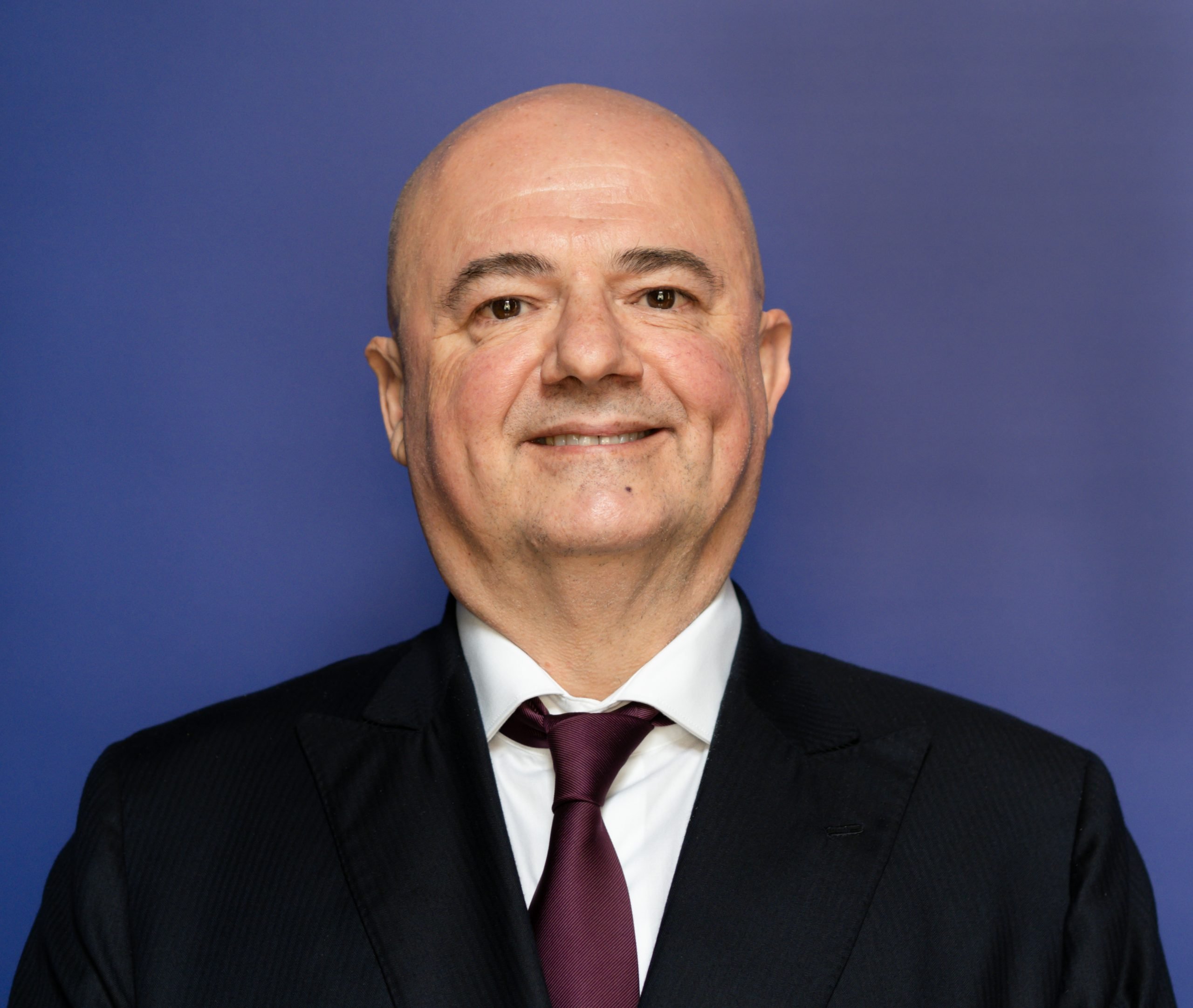
"This is the project of my life. I want to live and I want to die in that place, in a free place because as libertarians, we need a physical place to live. I mean, things like Network States are fine, but in the end we are people living in a three dimensional world. We need to have our feet on some soil and I want..."
Audio version
Read transcript
Use ¶ beside a passage to link directly to it.
Transcript
Timothy Allen: To begin with, would you mind telling me a little bit about your personal background and business background? Maybe you could tell me in your own words.
Massimo Mazzone: I am Italian. I lived in Italy until the end of university. I was in military service because it was the Cold War. Then I started to work in the Boston Consulting Group, which is a consulting company, and I was sent to Chicago.
There, they always staffed me on projects in Mexico because they said Italian and Spanish are similar, so I had to go there and learn Spanish. When they opened the office in Monterrey, I was one of the guys who went there, and I spent four years in Mexico.
Then there was the dot-com bubble. I lost my job, and Motorola, which was a client I had in Chicago, sent me to run the cellular phone company in Honduras. But that company was bought six months later, and they fired me again.
So I decided to be an entrepreneur. I met the girl who was going to be my wife, and I did not want to change place. I started with a pharmacy chain, and now I am the owner of a conglomerate. Let us say 80 percent is still in the pharmacy business. Overall, the companies sell $1 billion, and we employ 7,000 people in the region: 3,000 in Honduras and the rest in other countries in Central America.
I have been a libertarian all my life, since I was in Chicago, when I was exposed to the ideas of Ron Paul. So when the ZEDE project in Honduras was proposed, I was very interested.
Unfortunately, the first version did not work out. It was blocked by the Supreme Court. Then they made some changes in the Constitution and some changes in the law too. At that point, I became very interested.
The law was still fairly high-level and needed a lot of regulation to be implemented. This job was done mostly by Titus with Próspera. So in a sense, I piggybacked on the work of Titus, and when all the regulation and the way of working was clear, I applied to open a ZEDE in Honduras with two objectives.
The first was to help Hondurans, and to make money of course. I am a libertarian, so I believe that charity has its role in society, but charity in the end is sterile because when the person putting the money in dies, or is not interested anymore, the venture dies with him.
If you find a way of making money, not only will you grow, but people will copy you, and this is the way society grows. So the first idea was to help Hondurans. The other was to show the world that what are now called public services, which from an economic point of view are not public services, such as education, healthcare and so on, are provided by a private individual or company with exceptionally better results than when they are provided by the state, both in terms of cost and quality.
I think that is an objective that transcends Honduras. Hopefully, it is a lesson that can be learned across the world.
Timothy Allen: It is interesting, of course, because your project compared to Próspera, whilst they are both ZEDEs, has a very different attitude, I think. The way a lot of people in the Free Cities movement have classified it is white-collar and blue-collar. You have got a blue-collar ZEDE, and Próspera is a white-collar ZEDE.
That is interesting really, because you are an entrepreneur nevertheless, and I imagine entrepreneurs think the same way that the entrepreneurs at Próspera are thinking: bringing in investment, bringing in business contacts, bringing in money into Honduras. But I can see that you have a particular ideological idea behind your ZEDE. That is fair to say, is it not?
Massimo Mazzone: Yes. Próspera too. The three in Honduras, the two of us, Próspera and me, are clearly libertarians. The third one is more a business. It does not have residential people inside, so it is basically a traditional special economic zone. In that case, I do not think there is an ideological reason to do that.
Timothy Allen: In your case, compared to Próspera, from what I have seen anyway, and I obviously have not been to visit Morazán yet, though I hope to one day, Próspera is offering the opportunity for people to come and build. Your idea is: here is how we are going to do it, I am going to do it. Also, for example, you are renting places, and Próspera is offering people the chance to buy. Can you go a little bit into the reasons behind that?
Massimo Mazzone: There are two big differences with Próspera. One is the business model. We are what we call an entrepreneurial community, based on the ideas of Spencer Heath and Spencer MacCallum, that the landlord can take on a lot of roles that, traditionally, in the last 150 years, have been covered by the state.
People basically rent a place and receive a suite of services, which includes law and order. Not the criminal side, because the judges for criminal cases are still in the jurisdiction of Honduras, but on the civil side, and in implementation. Also, the police depend on us. The ZEDE is a municipality.
The first big difference with Próspera is that they are a subdivision. They sell the land. In our case, we only rent, and we can go later into the reason we chose this business model.
The second difference is clearly the objectives. Próspera is a great initiative looking to attract people from Honduras, but also from outside Honduras, and really to become a leading edge of innovation, for example in financial matters, biotechnology and new therapies.
We have nothing like that. In the world there are probably a couple of billion people who, in the next twenty years, will move from the countryside to the city. Poor people. People who live in extreme destitution. They usually go to sweatshops, places where they do not make a lot of money.
In Honduras, my clients are blue-collar workers, or what are called maquilas. Maquilas are the industry of special economic zones. It is light manufacturing, extremely labour-intensive, basically textiles and something like automotive harnessing. They make between $300 and $400 per month.
They come to Choloma, because that is where we are based. Choloma is the third city in Honduras. When I arrived in Honduras it had only 30,000 people. Now it has 300,000 people. In twenty-five years, they find jobs. It is a very vibrant city with a lot of jobs, but the environment is completely degraded.
I guess even in Sweden, an increase from 30,000 to 300,000 would present problems in terms of roads and sewage. In Honduras this is compounded by violence. Choloma is a pretty much lawless site. People do not go out after 7:00 because it is dangerous. All the small businesses pay the gangs extortion money. Most of the roads are not paved. Sewage is open-air. It is really a pretty bad place.
What we want to give to the Hondurans, and to show the world, is that even for people who do not have a lot of disposable income, we can provide a life with dignity, with houses that are good houses. They are not luxurious houses. They are not mansions, of course. Complete security, which is extremely important. Essential services like water and electricity 24/7. Good roads without potholes. A good school.
We do not have a school yet because we do not have enough clients, but we are going to open a bilingual school, a school in English. We can do that with very little money because we charge only 5 percent of taxes on income. We do not have any other type of tax. We do not have value-added taxes, sales taxes, inheritance taxes or property taxes. Only 5 percent on income.
That seems strange, because if you look at Western states, they usually spend between 35 and 40 percent. So is it possible to spend 5 percent? Well, in the United States under Grover Cleveland, so we are talking about around 120 years ago at the beginning of the twentieth century, federal taxation was not income tax, it was based on excise or import duties, but it was only 3.5 percent of GDP. Granted, schools were not included because they were a state matter, but it was 3.5 percent, and it worked.
Actually, we already showed that we can work with 5 percent, because until April 2022, when the law trying to eliminate us was approved in Congress, we had tax revenues of $70,000 per month.
It is important here to understand the two entities that compose the ZEDE. The first is a political, non-profit entity that charges the taxes, the 5 percent on income, and provides the public services. The second is the private entity that invests in the buildings and the land and gets rent, a lease.
The political entity, which is non-profit, was making $70,000 of taxes per month and spending about $40,000 in public services. So we had a surplus for a few months. Then in April 2022, when the law was approved, all the companies left, and at that point we did not have a tax base.
But for a few months we had a surplus. If that had continued, at the end of the year we would have given back the surplus to the taxpayers. With those numbers, the real taxation would have been basically 3 percent. Again, there was not the school. Probably with the school we would have used most of the 5 percent, but I am pretty sure the ZEDE would be at least break-even, even with the school and the healthcare.
On the other hand, the private entity at that point had invested probably about $12 million to buy the land, a couple of million dollars to do the perimeter wall, bring in the four-kilometre line, dig some wells for the water, build the main road and the water recycling plant.
In terms of monetisable buildings, we had sixty-four townhouses, two bedrooms each, and 4,000 square metres of industrial space. It was making $115,000 in rent, with only $3,000 or $4,000 of expenses. So we were making money.
Of course, the $10,000 we were making per month did not justify the opportunity cost of the $12 million investment. But consider that maybe 80 percent of the investments were non-monetisable things like the wall, the streets, the sewage. The project is $150 million, and of that, $120 million is monetisable.
Given that I lent money to the company, the company, from an accounting point of view, was making money. It was making $100,000 per year. So both the political entity and the private entity were making money.
I think the model was proved in two senses. The entrepreneurial-community model works, which is a thing I already know because it is my business. Even people considered poor, people making $400 per month, who would probably be considered poor in Western places, are still good clients if you provide the right product for them. They are satisfied, they pay, and they are clients. Everybody is a client. Everybody has needs. So if you can find a business model that provides what they are looking for, for the cost they can afford, you can make money.
Timothy Allen: Just out of interest, the rents in Morazán, how do they compare to similar buildings in Choloma?
Massimo Mazzone: More or less the same. We have these bedrooms, 60 square metres, and it is $120 per month. It includes all the fixed costs, like security and gardening. What is not included is water, electricity and internet connection, if they want the internet connection.
In local money, it is 3,000 lempiras, which is more or less the same price as outside. I could actually increase the price, probably by 25 percent, and still be completely booked out because the quality of life is much better in our ZEDE. But I am not doing that because the idea is to have a lot of people who want to come.
Right now, we actually have a waiting list of 200 families who came to visit friends in the community and then came to our offices saying, next time somebody leaves, please call me.
Unfortunately, the project now is blocked because with the rhetoric of the government there is no way. This is a third difference with Próspera. Próspera is a startup. They raise money continuously, so they have a legal mandate to do what they told the shareholders they were going to do with their money, which is to keep building.
In my case, it is me putting the money in, so I can decide when to slow down or increase the pace. After the election of this government, of course, I stopped building anything. But I recently decided to invest, from now to the end of June, probably $2 million or $3 million, because there is a lot of enthusiasm in the community. People tell me, I want my sister, or my uncle, to come and live there.
So we are going to build another twenty-four townhouses like the ones we have now, and an apartment building with probably fifty or sixty studios that we are going to rent for $80. This is for single people who work in the area.
And, nicely, very likely a church. We will build a church that we will rent to the local bishop for $1 per year, a nominal amount, but keeping the ownership. This is interesting because at the beginning, the church, and most of civil society in Honduras, was completely against us. Now, I have met the bishop, I have talked to him, and they are eager to send a priest. The church will actually serve not only Morazán but all the area around Morazán, which is very dangerous. They also like the fact that it is completely safe in our environment.
Timothy Allen: With regards to the legal battle, this is something I have gathered from speaking to people at Próspera and about the whole situation. They often say the current government is using places like Próspera as a distraction, as a bogeyman, let us say, for their political gain.
In your case, because you are more Honduras-facing in the way you work, first of all, is that a good characterisation of what the government is doing? Secondly, if it is, are you in a better position there?
Massimo Mazzone: No. The ZEDE was the biggest theme in the electoral process two years ago. The party currently in power, LIBRE, is a party very close to Venezuela. It is a rancid left, I would call it. They used this with a lot of lies, saying that we were expropriating people and that we were going to secede. Actually, they said we had the criminal judges. That is not true. The criminal judges are the judges of Honduras.
They even created a new post, a minister post, that is called the Comisionado Presidencial contra las ZEDEs, which means a minister against the ZEDEs. Not minister for the affairs of the ZEDEs, but minister against the ZEDEs. It is pretty clear that they do not want us.
Choloma is actually the centre of the LIBRE party because it is the most working-class city in Honduras. That is where there are unions. So they hate us, less than before among the people in the street, because the people realised we are not corrupt, we are not narcotraffickers. In a couple of cases they accused us of being paedophiles, that we wanted our place to take advantage of kids, I guess.
Now people are coming. Friends of people living there are coming. They see now that it is basically simply a residential community, a gated residential community, because the industry left. They see that, and you can see a lot of pictures on our site, morazan.city. It is a nice place. It would be a nice place even in Europe.
The people changed their idea, but the party has invested too much against the ZEDEs. They really poisoned the well with the election. So I do not see any way we will reach an agreement with the current government.
Timothy Allen: When you said the industries left, is that on account of the political instability?
Massimo Mazzone: Yes, absolutely. We are very successful on the residential side because our clients are relatively poor. They do not have a lot of belongings. So if the government comes and expropriates us, or does something like that, in two hours and a pickup they can move somewhere else.
But an industry has to move machinery, change the electrical setup of the building, and there are always investments. Also, they are continuously threatened by the government saying that they are in illegal places, that one of these days the tax people will show up, because it is a free trade zone. They pay only 5 percent to us, but the government says, no, they have to pay 35 percent. They actually never came, but they keep saying that.
Important people, especially the president of Congress, at least once a week insult us. So it is normal that if you are a business, you do not want to take a fight with the government. You definitely do not want to invest in setting up a place and then be kicked out.
One of the companies there was actually one of my companies, and I took it away because it was a company distributing among our pharmacies. We have 700 pharmacies in the region. That was the logistics centre, and there were containers of medicine coming in and out every day. A few politicians said they were going to tell the police to stop us, to stop the containers just outside the gate and leave them two weeks under the sun.
If you have a container of medicines under the sun for two weeks, you lose $1 million. The risk was too big. So one of the companies was my company, and I had to move even my company outside.
Timothy Allen: I am getting the impression that the charges levied against you, the reasons why the political side is vilifying the ZEDEs, none of them appear to be true, which we know. What is the general feeling among people though? Presumably one by one these myths are being expounded and withdrawn, are they not? If you have families living there, and local families noticing good standard of living, security, is word getting out that this is not the terrible thing it has been painted as?
Massimo Mazzone: Yes, it is. One of our best evangelists, the person who brings more friends inside the community, used to be against ZEDEs. Then he came to live there, and now he is our best advertiser. He is a guy called Roger. He is a bus driver, and he is a great guy.
But I think we have to go back to public choice and rational irrationality, as Bryan Caplan says. The LIBRE people in the country at large are not only not exposed to us, but they do not care about us really, because they do not think one day they will come to live with us.
They spent so much of their personal capital insulting us that for them it is very difficult to signal a different position. So there is what Bryan Caplan said in his book about rational irrationality. If on Twitter or Facebook they keep saying that the ZEDEs expropriated people, even if I am pretty sure they know nobody ever expropriated anything, the signal to their ideological tribe is what they get. So they keep telling us that we are criminals.
It could change if we had a big impact. Before the election we already had two big contracts aligned. One was with a pharmaceutical company, not one of my companies, another company that wanted to put a production facility there with 10,000 square metres and would provide more than 500 jobs, good-paying jobs because pharmaceuticals pay more than minimum wage. Then there was a call centre with 350 people. That would be 850 jobs. I guess most of them would have chosen to live in the community, to live next to their job.
At that point, only those two things would be enough to create an economy. Even now that we have only 150 residents, already we have a cafe, a small mom-and-pop shop that works as a convenience store, a gym, a girl who cuts hair, a hairdresser, and a laundromat I think. But with 800 or probably 1,000 families living there, this would be much bigger. It would probably be enough for a supermarket to go there, and then maybe a car shop, maybe a lawyer, and then the economy starts to do the magic of spontaneous order.
Timothy Allen: Obviously, the point of the ZEDE is that it is an economic zone as well. Can it run without the business? You said earlier it can run with just residents, right?
Massimo Mazzone: No, it does not work, because in the business plan we were always going to subsidise the residential side a little bit with the industrial side.
I will give you the economics. Our houses cost, well, that was two or three years ago, $18,000 each, and we are charging $120. If you take a little maintenance and one month of non-occupancy every year, it is probably $1,200. So the return on investment is like 5 or 6 percent, which in Honduras is lower than the cost of capital.
But on the industrial side, we were renting at $5 per square metre per month something that cost, without the land and the urbanisation, just the building, $250 per square metre. In that case, the payback without leverage was going to be four years. The reason is that the cost of similar industrial buildings in Choloma is between $3.50 and $4, but the objective was to rent these things to all the big international companies that do business in Honduras. They are mostly American, and they have these funny ESG complaints, so they like to tell their shareholders and clients that they take care of their workers.
The bet was that a better environment for the workers would allow us to charge $1 more per square metre on the industrial side. Now we lost the industrial side. We do not have taxes at all, and we also do not have the part that is more profitable.
For example, now the private entity, the owner of the buildings, has to loan every month about $35,000 to the ZEDE, the political entity, to provide the public services. Because yes, you are right. I was not interested in doing just a special economic zone, like a sweatshop. That is an industry that exists in Honduras. They make money. It is not my business. I was not interested in that. The idea was to build a complete city.
The urban plan that we have now, to give a little bit of numbers, is 45 hectares, which is basically a quarter of Monaco, to give an example. There were supposed to be dwellings for 15,000 people, 100,000 square metres of industrial space, about 50,000 square metres of offices, like for call centres, and maybe 30,000 or 40,000 square metres of other commercial places like supermarkets and things like this.
Then the civic buildings, because we need to have the customs office, the police office, the church. We are going to have a park, a stadium, a swimming pool. The overall investment was $150 million, which ends up being $10,000 per person living there.
If you take all the value of the real estate in the world and divide it by the people in the world, it is about $35,000. So it is one quarter or one third. But you have to consider that, first of all, the costs are slightly lower than in the United States and Europe because construction is labour-intensive, and the cost of labour is lower here.
Then we do not have the rent cost of the land, in economic terms, because we are not buying land in New York City. We are buying land at the outskirts of Choloma. We are basically buying agricultural land. We paid between $4 and $5 per square metre, and this explains much of why we can build a city with $10,000 compared to an average of $35,000.
Timothy Allen: How much of that is actually built, and how much of that is on the plan?
Massimo Mazzone: We have spent, directly and not just subsidising, probably $12 million. About $2 million for the land, a little bit more than that. Then there is the perimeter wall, a few roads, the recycling plant, the electrical line, the water wells, and then sixty-four houses and 4,000 square metres of industrial space. It is probably $12 million.
Timothy Allen: If the government changes, if it goes to the other side, the next election is in two years?
Massimo Mazzone: Two years.
Timothy Allen: Then you would just start up again with the process of building and attracting business?
Massimo Mazzone: Absolutely. The plan is there. This is not my main asset, even if I invest the $150 million. But this is the project of my life. I was extremely excited by this. I convinced my wife to go and live there and to have the kids going to the school there. That was tough, to convince my wife to go there.
Timothy Allen: Why? She is not from the area?
Massimo Mazzone: Yes, but let us say that she is accustomed to a level of life that is a little bit better. It is a nice place, it is safe, and it has dignity, but you do not find a Gucci shop in Morazán.
Timothy Allen: Do you actually live on site?
Massimo Mazzone: I used to go there often, and I was about to move with my family, but then these things happened, so at this moment, no.
We talk continuously with political people. The party in power actually squandered its support pretty fast. It arrived in power with a coalition, with a junior party that already left, so actually in Congress they have less than 50 percent. They have about 30 percent of the votes, so they do not control Congress.
They lost credibility also in the streets. Polls are not very reliable in those places, but the numbers are so big that there must be some truth. A lot of people who voted LIBRE changed their minds.
If the election takes place, which is the first question, because probably they are trying to play the book of Chávez and avoid having an election, then if the election takes place and they lose, if they do the election, they will lose, I think.
It is an educated guess that in reasonable time we will find an agreement with the other three parties, whoever wins. There will be another law. There will be a change in the name, because ZEDE is too toxic now. Probably some of the most extreme autonomy articles in the law will be eliminated. That is acceptable for us. I do not know how acceptable it is for Próspera.
Timothy Allen: What is your personal view on the actual legal battle currently ensuing? How do you see it playing out, if at all? Obviously, if the government disappears in two years, what would happen then? Would the new government be inclined to continue, or could it say, no, we do not want any part of this?
Massimo Mazzone: As I told you, with the new government we will find an agreement for them to avoid being sued, like Próspera is doing. I am trying to avoid it, but if it keeps like this I will have to sue.
They will not send to the world the image of Honduras as a place where international businesses are expropriated. And they can actually do something good for the country, because I can assure you that life in the ZEDE is much better than outside it.
But the name is toxic, so we will have to find a way of fixing something in the law. Some articles we agree with removing. For example, there is a stupid article that says the state can expropriate land in the name of the ZEDE. We are libertarians. If there is something we hate, it is eminent domain. It is stupid because the state can already do that. If they want to build a road, of course they can expropriate. There is nothing new. It is politically toxic. It is ideologically repellent. This is something that should go away immediately.
There are also some types of autonomy that I personally, at Morazán, do not need. For example, we can give bank charters to new banks, and they are not under the control of the Comisión Nacional de Bancos y Seguros, the agency that controls the banks. This might be needed by Próspera because Próspera wants to innovate at a worldwide level, but we do not care. We just want to provide houses for relatively poor people.
There are other types of administrative autonomy. Something we care about, for example, is that the schools are not under the Ministry of Education. Other things we could not care less about, and we could give up.
At this point, the question is what is needed by Próspera. From a practical point of view, any agreement has to satisfy Próspera, and any agreement that Próspera reaches is good enough for us. So the technical discussion of how the law will be changed, I believe, will be up to Próspera and the government, and we will just go along with whatever is decided.
Timothy Allen: Have you got an opinion on where this animosity towards ZEDEs comes from in the current government? Not in the political sense, just in the personal sense. Because in your case, it is very easy to argue that what you are doing is a good thing. You can go there and see it. You can see people quite voluntarily moving somewhere, getting a better standard of living, getting what they want.
Where does the opposition come from?
Massimo Mazzone: A lot of the opposition is historical because of the election, and now this was a law of the other party, and they used it as a main issue of the election.
But there is another reason. I was with the Ministry of Finance, and I told them about the project. They do not know anything about this. They never visited us. So I told them, and they said, it looks good to me. Then we started to look at the fiscal things, because we are taking out costs from them, like providing schooling and healthcare, but we are also taking out some revenues, like taxes.
We tax 5 percent, and out of that 5 percent we pay 12 percent to the government. But the point is that 99 percent of our residents do not pay taxes because they make less than 20,000 lempiras, and their income tax is zero.
So I showed them that it is actually better for them from a fiscal point of view. He said, I have to think about that. At the next meeting, we were not talking about numbers anymore. He said, look, we cannot accept that private companies provide things that are so important, like education.
The reason is that they cannot accept it because if people see that we can provide better service at a fraction of the cost, they start to ask, why do we need the politicians? Let us give public services to private providers, and people will discover the reality that they are useless parasites.
Timothy Allen: Making governments competitive for your business is a new idea, I suppose.
Talking to the guys who designed your place, Patrick said, we spoke to them recently, that you ended up building better quality houses for less money as well. Is that correct? With regards to a certain lack of red tape, I suppose, and another way that you proved that you can do it better than the outside world, let us say.
Massimo Mazzone: Yes. Two reasons, basically. One is the complete lack of red tape. We do not have zoning. We do not have anything like that. We also use a technology that is not used in Honduras. It is a little bit complex: polyester prefab houses with cement on top of it. But this explains maybe 10 percent cheaper than the normal price.
The big difference is not the cost of the dwellings. It is the way the environment is managed: the security, the lack of littering, the courtesy of people. When you go at 6:00 in the afternoon, when people go out from the job, you see what I used to see in Italy when I was young. All the ladies take out the chairs and start to chat until 9:00 in the evening.
This is the big difference from Choloma. People leave the cellular phone on the table while they eat. In Choloma, nobody would leave a cellular phone on the table in a restaurant in the open.
Timothy Allen: What about security? You have got a perimeter fence around it. If you had workers working within the ZEDE, how do they come and go? What is it like? Are there guards?
Massimo Mazzone: We need the perimeter, first of all, for security, because Choloma is dangerous. Our clients are not big targets. What can you steal? A small television or things like that. But anyway, some security is good.
We also need the wall for legal reasons. We are a special economic zone, so there must be only one exit where there are people from the government, from customs, who check that we or our tenants do not engage in contraband, in smuggling out the products that entered without paying duty.
Now, if they are residents, there are so few, only 150, that the guards know them. If they are friends, they say they are going there and the guards call them, like in a traditional residential community.
At the beginning, we were working with a great software company that was actually founded by a libertarian and was almost free. We were devising a complex software system in which you pre-register before going there, so that even if you work there the door opens automatically, recognising your face. It was pretty sophisticated, but in the end there was no need to keep developing that.
In case we start again, we will definitely need to find a way of letting hundreds of people per hour enter without creating bottlenecks.
Timothy Allen: I was going to say, 15,000 residents is the plan. You need a number of entrances and exits with that, I would imagine. It is like the old cities of Europe, right? Same kind of thing.
Massimo Mazzone: I think Monaco has 50,000 residents.
Timothy Allen: Monaco you can just drive in and out of, though, can you not?
Massimo Mazzone: Yes, because the value-added tax is the same there. There is no smuggling. In our case, it would be more complex because you are also not paying VAT on goods.
Timothy Allen: Does that mean goods are cheaper inside the ZEDE? If you had a supermarket, would goods be cheaper inside?
Massimo Mazzone: If they are imported, they could be cheaper. The market would probably even it up. We were very serious about avoiding smuggling. I guess if somebody comes in and buys some carrots from Guatemala, and then goes out, customs probably would not stop them. But for example, if somebody wants to come out with a sixty-inch television, we would stop them.
We would actually not allow an electronics shop that prices lower than the rest of Honduras to set up shop there. Think about gasoline. In theory, we could import gasoline without paying the excise taxes, which means gasoline would cost at least 50 percent less than in the rest of Honduras. In that case, we already decided to keep a monopoly on that. If some gasoline dispenser wanted to set up a shop there, we would have sold the gasoline at the same price that they could have bought outside, to avoid any incentive for smuggling.
We have to be very careful because we have to be fair. We cannot compete with people who live outside.
Timothy Allen: I remember I visited Venezuela ten years ago, and people were driving over the border to fill up.
Massimo Mazzone: Even pipes in Venezuela. They buy huge trucks and they bring it to Colombia. It is a huge amount of corruption.
Timothy Allen: I suppose in a small city like Morazán you can deal with that a little bit better than when it is someone leaving the country to stock up.
Massimo Mazzone: Yes. The point is that there are some questions like: when we have 100,000 people coming in and out every day, how will we manage the entrance and the exit? Well, this is a bridge we will cross when we get there. We do not have to solve every future problem.
Timothy Allen: It is a process, is it not? As it expands, almost certainly all cities go through this, I would expect. Maybe not in this sense, because it is not common to found a city en masse in one go. But you would argue that all those problems will get sorted out.
Do you have a vision of the finished product with 15,000 people? Is it something you can really imagine?
Massimo Mazzone: We have the urban plan, and you can find it on the site. In terms of positioning, the good thing about cities is that they can expand. They can buy land, contiguous or not contiguous, and they can grow.
The idea was to become the central business district of the Valle de Sula. The Valle de Sula is a valley 80 kilometres long and maybe 40 kilometres wide, where most of the industrial activity of Honduras happens. It probably includes two and a half million people. There is not only Choloma. There is a bigger city called San Pedro Sula. But there is not a central business district now.
I think maybe in ten years Morazán would have a pretty good opportunity to become the central business district of the valley.
Timothy Allen: Is it something you would franchise? I do not mean literally. I mean take the model and implement it somewhere else. Or is this your baby, and you just want to see it through to the end?
Massimo Mazzone: I do not have money to do more than one of these. Especially with the model of the entrepreneurial community, in which you do not sell, it is a lot of money. So I prefer to spend the money on one and make it good.
I would love other people to do it. In theory I could franchise, but there is no reason to franchise. Until the new government, literally anybody who asked for a charter to become a ZEDE received it. The previous government was desperate to find investors to open ZEDEs.
I would love to see another thirty ZEDEs in Honduras competing with me. Let us see who provides the best service at the lowest cost. But I do not see a reason to have a franchise. If somebody asks me to franchise, I might think about it, but I do not think anybody will ask me.
Timothy Allen: I meant implement the same lessons you have learned from setting up Morazán. By the time it is complete, would that be enough, or would you want to see it elsewhere? If it is ideologically driven, which I think in your case it is, you would presumably want to see it elsewhere.
But you are right, it is expensive. It is not like Próspera. Próspera is more decentralised in a way. It is relying on other people to come in and boost and build it, whereas with you, it is you.
Massimo Mazzone: They sell the land. This is where we mention the Heathian approach of entrepreneurial community. The entrepreneurial model gives you a lot of advantages.
The first is the resolution of conflicts. If you have a person who does not do anything against the HOA, which is basically how Próspera works, a condominium with a set of rules, imagine that a few university guys come and have a party every night. They close at 11:00, but they do it every night. If it is a subdivision, there is no way you get rid of them.
In our case, we can go and say, be reasonable, do it once a week. If they say no, look, it is written that I can do whatever I want, fine. Next lease, we will not renew. You will be kicked out of the place.
There are a million examples like this. Imagine a 12-year-old kid who comes back with a gang of kids and starts to vandalise lighting or things like that. Maybe I know who they are. I will definitely know who they are. But these guys are less than fourteen years old. So what do you do in Próspera, or even in a nation-state? There is only so much you can do.
We can go to the father and say, look, we know they did it, so we do not want to criminally charge them, but fix the problem. If not, in three months you are out. You are a great client, but you have to take care of your kid. So this is the reason why, at least on the residential side, we do lease-only contracts of three months, renewable.
In one case, we kicked one guy out who was a drunkard and was really heavy with a lot of other residents.
A second big advantage is the flexibility in the use of real estate. Where we have houses now is at the entrance. Very likely in the future that will be the most valuable land of the community. If we sell the house and we do not want to use eminent domain, there is no way. It is very difficult to redeploy the land.
In my case, I can just wait for the leases to expire, build the same houses one kilometre away, and tell the client: look, you are a great client, but I need to build a forty-storey tower for McKinsey and PwC now. The rent is the same, and I will kick in one month's free rent if you agree to move there.
Timothy Allen: It is interesting. I have not thought of that model myself. It is the first time I have been thinking about it. You can see that, even though you do not have 15,000 people there, you have 150 now, right?
Massimo Mazzone: Okay, yes.
Timothy Allen: What I found interesting is that you mentioned it is clean, people pick up their litter, and so on. That is obviously partly because there is security, there is a reason to pick up your litter, but also because there is an incentive to do good because there is the option for you not to be part of the community.
Massimo Mazzone: Yes. The main reason is cultural. When you see that everybody puts litter in the garbage, you do not feel well throwing it on the floor.
But it is true that in many cases a guard, when he sees a lady letting her toddler throw paper on the floor, goes there and says, look, lady, you do not have to do that and you cannot do that. Very courteously. The second time, less courteously. The third time, the head of police goes there and says, lady, you are a great client, but you cannot do that. If you do that, we will not renew the lease.
Timothy Allen: It is really interesting. As I say, I have not had much connection with Morazán. We went to Honduras and had a good look around Próspera, and that model was the one that stuck with me. But yours is more interesting in a way, because one of the main things levied at somewhere like Próspera, from the outside world, is that it is a neocolonialist exercise. It is a very easy thing to say when you look at it, even though I know it is not true.
Massimo Mazzone: It is a semantic problem. You cannot talk about colonialism when there is, first of all, no use of violence. The basis of colonialism was gunboats. That land was bought, and people went voluntarily to Próspera. To use the term colonialist is like using the term feudalism. It does not make any sense. It is all voluntary. People go there voluntarily.
Timothy Allen: I am making the devil's advocate argument here, because I know that is stupid.
Massimo Mazzone: A stupid devil, when they use this.
Timothy Allen: I know. But it is made. The Guardian writes articles saying it. They are stupid, but in your case it is very hard to argue that. I know even in Próspera, Próspera is mostly Hondurans, and I think it is written into the ZEDE law that if people are working there they have to be at least 90 percent local.
Massimo Mazzone: The workers must be 90 percent from Honduras.
Timothy Allen: Exactly. So even in Próspera it is untrue. But in Morazán it is very easy to say, come on, show me where this is true. Where is this no longer Honduran sovereign land, or whatever?
Massimo Mazzone: Nobody knows much about us, first of all, because I do not need investors. I do not need to do all the advertising that Próspera does. Secondly, it is because our clients are local. I have a couple of digital nomads. One is Alex Ugorji. They are great people, and I love them, but the main business case is for local people, low-class local people.
I am much less known than Próspera. That said, in a sense, we are a pretty sexy lady in the market because we are catering to relatively poor people. Three or four years ago I was in Silicon Valley talking with some very big, blue-blooded funds. They were very interested because people in Silicon Valley are a strange animal. On one side they are woke, but on the other, they understand that the market is much more efficient than the state in providing services.
So the idea of helping the poor, making money, and avoiding all the pitfalls of public choice, corruption and waste, because it is a private provider, was very exciting for them. With one of them I was talking about raising $500 million for a future expansion. Then the election happened.
I cannot stand the ESG, but actually we are pretty well perceived, in theory, by these people.
Timothy Allen: But nothing is actually currently happening until you have a result with the legal battle?
Massimo Mazzone: I am not continuing with the $150 million in three years that was the plan, because I am not suicidal. I am not going to put $150 million there in this situation.
But as I told you, I am putting a few million dollars in from now to June next year to keep the ball rolling and to let the enthusiasm keep being there.
Timothy Allen: Thanks for talking. It is a bit of a fact-finding mission for me because, whilst in the Free Cities movement we know about Morazán, like you say, it is not as outwardly self-promoting as Próspera, for obvious reasons.
It is the one that makes… How can I put it? I do not know what I am trying to say. I think it is probably the one that would appeal to the most number of people, whatever side of the political spectrum they fall on. Do you know what I mean?
Because it is still a capitalist endeavour and it is still a free market, but it is catering to people who…
Massimo Mazzone: You can make money with poor people. There are plenty of companies that make money with poor people and provide a service.
Timothy Allen: I am going to go ahead and assume that was not your intention when you started it. Obviously it is part of it, but you do not strike me as the kind of gentleman who would sit there and go, right, let us make some money out of poor people.
Massimo Mazzone: No, but I say that, first of all, because it is true. I have other ways of deploying my capital that possibly are more profitable than the ZEDE. But I say that because I am a proud capitalist.
I know that when you make money, the good thing, the thing you must be proud of, is not only the money you bring to the family, but the good that you do in society, on average. When there is a transaction, of course both parties, being voluntary, are better off. It is very difficult to find out how much better off the entrepreneur is and how much better off the client is.
But the few studies that have been done on that say that for any unit of value for the entrepreneur, it creates nineteen units of value in the market. So when you make money, it means you are making, on average, good for society twenty times more than the money you make.
So when I say I am going there and I want to make money, you can take that as because I want to make money to go skiing or to give bread to my family, but also to make society better. It is the same thing. It is a by-product. You cannot have one without the other.
Timothy Allen: Well, thank you. I am a convert now. I was not not a convert before, I just did not really know.
Massimo Mazzone: Calm down, calm down. We have an Airbnb. It is not $120 because it has furniture and air conditioning and everything, but it is $30 per day. If you come, I will waive the $30.
Timothy Allen: No, I will pay, do not worry. You are rich enough.
Massimo Mazzone: Well, no, I am not that rich. But yes, I invite all the libertarians out there listening to this podcast: fly to Honduras. It is not too expensive. You are probably in the United States. Come down a couple of weeks and take a different vacation.
Timothy Allen: Do you know what, though? It is so disappointing that it is on hold. I am really disappointed to hear that, because it is on hold for just, I think, obviously the wrong reasons.
Massimo Mazzone: Political reasons.
Timothy Allen: I know. But what is it about people that always mess it up like that? Here is the thing that annoys me so much. Left-wing governments care about the people, apparently. But what you are doing is actually doing it, and because it comes from the wrong side…
Massimo Mazzone: A progressive comes basically from the Puritan side of the United Kingdom and the United States. These are people from the Social Gospel. These are people who have a mission in life. They think they know what is better for others better than the others themselves. They know what is good for you better than you do.
So after twenty years in politics that started like that and then became corrupted, a guy says, no, I just want people to decide what is good for them. It is very contrary to their soul.
They say, the free market fixes problems without me saying how this guy must be served.
Timothy Allen: For example, take the way that the government has bad-mouthed ZEDEs during and after the election. What was the main issue, other than that it was the former government that passed the law? Did they say, they are doing this, they are doing this?
Massimo Mazzone: Actually, the guys who brought the ZEDEs into the electoral discussion were the old party, because frankly the old party was pretty corrupt and did not have many things to campaign on. ZEDEs were one of the very few things that were completely clean and also not corrupt. So they started to make advertising about how good the ZEDEs are, and the other guys bought it completely, but of course they went against it.
They started to say we were expropriating, which was absolutely not right. They said we had our own judges, which is true for the civil cases. In our case, we chose the civil code of Honduras, and the judges in our case are not judges, they are arbitrators. But this is already possible in Honduras because there is the law of arbitration.
For example, if you rent a house from me, we can decide that the law is Pakistani law and the arbitrator is somebody from Iceland. I do not need the ZEDE to have that. I can make a rental agreement ruled by whatever law I want, with whatever arbitrator I want. But, by the way, I did not do that. I use the civil code of Honduras.
They also said, and this is an important technical point, that the police cannot enter the ZEDE. In my interpretation, the police can enter the ZEDE. We have our municipal police, like Choloma has the municipal police, but this does not mean that the National Police cannot enter Choloma or the ZEDE. If the police show up and want to come in, I am not only fine with it, but I think they have the right to enter.
Given that the police in Honduras can be dangerous, because in many cases they extort small businesses, I will not give them a place to put a police post. They have to come from outside. When they come, I put a patrol of my police behind them so they cannot do anything. But I am fine with that.
I think Próspera says that the Honduran police cannot enter in. As I read the law, that is not the case. But of course they made a lot of insults out of this, because if you are afraid of the police, what do you have to hide? It is a typical question.
These were the things they said: because you are dealing drugs, because you are a paedophile. It was pretty outlandish.
Timothy Allen: It is just a bit sad, is it not?
Massimo Mazzone: It is very sad. You have to understand that I am fifty-eight years old. I said this at the conference. I probably have twenty years to live, and I am wasting four years on these stupid things. It is 20 percent of the time I have. This is the project of my life.
I want to live and I want to die in that place, in a free place, because as libertarians, we need our physical place to live. These things like network states, everything is fine, but in the end we are people living in a three-dimensional world. We need to have our feet on some soil, and I want to find a place that is free. Be it the Free Staters in New Hampshire, the seasteaders, the ZEDEs or something else. I want to die in a free place.
Timothy Allen: Hallelujah, Massimo. Thanks for coming. I have got tingles down my spine.
Massimo Mazzone: Thank you. Thank you very much. I very much enjoyed this.